Merritt Christopher, Rasoloson Dominique, Ko Darae, Seydoux Geraldine
Department of Molecular Biology and Genetics, Howard Hughes Medical Institute, Center for Cell Dynamics, Johns Hopkins School of Medicine, Baltimore, Maryland 21205, USA.
Curr Biol. 2008 Oct 14;18(19):1476-82. doi: 10.1016/j.cub.2008.08.013. Epub 2008 Sep 25.
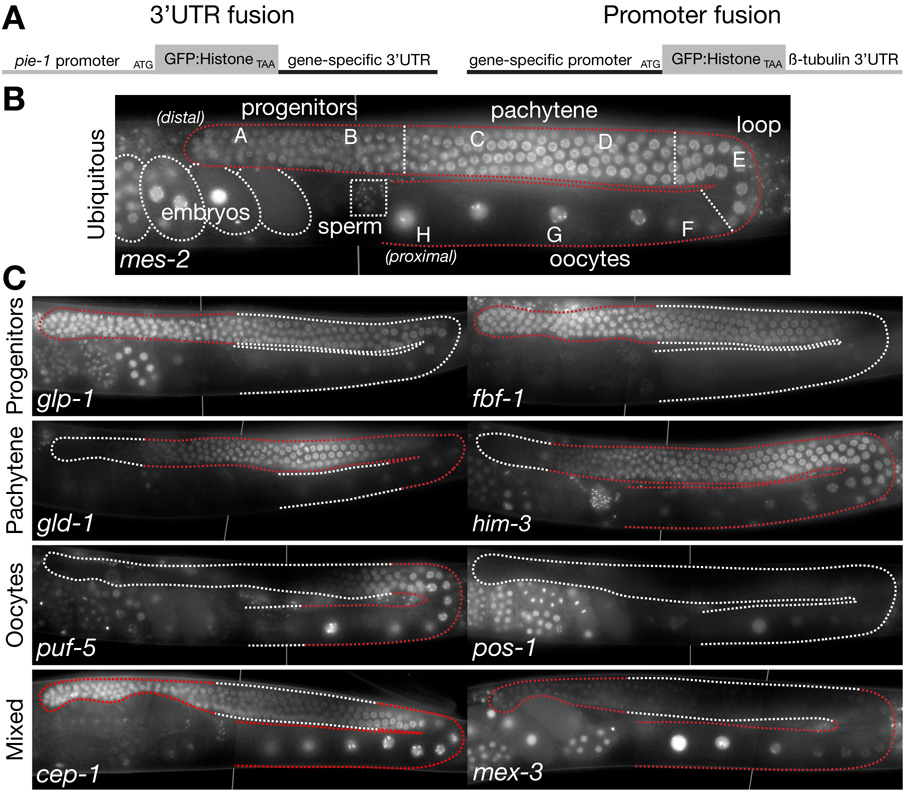
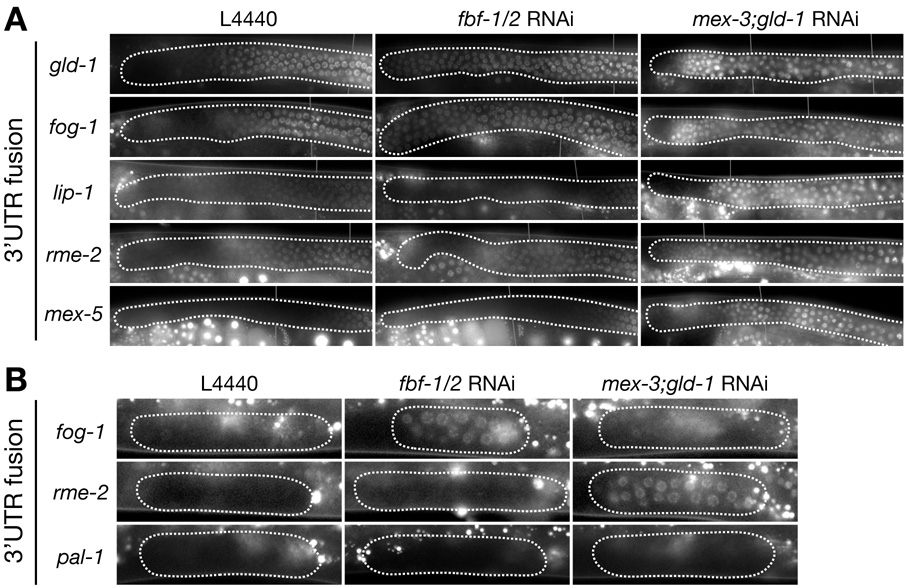
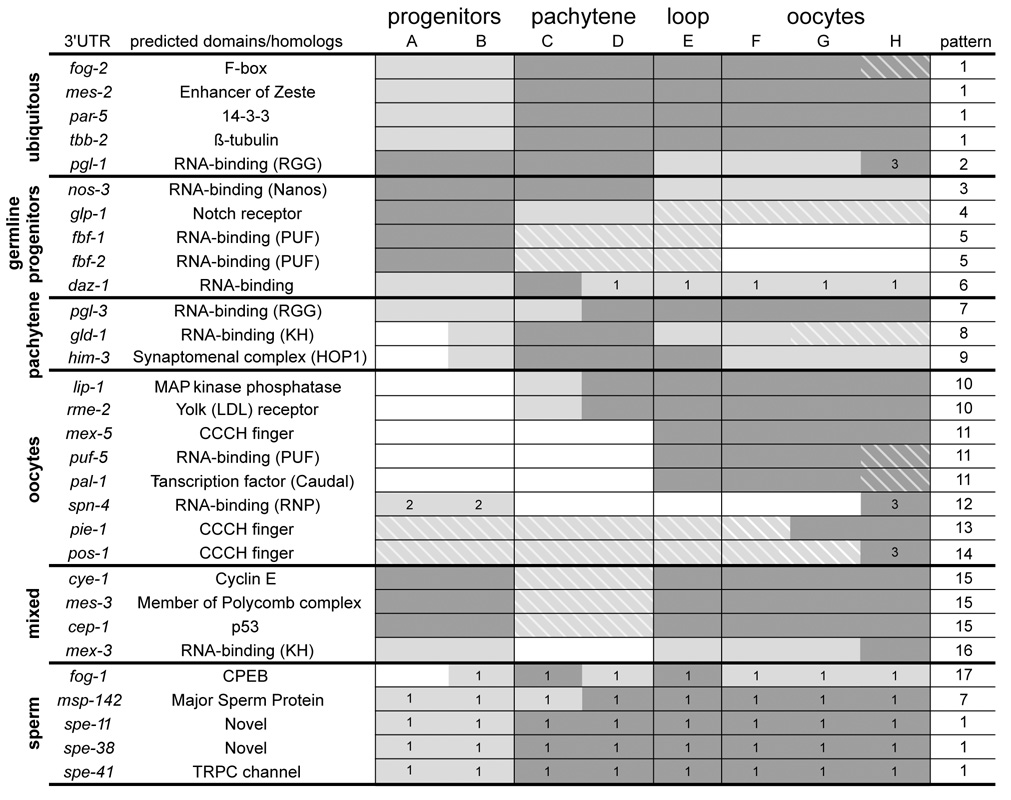
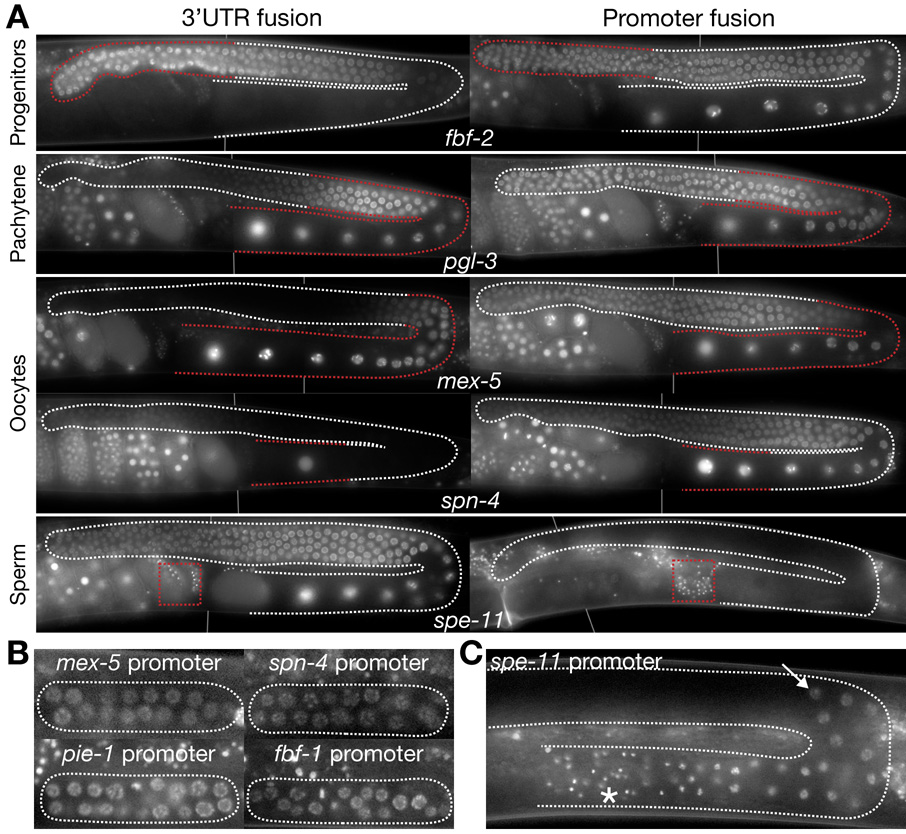
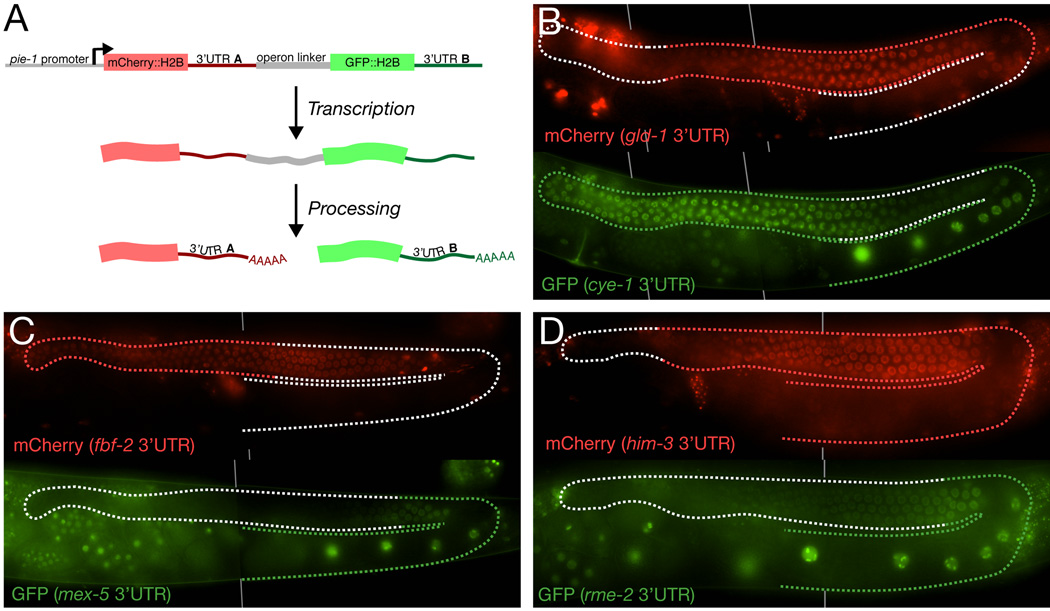
How genes are regulated to produce the correct assortment of proteins for every cell type is a fundamental question in biology. For many genes, regulation begins at the DNA level with the use of promoter sequences to control transcription. Regulation can also occur after transcription using sequences in the 3' untranslated region (UTR) of the mRNA to affect mRNA stability and/or translation [1]. The C. elegans gonad is an excellent tissue to study gene regulation during development: In the adult, germ cells are arranged in order of differentiation, with undifferentiated progenitors at one end of the gonad, cells in meiotic prophase in the middle, and gametes at the other end [2]. Using a transgenic assay, we have compared the contribution of promoters and 3' UTRs to gene regulation during germline development. We find that for most genes tested, 3' UTRs are sufficient for regulation. With the exception of promoters activated during spermatogenesis, promoters are permissive for expression in all germ cell types (from progenitors to oocytes and sperm). In progenitors, 3' UTRs inhibit the production of meiotic and oocyte proteins by posttranscriptional mechanisms involving PUF- and KH-domain RNA-binding proteins. Our findings indicate that many genes rely primarily on 3' UTRs, not promoters, for regulation during germline development.
基因如何被调控以产生适合每种细胞类型的正确蛋白质组合是生物学中的一个基本问题。对于许多基因来说,调控始于DNA水平,通过使用启动子序列来控制转录。调控也可以在转录后发生,利用mRNA的3'非翻译区(UTR)中的序列来影响mRNA的稳定性和/或翻译[1]。秀丽隐杆线虫的性腺是研究发育过程中基因调控的绝佳组织:在成虫中,生殖细胞按分化顺序排列,性腺一端是未分化的祖细胞, 中间是处于减数分裂前期的细胞,另一端是配子[2]。我们使用转基因分析方法,比较了启动子和3'UTR在生殖系发育过程中对基因调控的作用。我们发现,对于大多数测试基因,3'UTR足以进行调控。除了在精子发生过程中被激活的启动子外,启动子在所有生殖细胞类型(从祖细胞到卵母细胞和精子)中都允许基因表达。在祖细胞中,3'UTR通过涉及PUF和KH结构域RNA结合蛋白的转录后机制抑制减数分裂和卵母细胞蛋白的产生。我们的研究结果表明,在生殖系发育过程中,许多基因主要依赖3'UTR而非启动子进行调控。