Ryan Christina M, Staveley-O'Carroll Kevin, Schell Todd D
Department of Microbiology and Immunology, Pennsylvania State University College of Medicine, 500 University Drive, Hershey, PA 17033, USA.
J Immunother. 2008 Nov-Dec;31(9):906-20. doi: 10.1097/CJI.0b013e318189f155.
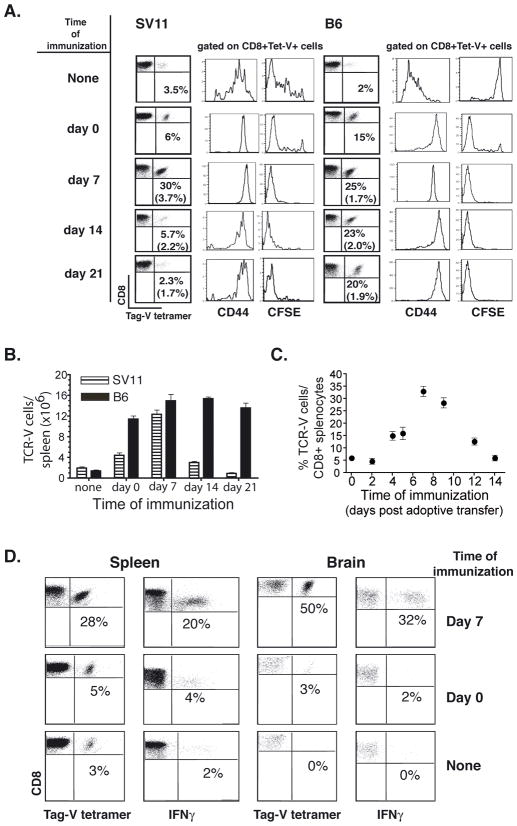
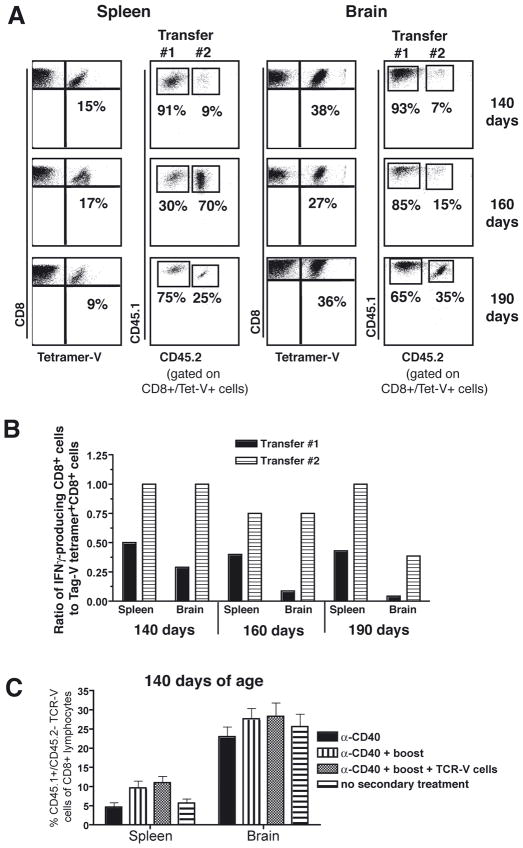
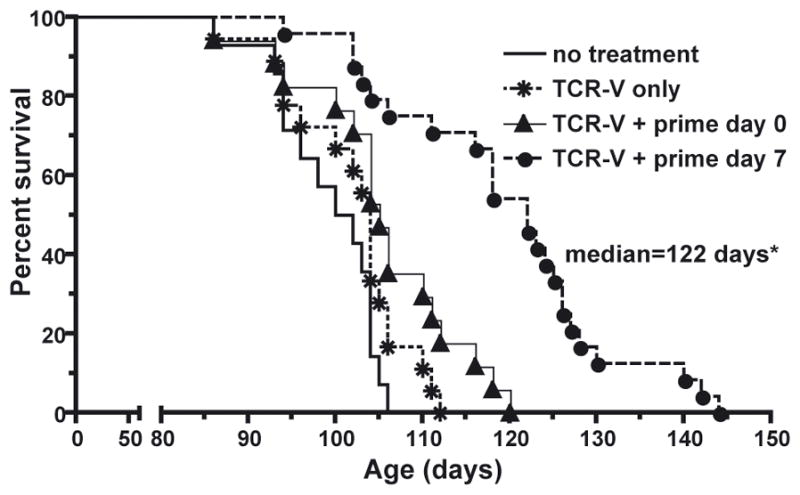
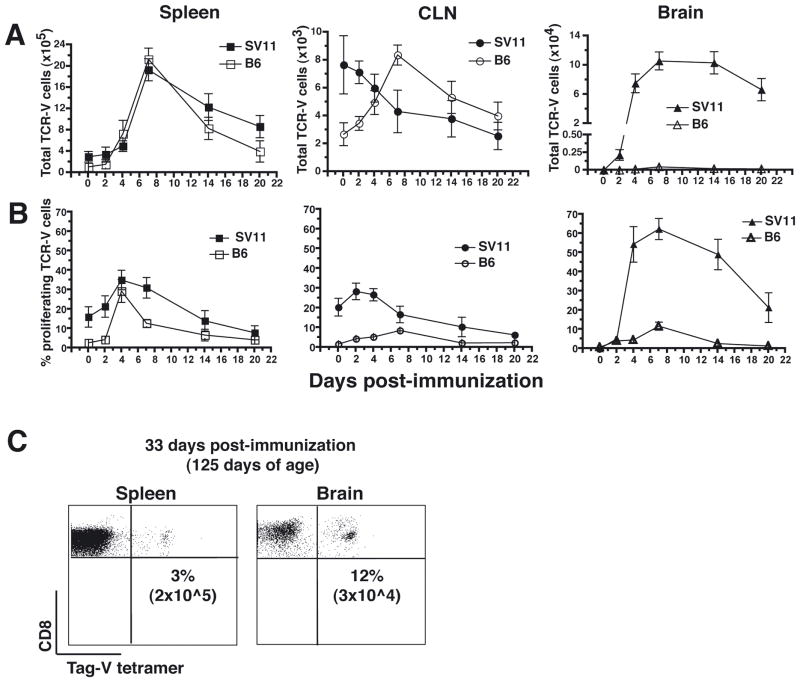
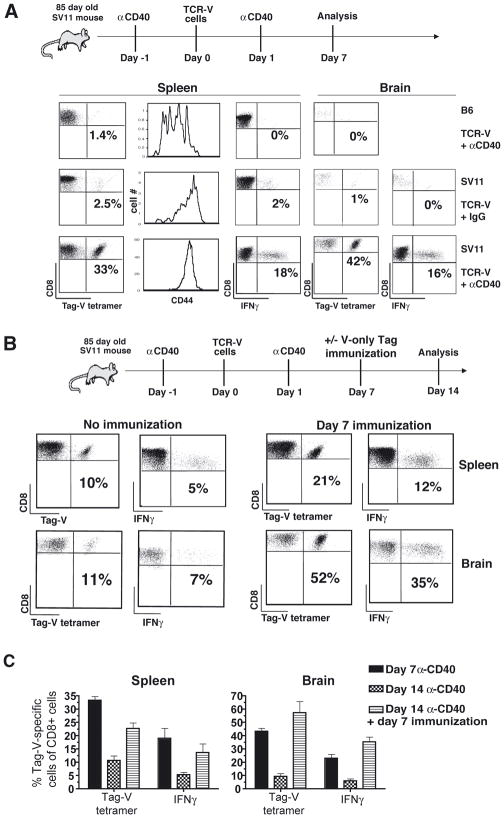
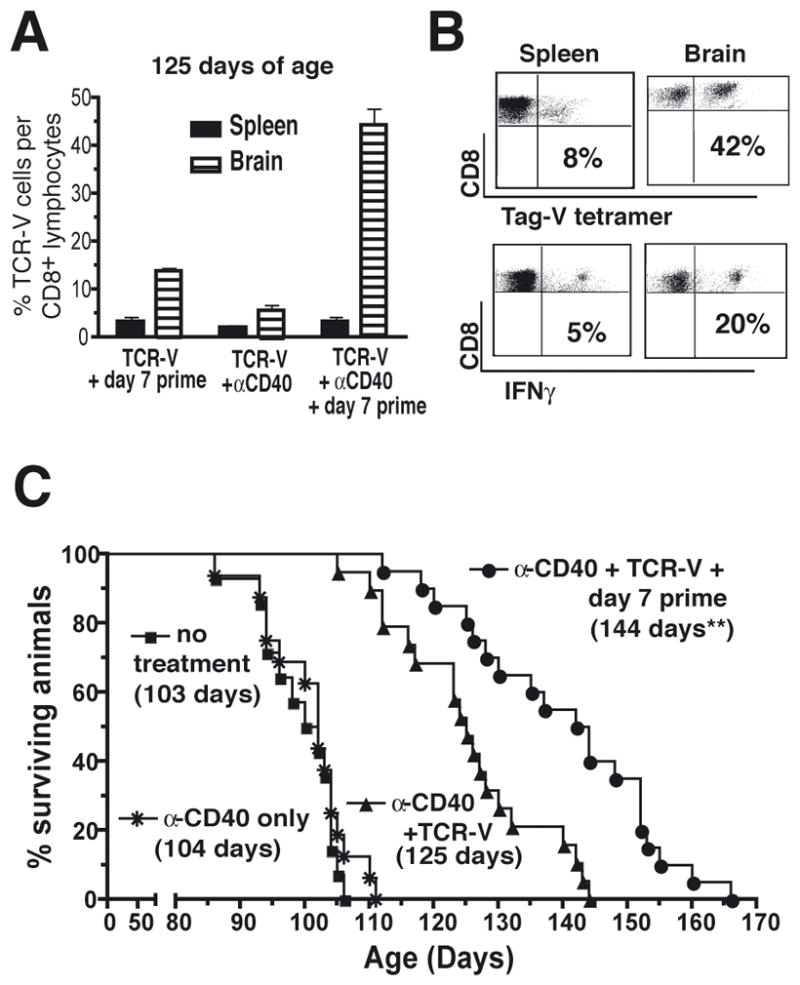
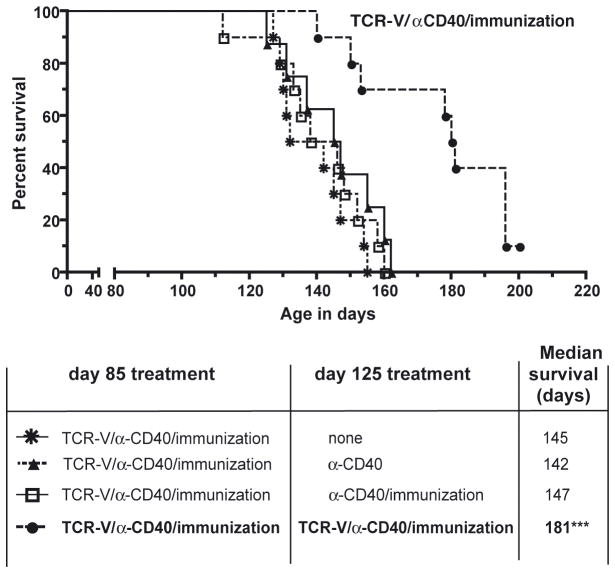
Adoptive cell transfer has been shown to significantly reduce established tumors in both experimental models and cancer patients. Owing to the tolerogenic nature of cancer, approaches that lead to durable maintenance of functional T cells in tumor-bearing hosts are needed to maximize tumor regression. In this study, we investigated strategies to augment CD8+ T-cell (T-CD8)-mediated adoptive immunotherapy of mice bearing advanced-stage autochthonous brain tumors by targeting a weakly immunogenic epitope. We found that immunization enhanced the accumulation of adoptively transferred T-CD8 at the tumor site, but that the timing of immunization was critical for optimal T cell expansion. A more rapid accumulation of T-CD8 was achieved when mice were conditioned with agonist anti-CD40 antibody before adoptive transfer due to increased T cell activation against the endogenous tumor antigen. Both approaches led to an increase in the lifespan of SV11 mice due to decreased tumor progression. However, tumor-specific T-CD8 did not persist long term at the tumor site after administration of either regimen. Importantly, the combination of anti-CD40 conditioning followed by optimally timed immunization synergistically promoted long-term maintenance of T-CD8 in the brain and dramatically enhanced survival. A second round of combination immunotherapy resulted in a further increase in survival, suggesting long-term tumor sensitivity to CD8+ T-cell-based immunotherapy. These results demonstrate that even a weak antigen can be effectively targeted for control of established tumors using a combined adoptive transfer plus immune modulation approach and suggest that similar strategies may translate to clinical practice.
在实验模型和癌症患者中,过继性细胞转移已被证明能显著缩小已形成的肿瘤。由于癌症具有致耐受性的特性,需要采取能在荷瘤宿主中持久维持功能性T细胞的方法,以实现最大程度的肿瘤消退。在本研究中,我们通过靶向一个弱免疫原性表位,研究了增强晚期原位脑肿瘤小鼠的CD8⁺ T细胞(T-CD8)介导的过继性免疫疗法的策略。我们发现免疫可增强过继转移的T-CD8在肿瘤部位的积聚,但免疫时间对于T细胞的最佳扩增至关重要。在过继转移前用激动剂抗CD40抗体预处理小鼠,由于针对内源性肿瘤抗原的T细胞活化增加,可使T-CD8更快地积聚。两种方法均因肿瘤进展减缓而使SV11小鼠的寿命延长。然而,在给予任何一种方案后,肿瘤特异性T-CD8在肿瘤部位都不能长期持续存在。重要的是,抗CD40预处理与最佳时间免疫相结合,可协同促进T-CD8在脑内的长期维持,并显著提高生存率。第二轮联合免疫疗法可进一步提高生存率,表明长期肿瘤对基于CD8⁺ T细胞的免疫疗法敏感。这些结果表明,即使是弱抗原,使用过继转移加免疫调节联合方法也可有效靶向控制已形成的肿瘤,并提示类似策略可能转化为临床实践。