Forsell Mattias N E, Dey Barna, Mörner Andreas, Svehla Krisha, O'dell Sijy, Högerkorp Carl-Magnus, Voss Gerald, Thorstensson Rigmor, Shaw George M, Mascola John R, Karlsson Hedestam Gunilla B, Wyatt Richard T
Vaccine Research Center, NIH, Bethesda, MD, USA.
PLoS Pathog. 2008 Oct 3;4(10):e1000171. doi: 10.1371/journal.ppat.1000171.
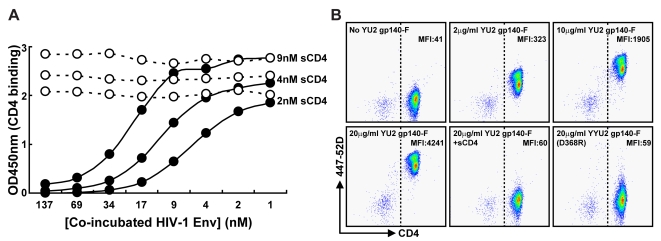
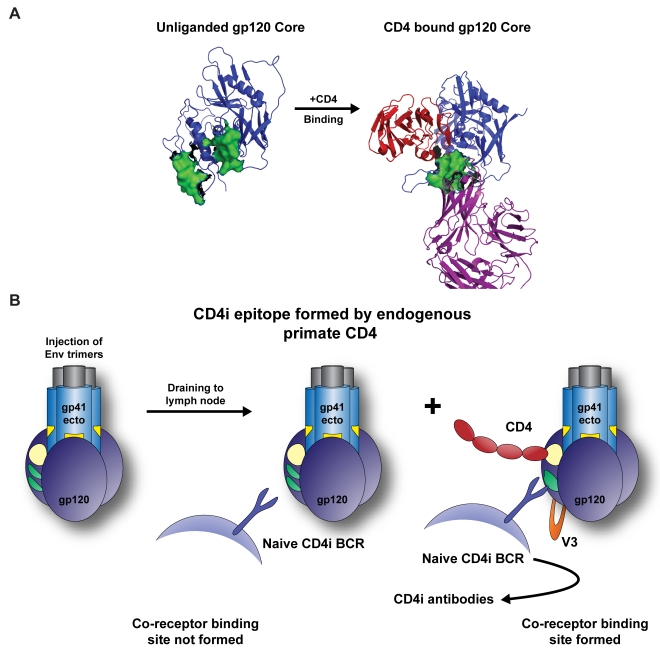
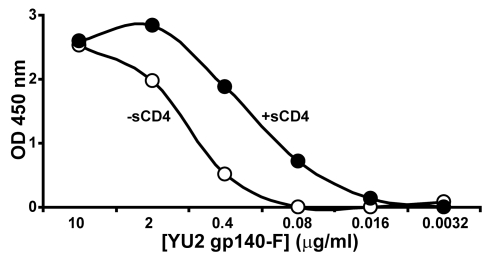
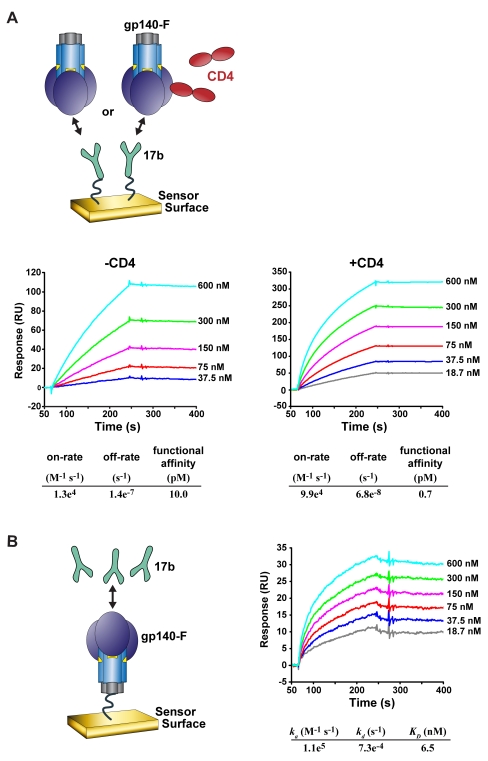
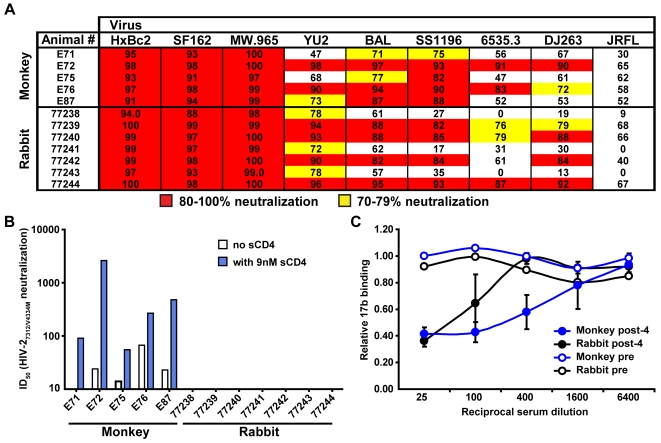
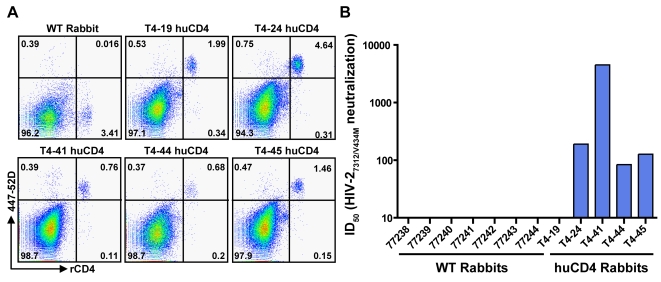
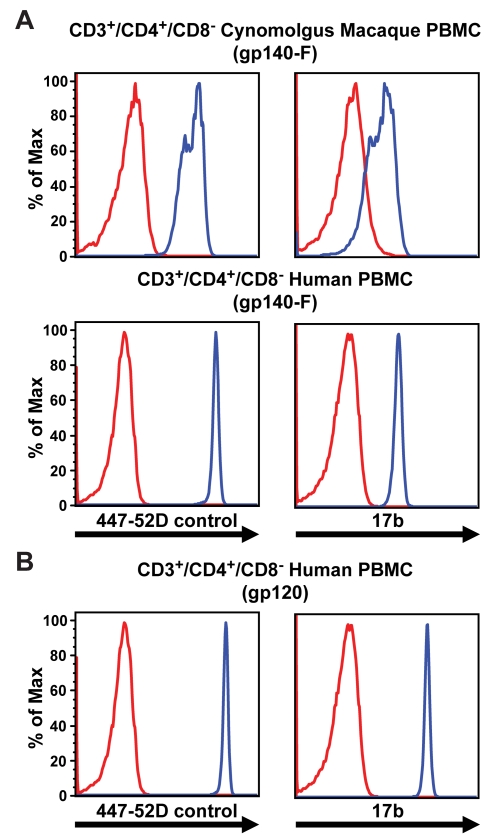
The surface HIV-1 exterior envelope glycoprotein, gp120, binds to CD4 on the target cell surface to induce the co-receptor binding site on gp120 as the initial step in the entry process. The binding site is comprised of a highly conserved region on the gp120 core, as well as elements of the third variable region (V3). Antibodies against the co-receptor binding site are abundantly elicited during natural infection of humans, but the mechanism of elicitation has remained undefined. In this study, we investigate the requirements for elicitation of co-receptor binding site antibodies by inoculating rabbits, monkeys and human-CD4 transgenic (huCD4) rabbits with envelope glycoprotein (Env) trimers possessing high affinity for primate CD4. A cross-species comparison of the antibody responses showed that similar HIV-1 neutralization breadth was elicited by Env trimers in monkeys relative to wild-type (WT) rabbits. In contrast, antibodies against the co-receptor site on gp120 were elicited only in monkeys and huCD4 rabbits, but not in the WT rabbits. This was supported by the detection of high-titer co-receptor antibodies in all sera from a set derived from human volunteers inoculated with recombinant gp120. These findings strongly suggest that complexes between Env and (high-affinity) primate CD4 formed in vivo are responsible for the elicitation of the co-receptor-site-directed antibodies. They also imply that the naïve B cell receptor repertoire does not recognize the gp120 co-receptor site in the absence of CD4 and illustrate that conformational stabilization, imparted by primary receptor interaction, can alter the immunogenicity of a type 1 viral membrane protein.
表面的HIV-1外膜糖蛋白gp120与靶细胞表面的CD4结合,诱导gp120上的共受体结合位点形成,这是病毒进入过程的第一步。该结合位点由gp120核心上的一个高度保守区域以及第三个可变区(V3)的元件组成。在人类自然感染期间会大量产生针对共受体结合位点的抗体,但产生抗体的机制仍不明确。在本研究中,我们通过用对灵长类CD4具有高亲和力的包膜糖蛋白(Env)三聚体接种兔子、猴子和人CD4转基因(huCD4)兔子,来研究诱导共受体结合位点抗体的条件。抗体反应的跨物种比较表明,相对于野生型(WT)兔子,Env三聚体在猴子中引发的HIV-1中和广度相似。相比之下,仅在猴子和huCD4兔子中诱导出了针对gp120上共受体位点的抗体,而WT兔子中未诱导出。这一点得到了一组接种重组gp120的人类志愿者所有血清中高滴度共受体抗体检测结果的支持。这些发现强烈表明,体内形成的Env与(高亲和力)灵长类CD4之间的复合物是诱导共受体位点定向抗体的原因。它们还意味着,在没有CD4的情况下,未成熟的B细胞受体库无法识别gp120共受体位点,并表明由初级受体相互作用赋予的构象稳定性可以改变1型病毒膜蛋白的免疫原性。