Lees Jason R, Golumbek Paul T, Sim Julia, Dorsey Denise, Russell John H
Department of Surgery, University of Maryland School of Medicine, Baltimore, MD 21201, USA.
J Exp Med. 2008 Oct 27;205(11):2633-42. doi: 10.1084/jem.20080155. Epub 2008 Oct 13.
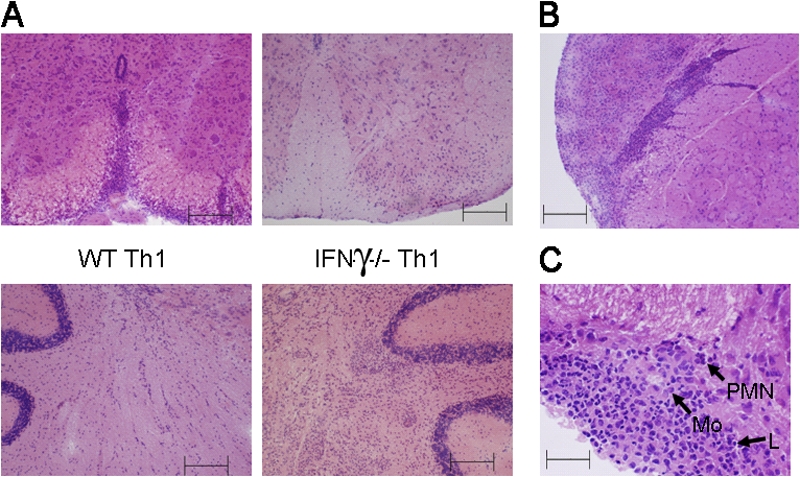
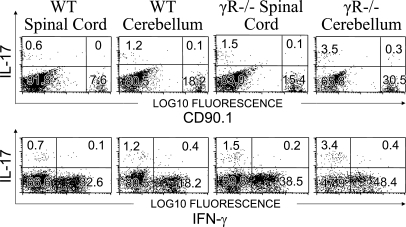
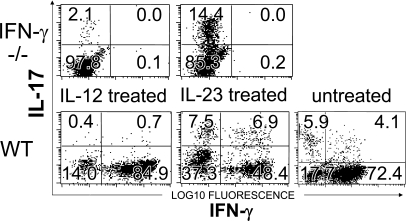
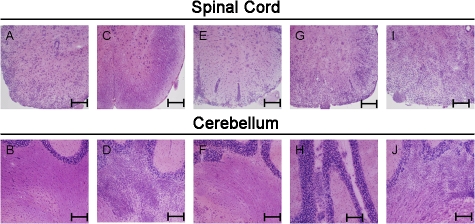
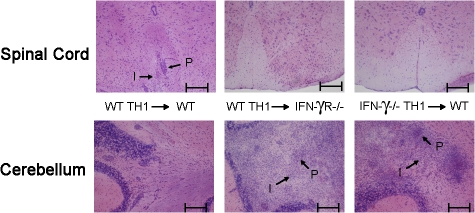
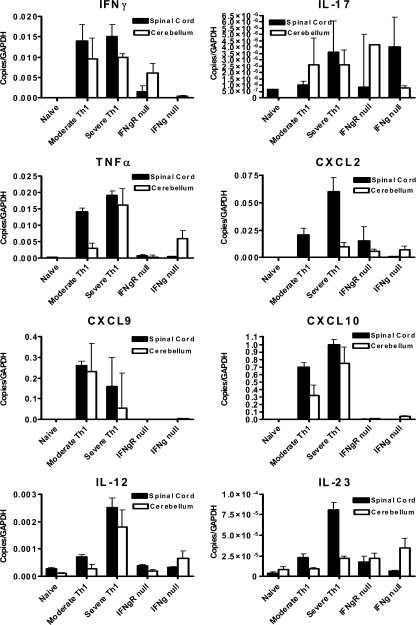
The localization of inflammatory foci within the cerebellum is correlated to severe clinical outcomes in multiple sclerosis (MS). Previous studies of experimental autoimmune encephalomyelitis (EAE), a model of MS, revealed distinct clinical outcomes correlated with the capacity of the animal to produce IFN-gamma. Outcomes were linked to localization of inflammatory cells in either the spinal cord (wild type [WT]) or the cerebellum and brain stem (IFN-gamma deficient). We demonstrate, using an adoptive transfer system, that the ability of the central nervous system (CNS) to sense pathogenic T cell-produced IFN-gamma during EAE initiation determines the sites of CNS pathogenesis. Transfer of WT Th1 cells into IFN-gamma receptor-deficient mice results in pathogenic invasion of the brain stem and cerebellum with attendant clinical symptoms, which are identical to the disease observed after transfer of IFN-gamma-deficient T cells to WT hosts. Inflammation of the spinal cord associated with classical EAE is abrogated in both IFN-gamma-deficient systems. Cotransfer of CNS antigen-specific WT Th1 cells with IFN-gamma-deficient T cells is sufficient to restore spinal cord invasion and block cerebellar and brain stem invasion. These data demonstrate that interaction between IFN-gamma and host CNS cells during the initiation of EAE can selectively promote or suppress neuroinflammation and pathogenesis.
小脑内炎症病灶的定位与多发性硬化症(MS)的严重临床结局相关。先前对实验性自身免疫性脑脊髓炎(EAE,一种MS模型)的研究表明,不同的临床结局与动物产生干扰素-γ的能力相关。结局与炎症细胞在脊髓(野生型[WT])或小脑和脑干(干扰素-γ缺陷型)中的定位有关。我们使用过继转移系统证明,在EAE发病初期中枢神经系统(CNS)感知致病性T细胞产生的干扰素-γ的能力决定了CNS发病的部位。将野生型Th1细胞转移到干扰素-γ受体缺陷型小鼠中会导致脑干和小脑的致病性侵袭以及随之而来的临床症状,这与将干扰素-γ缺陷型T细胞转移到野生型宿主后观察到的疾病相同。在两种干扰素-γ缺陷型系统中,与经典EAE相关的脊髓炎症均被消除。将中枢神经系统抗原特异性野生型Th1细胞与干扰素-γ缺陷型T细胞共转移足以恢复脊髓侵袭并阻止小脑和脑干侵袭。这些数据表明,在EAE发病初期,干扰素-γ与宿主中枢神经系统细胞之间的相互作用可以选择性地促进或抑制神经炎症和发病机制。