Wong Ka-Wing, Mohammadi Sina, Isberg Ralph R
Howard Hughes Medical Institute, Department of Molecular Biology and Microbiology, Tufts University School of Medicine, Boston, Massachusetts 02111, USA.
J Biol Chem. 2008 Dec 19;283(51):35954-65. doi: 10.1074/jbc.M804717200. Epub 2008 Oct 21.
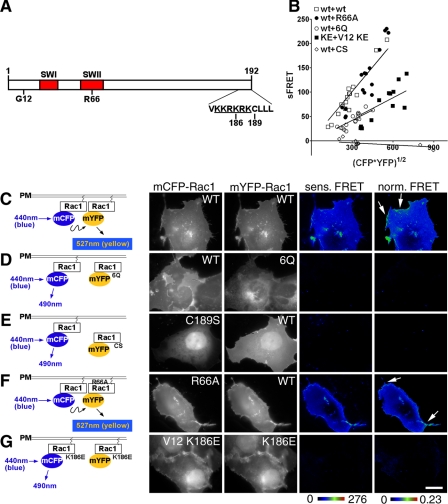
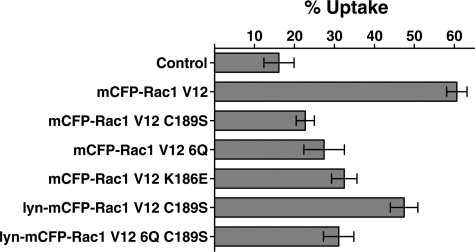
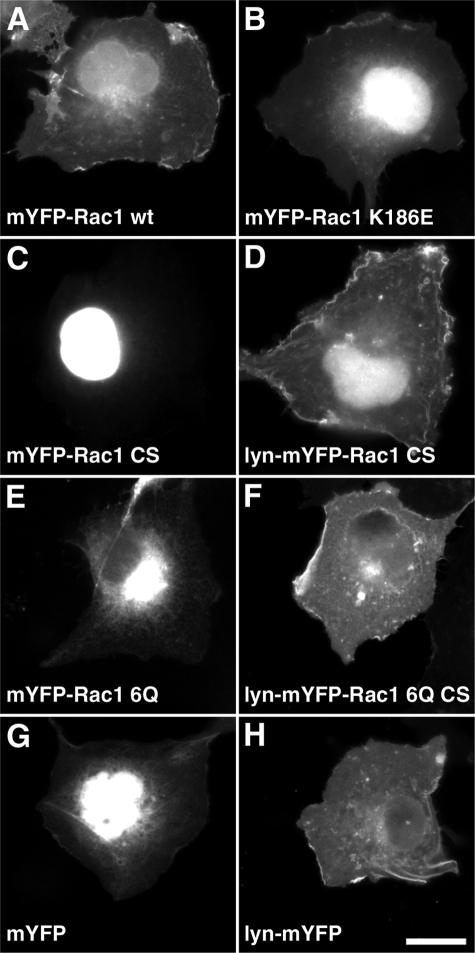
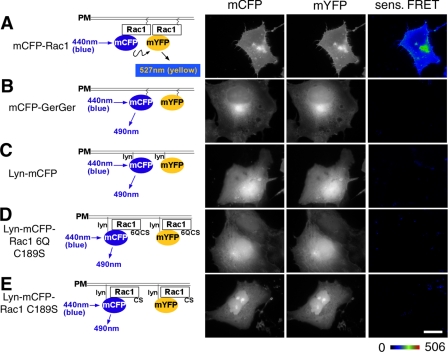
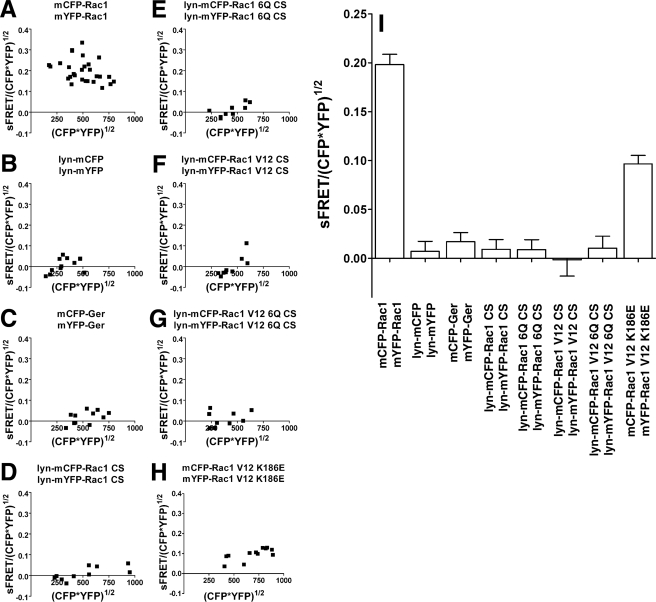
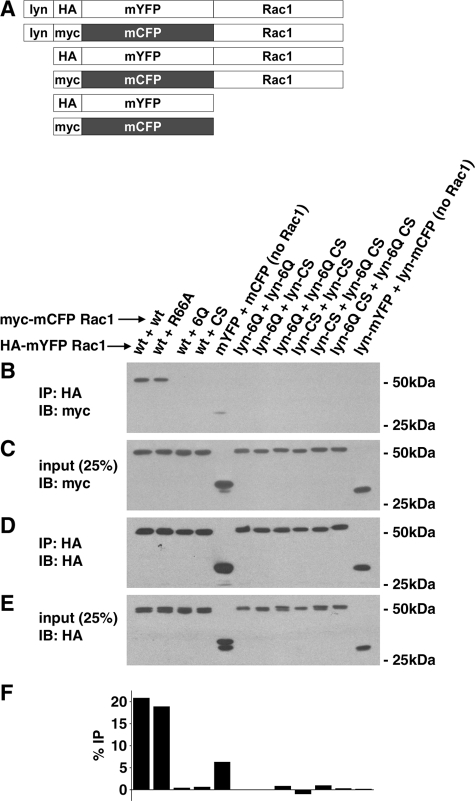
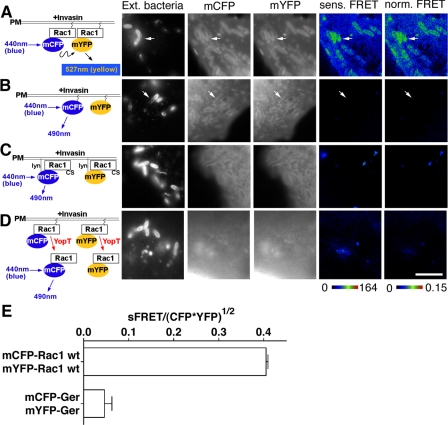
The COOH-terminal polybasic region (PBR) of Rac1, a Rho family GTPase member, is required for Rac1 self-association, membrane localization, nuclear translocation, and interaction with downstream effectors. We previously demonstrated that phosphatidylinositol-4-phosphate 5-kinase, one of the effectors that requires the polybasic region for interaction, is necessary for efficient invasin-promoted uptake of Yersinia pseudotuberculosis by nonphagocytic cells. Here we further examined the role of this region in invasin-promoted uptake. Using fluorescence resonance energy transfer experiments (FRET), we determined that engagement of integrin receptors by invasin caused elevated levels of Rac1 self-association at the site of bacterial adhesion in a PBR-dependent fashion. Self-association could be disrupted using several strategies: translocation of the Yersinia YopT prenylcysteine protease into host cells, inactivation of the Rac1 isoprenylation signal that is required for membrane localization, and elimination of the PBR. Disruption in each case impaired invasin-promoted uptake. To determine if there is a role for the PBR in Rac1 effector signaling that was independent of its role in membrane localization or multimerization, we examined the effect of the PBR in the context of a Rac1 derivative that was targeted to the membrane via an NH2-terminal lipid tail. The membrane-targeted Rac1 derivative restored significant invasin-promoted bacterial uptake in a PBR-dependent manner and yet displayed no detectable self-association. This study indicates that, in addition to its role in promoting membrane localization, the PBR exerts a positive effect on Rac1-controlled bacterial uptake that is independent of Rac1 self-association, most likely due to signaling to downstream effectors.
Rac1是一种Rho家族GTP酶成员,其羧基末端多碱性区域(PBR)对于Rac1的自我缔合、膜定位、核转位以及与下游效应器的相互作用是必需的。我们之前证明,磷脂酰肌醇-4-磷酸5-激酶是一种需要多碱性区域进行相互作用的效应器,对于非吞噬细胞有效摄取侵袭素促进的假结核耶尔森菌是必需的。在这里,我们进一步研究了该区域在侵袭素促进摄取中的作用。使用荧光共振能量转移实验(FRET),我们确定侵袭素与整合素受体的结合以PBR依赖的方式导致细菌粘附部位的Rac1自我缔合水平升高。可以使用几种策略破坏自我缔合:将耶尔森菌YopT异戊烯基半胱氨酸蛋白酶转运到宿主细胞中、使膜定位所需的Rac1异戊烯化信号失活以及消除PBR。每种情况下的破坏都会损害侵袭素促进的摄取。为了确定PBR在Rac1效应器信号传导中是否存在独立于其在膜定位或多聚化中的作用,我们在通过NH2末端脂质尾靶向膜的Rac1衍生物的背景下研究了PBR的作用。膜靶向的Rac1衍生物以PBR依赖的方式恢复了显著的侵袭素促进的细菌摄取,但未显示可检测到的自我缔合。这项研究表明,除了其在促进膜定位中的作用外,PBR对Rac1控制的细菌摄取具有积极作用,这独立于Rac1的自我缔合,很可能是由于向下游效应器发出信号。