Nicholson E B, Concaugh E A, Mobley H L
Department of Medicine, University of Maryland School of Medicine, Baltimore 21201.
Infect Immun. 1991 Oct;59(10):3360-5. doi: 10.1128/iai.59.10.3360-3365.1991.
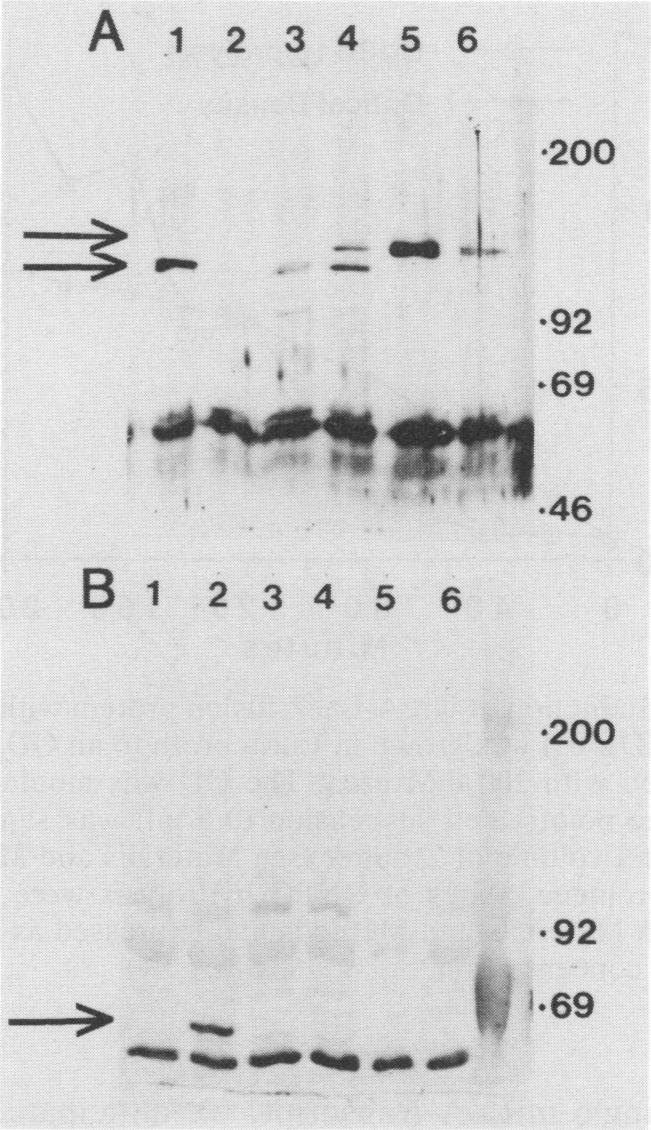
Proteus mirabilis, a common agent of nosocomially acquired and catheter-associated urinary tract infection, is the most frequent cause of infection-induced bladder and kidney stones. Urease-catalyzed urea hydrolysis initiates stone formation in urine and can be inhibited by acetohydroxamic acid and other structural analogs of urea. Since P. mirabilis urease is inducible with urea, there has been some concern that urease inhibitors actually induce urease during an active infection, thus compounding the problem of elevated enzyme activity. Quantitating induction by compounds that simultaneously inhibit urease activity has been difficult. Therefore, to study these problems, we constructed a fusion of ureA (a urease subunit gene) and lacZ (the beta-galactosidase gene) within plasmid pMID1010, which encodes an inducible urease of P. mirabilis expressed in E. coli JM103 (Lac-). The fusion protein, predicted to be 117 kDa, was induced by urea and detected on Western blots (immunoblots) with anti-beta-galactosidase antiserum. Peak beta-galactosidase activity of 9.9 mumol of ONPG (o-nitrophenyl-beta-D-galactopyranoside) hydrolyzed per min per mg of protein, quantitated spectrophotometrically, was induced at 200 mM urea. The uninduced rate was 0.2 mumol of ONPG hydrolyzed per min per mg of protein. Induction was specific for urea, as no structural analog of urea (including acetohydroxamic acid, hydroxyurea, thiourea, hippuric acid, flurofamide, or hydroxylamine) induced fusion protein activity. These data suggest that induction by inactivation of UreR, the urease repressor protein that governs regulation of the urease operon, is specific for urea and does not respond to closely related structural analogs.
奇异变形杆菌是医院获得性感染和导管相关尿路感染的常见病原体,是感染性膀胱结石和肾结石最常见的病因。脲酶催化尿素水解引发尿液中结石形成,可被乙酰氧肟酸和其他尿素结构类似物抑制。由于奇异变形杆菌脲酶可被尿素诱导,有人担心脲酶抑制剂在活跃感染期间实际上会诱导脲酶,从而使酶活性升高的问题更加复杂。定量由同时抑制脲酶活性的化合物引起的诱导一直很困难。因此,为了研究这些问题,我们在质粒pMID1010中构建了ureA(脲酶亚基基因)和lacZ(β-半乳糖苷酶基因)的融合体,该质粒编码在大肠杆菌JM103(Lac-)中表达的奇异变形杆菌诱导型脲酶。预测为117 kDa的融合蛋白由尿素诱导,并用抗β-半乳糖苷酶抗血清在蛋白质印迹(免疫印迹)上检测到。通过分光光度法定量,在200 mM尿素诱导下,每毫克蛋白质每分钟水解9.9 μmol邻硝基苯-β-D-吡喃半乳糖苷(ONPG)的β-半乳糖苷酶活性峰值出现。未诱导时的速率为每毫克蛋白质每分钟水解0.2 μmol ONPG。诱导对尿素具有特异性,因为没有尿素的结构类似物(包括乙酰氧肟酸、羟基脲、硫脲、马尿酸、氟乙酰胺或羟胺)诱导融合蛋白活性。这些数据表明,由调控脲酶操纵子的脲酶阻遏蛋白UreR失活引起的诱导对尿素具有特异性,对密切相关的结构类似物无反应。