Epsztejn-Litman Silvina, Feldman Nirit, Abu-Remaileh Monther, Shufaro Yoel, Gerson Ariela, Ueda Jun, Deplus Rachel, Fuks François, Shinkai Yoichi, Cedar Howard, Bergman Yehudit
Departments of Experimental Medicine and Cellular Biochemistry Hebrew University Medical School Ein Kerem Jerusalem, 91120 ISRAEL.
IVF Unit, The Department of OB/GYN The Hadassah Human Embryonic Stem Cell Research Center Hadassah Hebrew University Medical Center Jerusalem, 91120 ISRAEL.
Nat Struct Mol Biol. 2008 Nov;15(11):1176-1183. doi: 10.1038/nsmb.1476. Epub 2008 Oct 26.
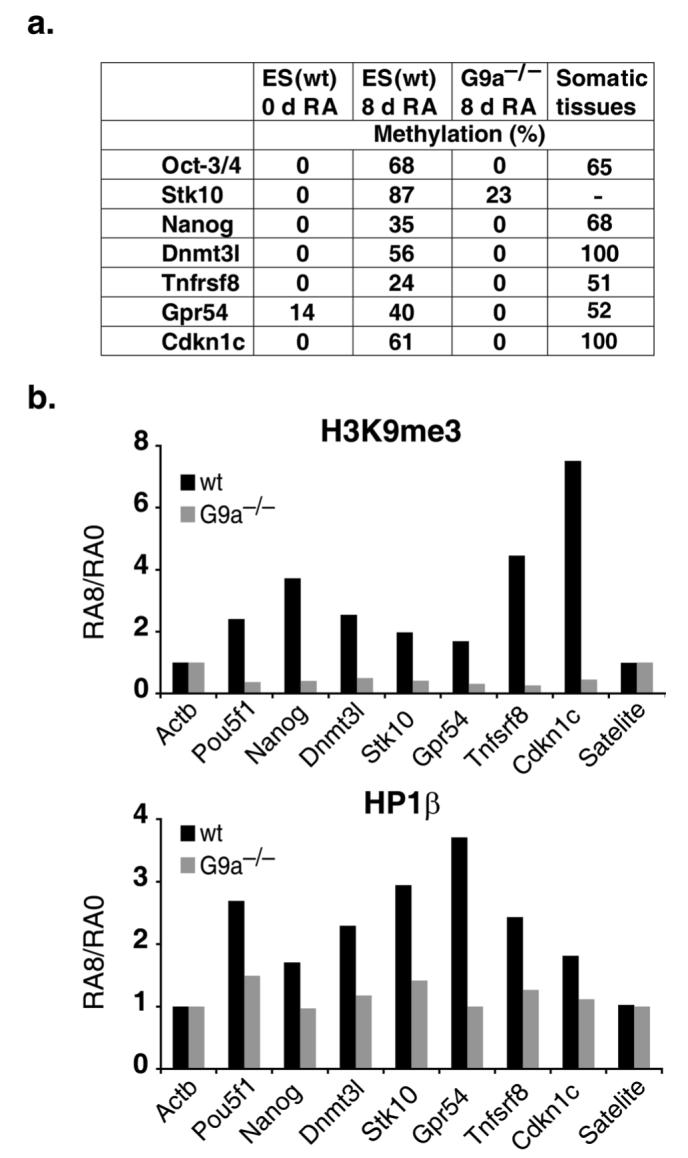
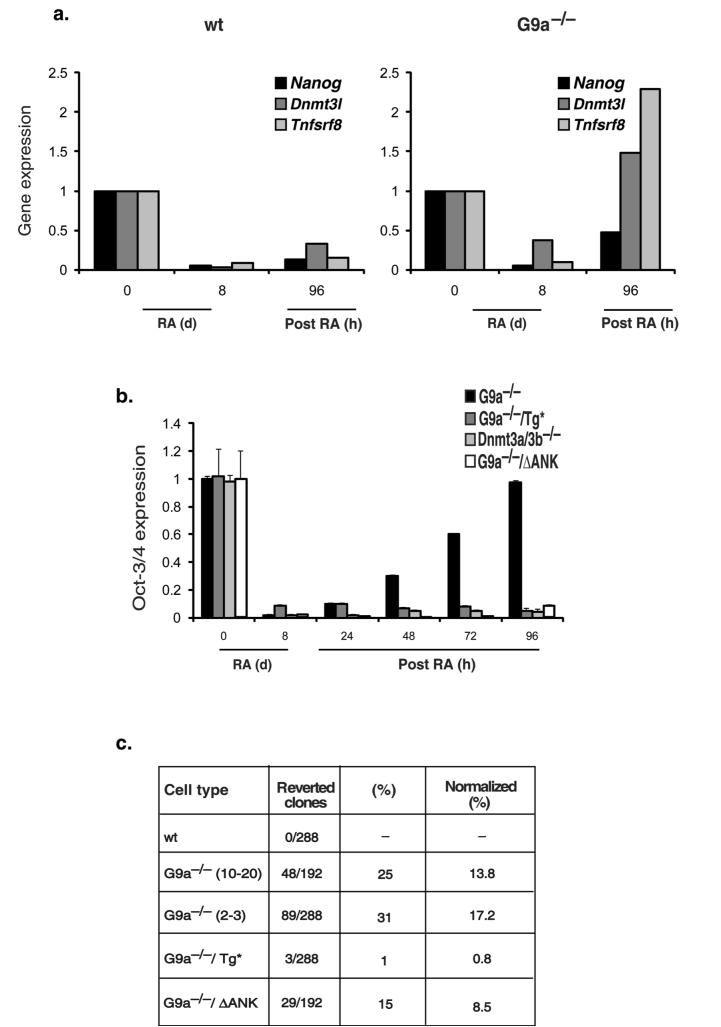
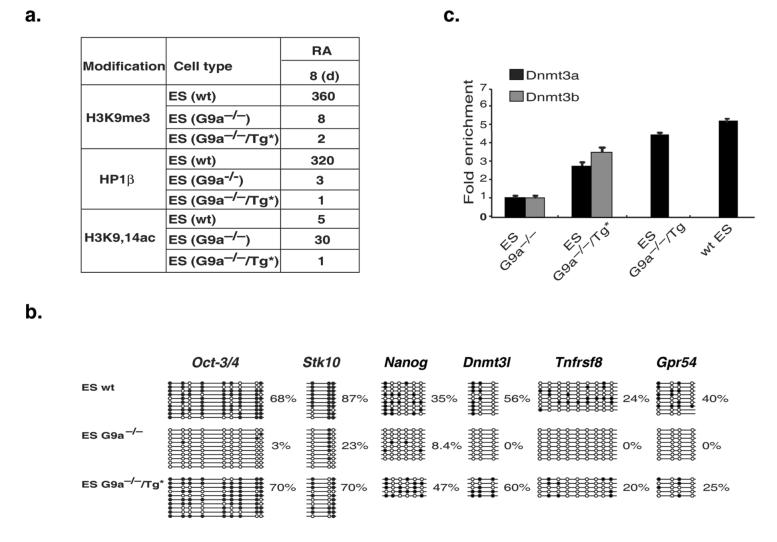
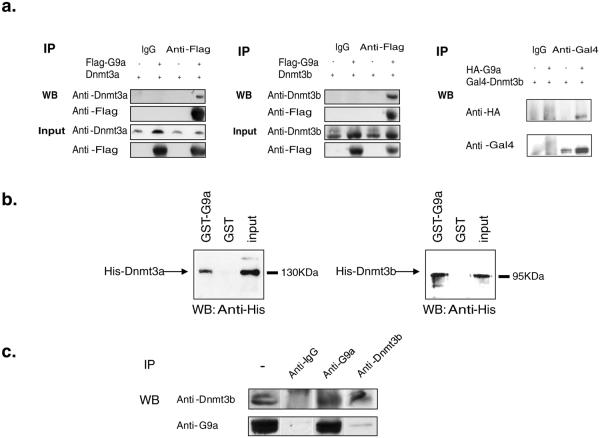
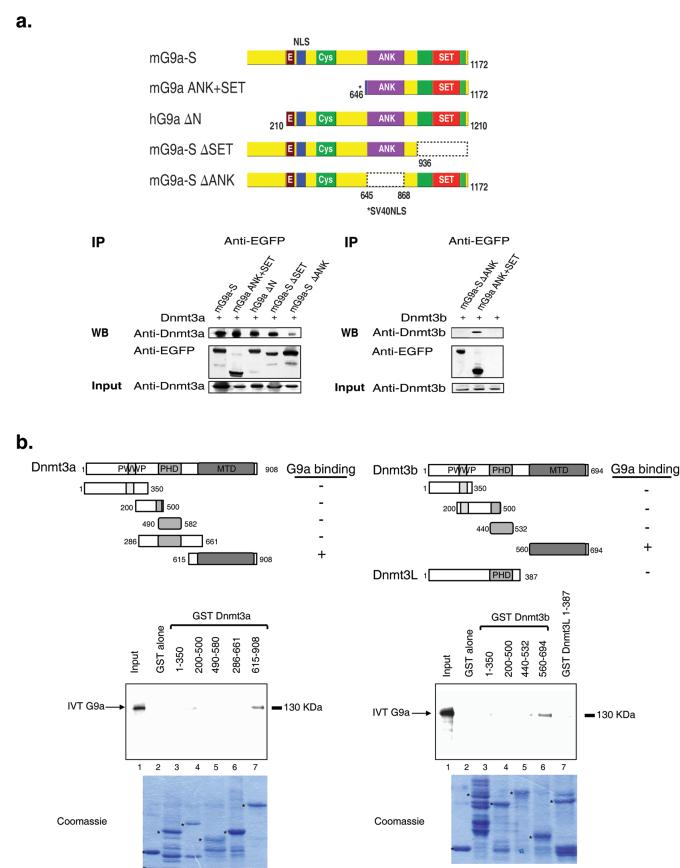
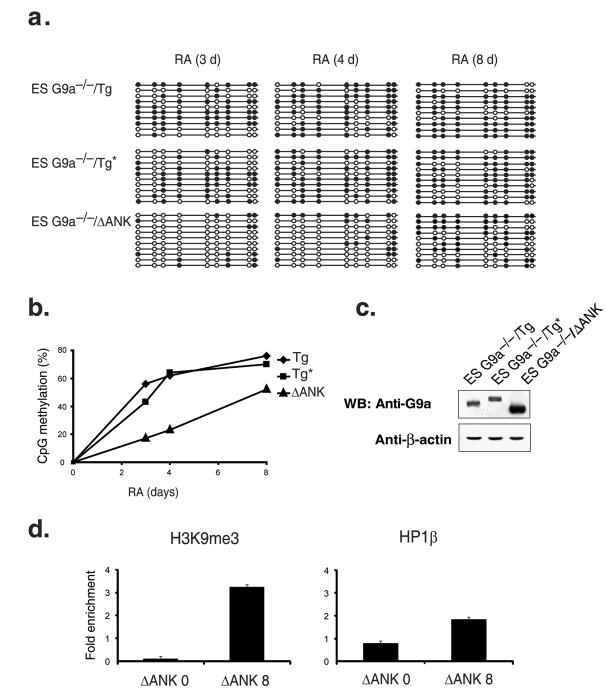
The pluripotency-determining gene Oct3/4 (also called Pou5f1) undergoes postimplantation silencing in a process mediated by the histone methyltransferase G9a. Microarray analysis now shows that this enzyme may operate as a master regulator that inactivates numerous early-embryonic genes by bringing about heterochromatinization of methylated histone H3K9 and de novo DNA methylation. Genetic studies in differentiating embryonic stem cells demonstrate that a point mutation in the G9a SET domain prevents heterochromatinization but still allows de novo methylation, whereas biochemical and functional studies indicate that G9a itself is capable of bringing about de novo methylation through its ankyrin domain, by recruiting Dnmt3a and Dnmt3b independently of its histone methyltransferase activity. These modifications seem to be programmed for carrying out two separate biological functions: histone methylation blocks target-gene reactivation in the absence of transcriptional repressors, whereas DNA methylation prevents reprogramming to the undifferentiated state.
多能性决定基因Oct3/4(也称为Pou5f1)在由组蛋白甲基转移酶G9a介导的过程中经历植入后沉默。微阵列分析现在表明,这种酶可能作为主要调节因子发挥作用,通过导致甲基化组蛋白H3K9的异染色质化和从头DNA甲基化来使众多早期胚胎基因失活。对分化中的胚胎干细胞的遗传学研究表明,G9a SET结构域中的点突变可防止异染色质化,但仍允许从头甲基化,而生化和功能研究表明,G9a本身能够通过其锚蛋白结构域,通过独立于其组蛋白甲基转移酶活性募集Dnmt3a和Dnmt3b来实现从头甲基化。这些修饰似乎被编程用于执行两种不同的生物学功能:组蛋白甲基化在没有转录抑制因子的情况下阻止靶基因重新激活,而DNA甲基化则防止重新编程为未分化状态。