Abellana Rosa, Ascaso Carlos, Aponte John, Saute Francisco, Nhalungo Delino, Nhacolo Ariel, Alonso Pedro
Bioestadistica, Departament de Salut Publica, Universitat de Barcelona, Casanova 143, 08036, Barcelona, Spain.
Malar J. 2008 Oct 31;7:228. doi: 10.1186/1475-2875-7-228.
The objective was to study the seasonal effect on the spatial distribution of the incidence of malaria in children under 10 years old living in the Manhiça district, Mozambique.
The data of the clinical malaria incidence were obtained from a study of two cohorts of children followed from December 1996 to July 1999. The cases were obtained by the active detection method. Hierarchical Bayesian models were used to model the incidence of malaria, including spatial correlation nested to climatic season. The models were compared with the deviance information criterion. The age and gender of the children were also taken into account.
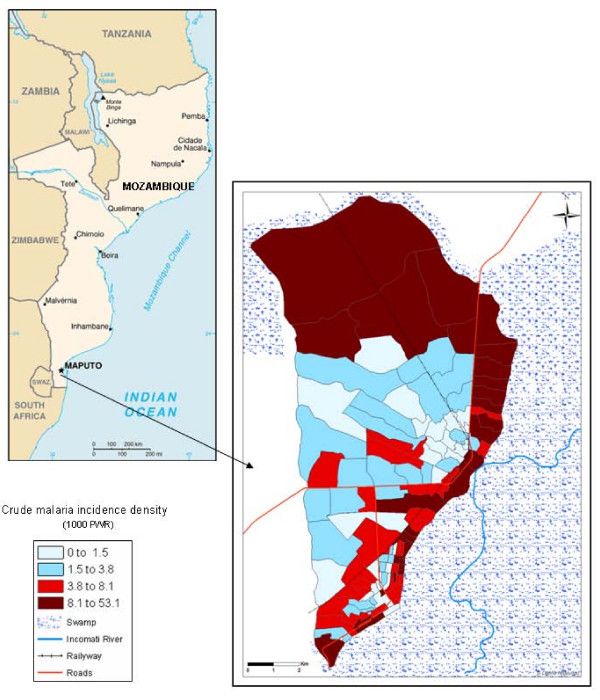
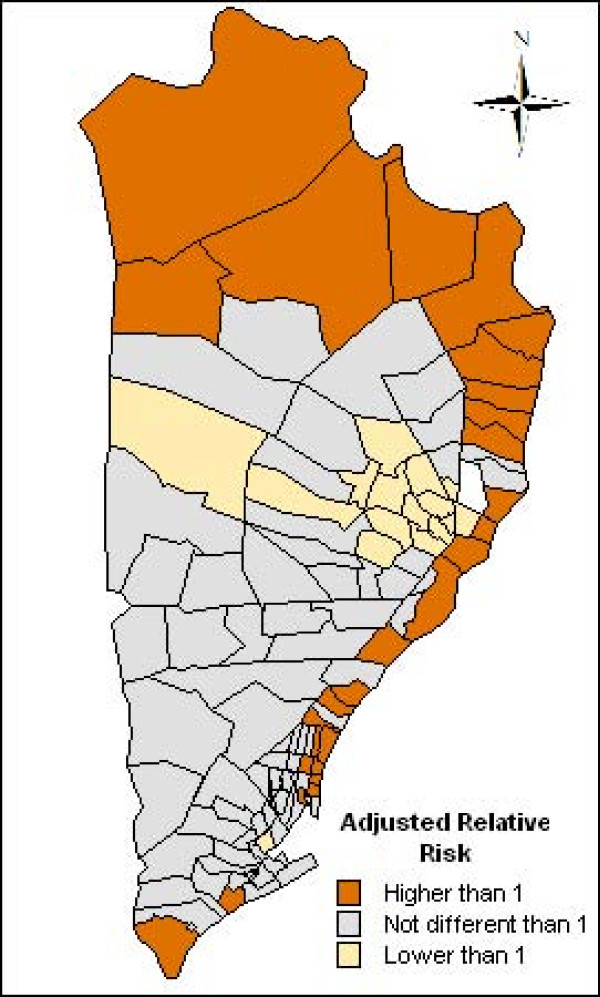
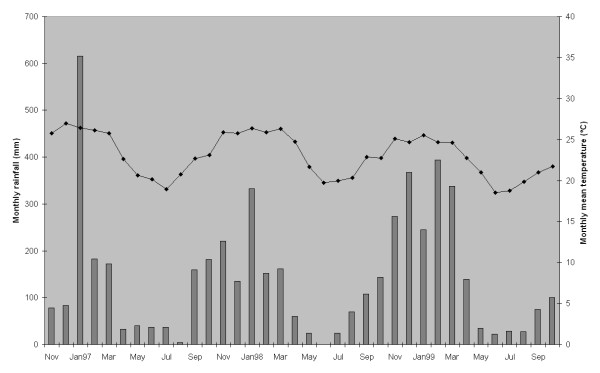
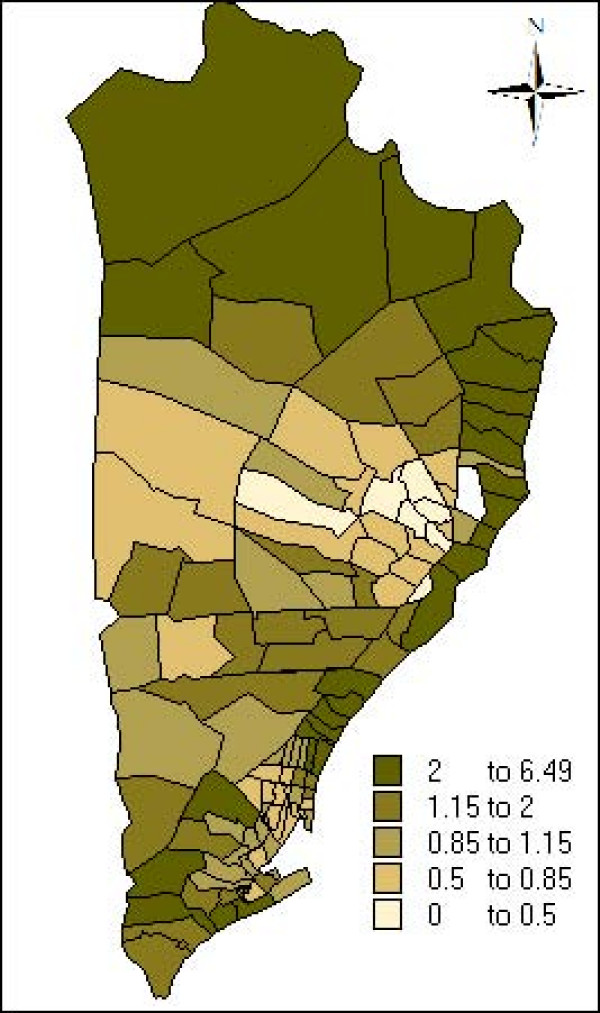
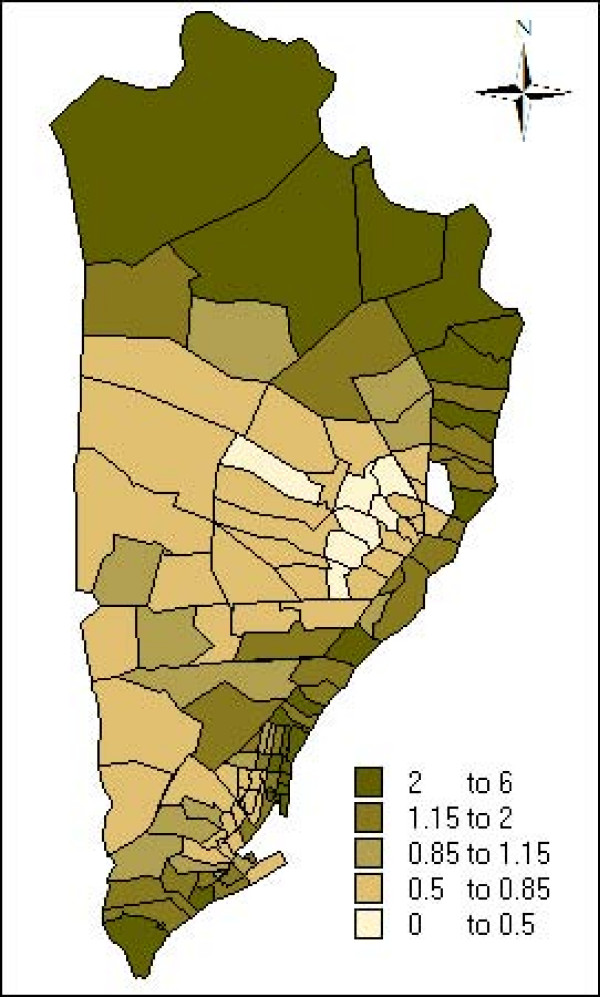
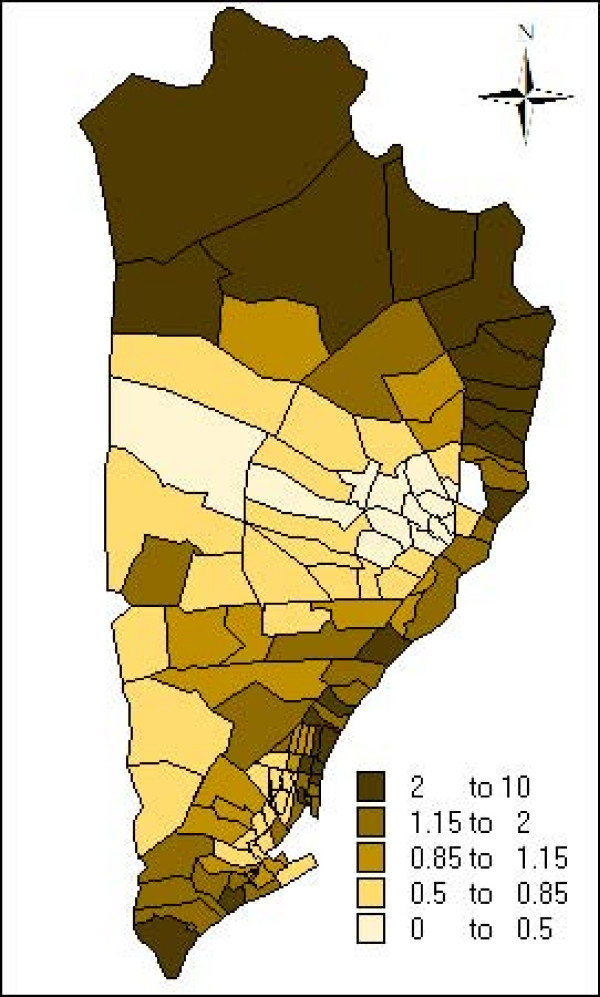
The incidence of malaria is associated with age, period and climate season. The incidence presents a clear spatial pattern, with a higher incidence in the neighbourhoods situated in the north and northeast of the Manhiça area. The transmission of malaria is highest during the wet season but the spatial pattern of malaria does not differ from that during the dry season.
The incidence of malaria in Manhiça presents a spatial pattern which is independent of the seasonal climatic conditions. The climate modifies the incidence of malaria in the entire region but does not change the spatial pattern of the incidence of this disease. These findings may be useful for the planning of malaria control activities. These activities can be performed taking account that the neighbourhoods with more incidence of malaria do not change over the annual climate seasons.
目的是研究季节对莫桑比克曼希卡地区10岁以下儿童疟疾发病率空间分布的影响。
临床疟疾发病率数据来自1996年12月至1999年7月对两组儿童队列的研究。病例通过主动检测方法获得。使用分层贝叶斯模型对疟疾发病率进行建模,包括嵌套于气候季节的空间相关性。模型通过偏差信息准则进行比较。还考虑了儿童的年龄和性别。
疟疾发病率与年龄、时期和气候季节相关。发病率呈现出明显的空间模式,在曼希卡地区北部和东北部的社区发病率较高。疟疾传播在雨季最高,但疟疾的空间模式与旱季并无差异。
曼希卡地区的疟疾发病率呈现出一种与季节性气候条件无关的空间模式。气候改变了整个地区的疟疾发病率,但并未改变该疾病发病率的空间模式。这些发现可能有助于疟疾控制活动的规划。开展这些活动时可以考虑到,疟疾发病率较高的社区在全年气候季节中不会发生变化。