Wyatt Kelly B, Campos Paula F, Gilbert M Thomas P, Kolokotronis Sergios-Orestis, Hynes Wayne H, DeSalle Rob, Ball Stanley J, Daszak Peter, MacPhee Ross D E, Greenwood Alex D
Biological Sciences Department, Old Dominion University, Norfolk, VA, USA.
PLoS One. 2008;3(11):e3602. doi: 10.1371/journal.pone.0003602. Epub 2008 Nov 5.
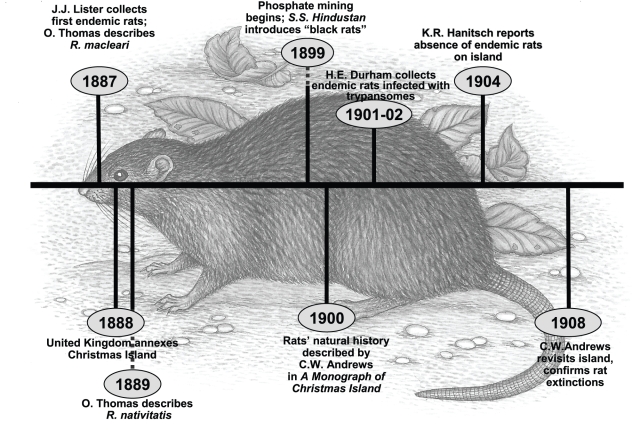
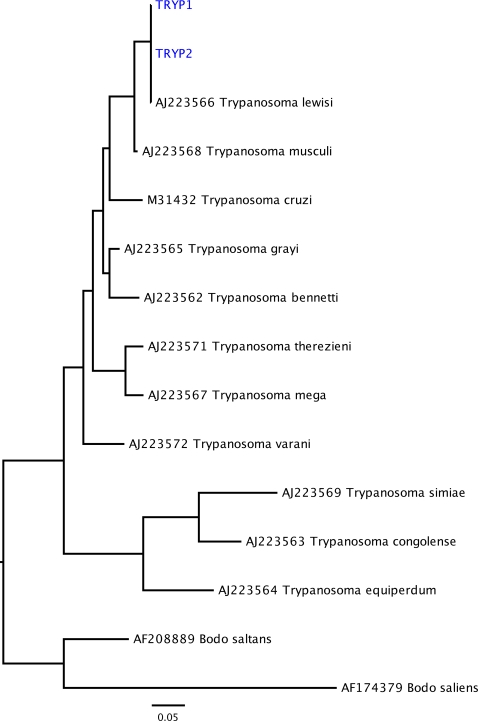
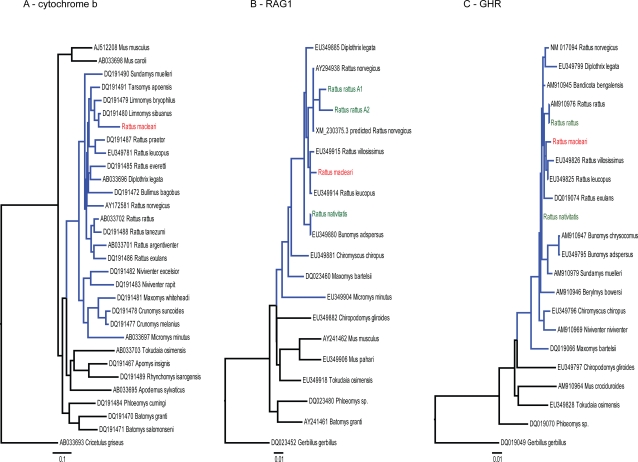
It is now widely accepted that novel infectious disease can be a leading cause of serious population decline and even outright extinction in some invertebrate and vertebrate groups (e.g., amphibians). In the case of mammals, however, there are still no well-corroborated instances of such diseases having caused or significantly contributed to the complete collapse of species. A case in point is the extinction of the endemic Christmas Island rat (Rattus macleari): although it has been argued that its disappearance ca. AD 1900 may have been partly or wholly caused by a pathogenic trypanosome carried by fleas hosted on recently-introduced black rats (Rattus rattus), no decisive evidence for this scenario has ever been adduced. Using ancient DNA methods on samples from museum specimens of these rodents collected during the extinction window (AD 1888-1908), we were able to resolve unambiguously sequence evidence of murid trypanosomes in both endemic and invasive rats. Importantly, endemic rats collected prior to the introduction of black rats were devoid of trypanosome signal. Hybridization between endemic and black rats was also previously hypothesized, but we found no evidence of this in examined specimens, and conclude that hybridization cannot account for the disappearance of the endemic species. This is the first molecular evidence for a pathogen emerging in a naïve mammal species immediately prior to its final collapse.
现在人们普遍认为,新型传染病可能是导致一些无脊椎动物和脊椎动物群体(如两栖动物)数量严重下降甚至彻底灭绝的主要原因。然而,就哺乳动物而言,尚无充分确凿的实例表明此类疾病导致了物种的完全崩溃或对此有重大影响。一个恰当的例子是地方性圣诞岛大鼠(Rattus macleari)的灭绝:尽管有人认为其在公元1900年左右的消失可能部分或全部是由寄生于最近引入的黑鼠(Rattus rattus)身上的跳蚤携带的致病性锥虫所致,但从未有过支持这一说法的确凿证据。通过对在灭绝时期(公元1888 - 1908年)收集的这些啮齿动物博物馆标本样本使用古DNA方法,我们能够明确解析出地方性大鼠和入侵大鼠体内鼠科锥虫的序列证据。重要的是,在引入黑鼠之前收集的地方性大鼠没有锥虫信号。此前也有人推测地方性大鼠和黑鼠之间存在杂交,但我们在检测的标本中未发现这方面的证据,并得出杂交不能解释地方性物种消失的结论。这是首次有分子证据表明一种病原体在一种原本未受影响的哺乳动物物种最终灭绝之前出现。