Li Yang, Fan Xing, Goodwin C Rory, Laterra John, Xia Shuli
Hugo W, Moser Research Institute at Kennedy Krieger, Baltimore, MD, USA.
BMC Cancer. 2008 Nov 7;8:325. doi: 10.1186/1471-2407-8-325.
Hepatocyte growth factor (HGF) and its receptor c-MET are commonly expressed in malignant gliomas and embryonic neuroectodermal tumors including medulloblastoma and appear to play an important role in the growth and dissemination of these malignancies. Dependent on cell context and the involvement of specific downstream effectors, both pro- and anti-apoptotic effects of HGF have been reported.
Human medulloblastoma cells were treated with HGF for 24-72 hours followed by death receptor ligand TRAIL (Tumor necrosis factor-related apoptosis-inducing ligand) for 24 hours. Cell death was measured by MTT and Annexin-V/PI flow cytometric analysis. Changes in expression levels of targets of interest were measured by Northern blot analysis, quantitative reverse transcription-PCR, Western blot analysis as well as immunoprecipitation.
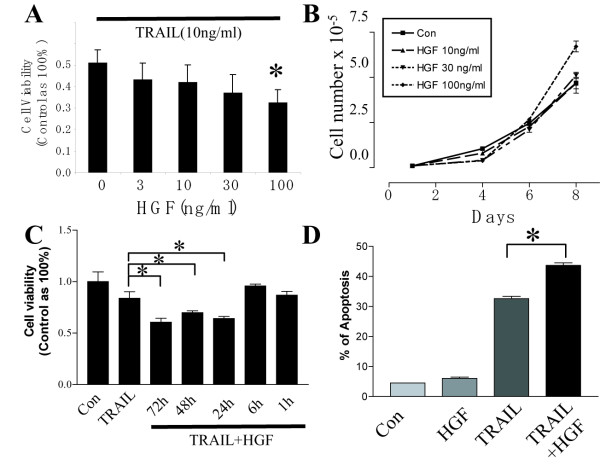
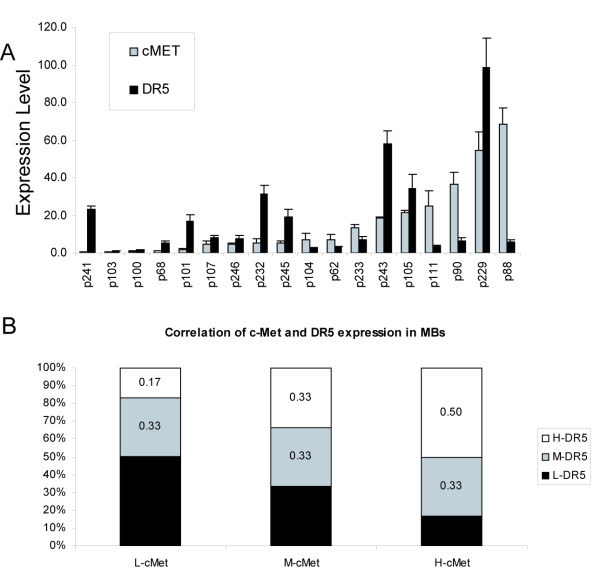
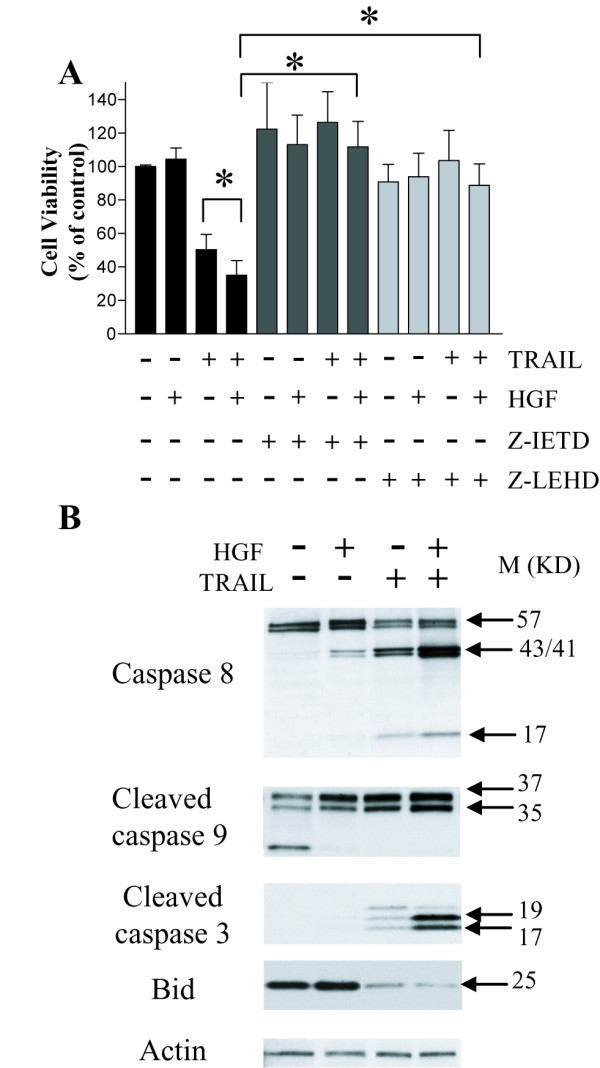
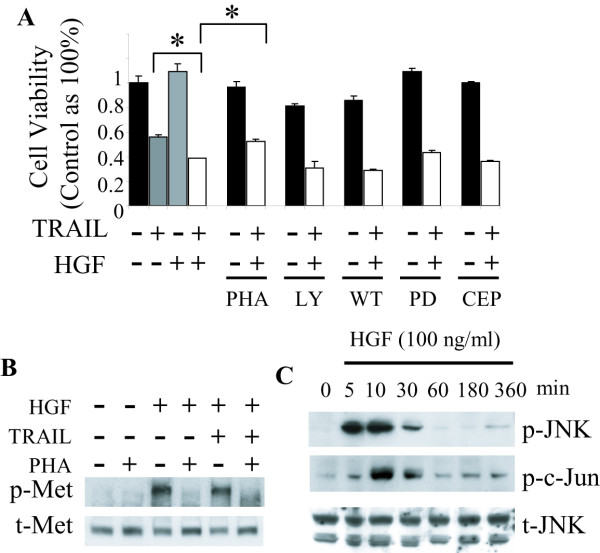
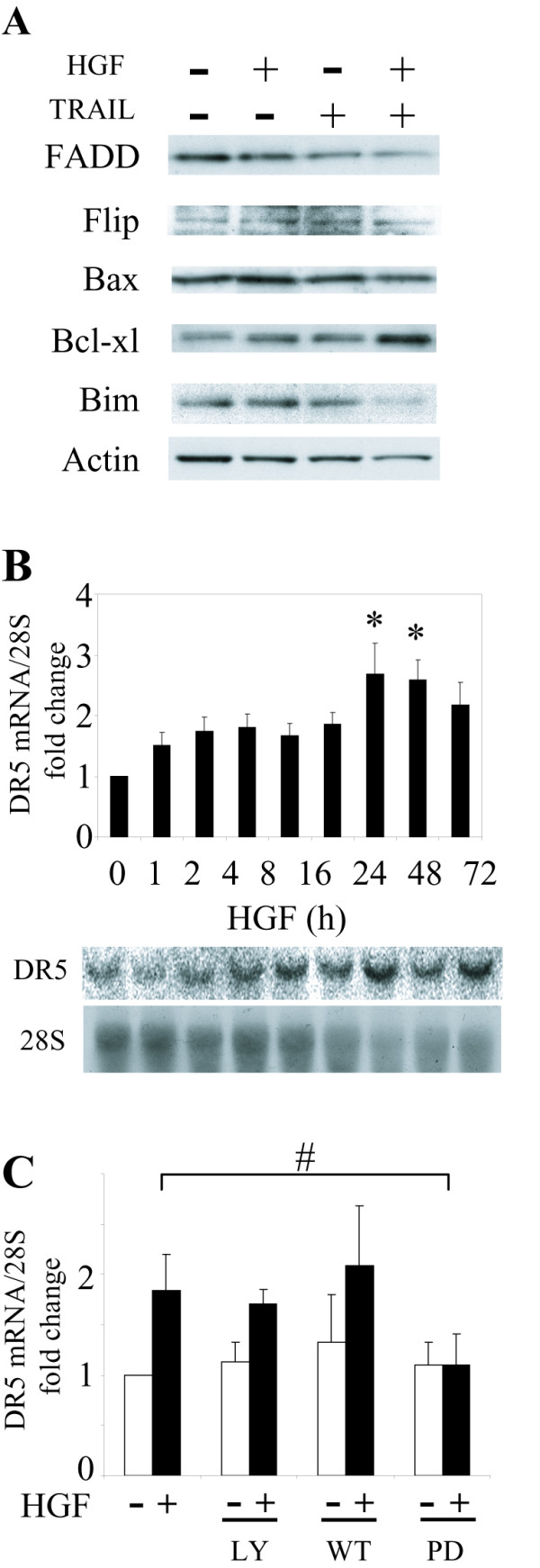
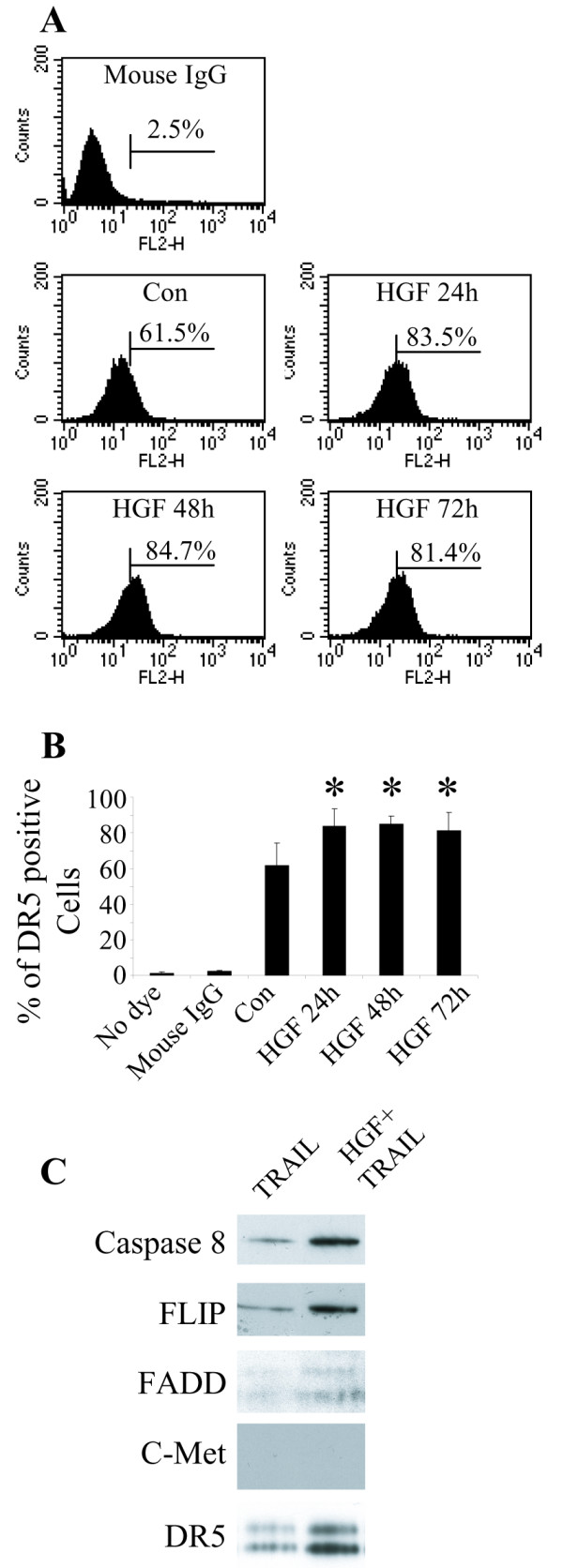
In this study, we show that HGF promotes medulloblastoma cell death induced by TRAIL. TRAIL alone triggered apoptosis in DAOY cells and death was enhanced by pre-treating the cells with HGF for 24-72 h prior to the addition of TRAIL. HGF (100 ng/ml) enhanced TRAIL (10 ng/ml) induced cell death by 36% (P<0.001). No cell death was associated with HGF alone. Treating cells with PHA-665752, a specific c-Met receptor tyrosine kinase inhibitor, significantly abrogated the enhancement of TRAIL-induced cell death by HGF, indicating that its death promoting effect requires activation of its canonical receptor tyrosine kinase. Cell death induced by TRAIL+HGF was predominately apoptotic involving both extrinsic and intrinsic pathways as evidenced by the increased activation of caspase-3, 8, 9. Promotion of apoptosis by HGF occurred via the increased expression of the death receptor DR5 and enhanced formation of death-inducing signal complexes (DISC).
Taken together, these and previous findings indicate that HGF:c-Met pathway either promotes or inhibits medulloblastoma cell death via pathway and context specific mechanisms.
肝细胞生长因子(HGF)及其受体c-MET在恶性胶质瘤以及包括髓母细胞瘤在内的胚胎神经外胚层肿瘤中普遍表达,并且似乎在这些恶性肿瘤的生长和扩散中发挥重要作用。根据细胞环境以及特定下游效应器的参与情况,HGF既有促凋亡作用,也有抗凋亡作用的报道。
用人髓母细胞瘤细胞用HGF处理24至72小时,然后用死亡受体配体TRAIL(肿瘤坏死因子相关凋亡诱导配体)处理24小时。通过MTT和膜联蛋白-V/PI流式细胞术分析测量细胞死亡情况。通过Northern印迹分析、定量逆转录-PCR、蛋白质印迹分析以及免疫沉淀法测量感兴趣靶标的表达水平变化。
在本研究中,我们表明HGF促进TRAIL诱导的髓母细胞瘤细胞死亡。单独的TRAIL在DAOY细胞中引发凋亡,并且在添加TRAIL之前用HGF预处理细胞24至72小时可增强细胞死亡。HGF(100 ng/ml)使TRAIL(10 ng/ml)诱导的细胞死亡增加了36%(P<0.001)。单独的HGF未引起细胞死亡。用特异性c-Met受体酪氨酸激酶抑制剂PHA-665752处理细胞,可显著消除HGF对TRAIL诱导的细胞死亡的增强作用,表明其促死亡作用需要激活其经典受体酪氨酸激酶。TRAIL+HGF诱导的细胞死亡主要是凋亡性的,涉及外源性和内源性途径,这通过半胱天冬酶-3、8、9的激活增加得以证明。HGF通过增加死亡受体DR5的表达以及增强死亡诱导信号复合物(DISC)的形成来促进凋亡。
综上所述,这些以及先前的研究结果表明,HGF:c-Met途径通过途径和环境特异性机制促进或抑制髓母细胞瘤细胞死亡。