Tosoni Annalisa, Galati Gaspare, Romani Gian Luca, Corbetta Maurizio
Department of Clinical Sciences and Bioimaging, Institute for Advanced Biomedical Technologies, G. d'Annunzio Foundation, Via dei Vestini 31, Chieti 66013, Italy.
Nat Neurosci. 2008 Dec;11(12):1446-53. doi: 10.1038/nn.2221. Epub 2008 Nov 9.
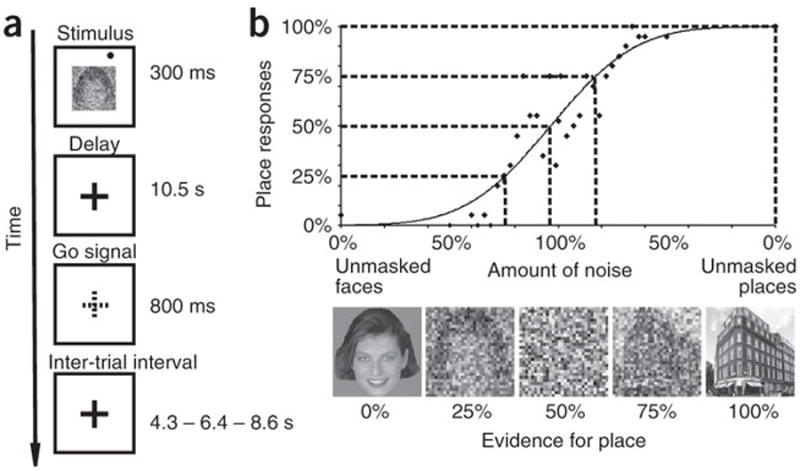
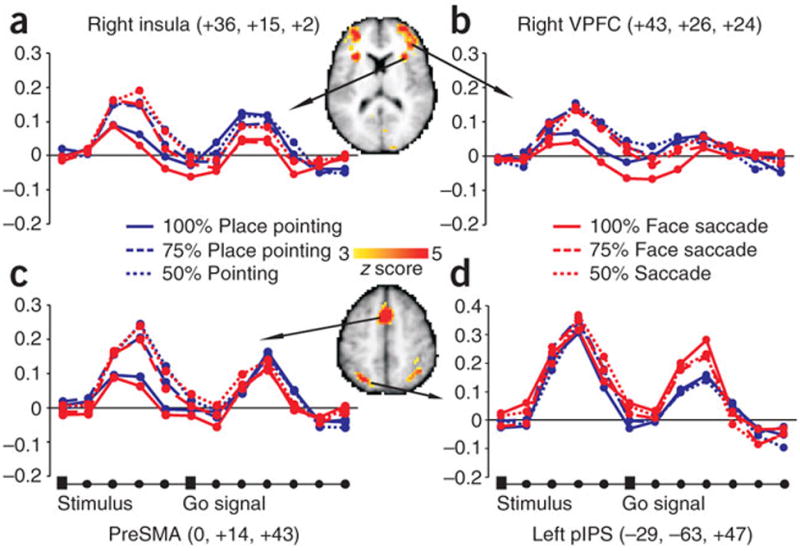
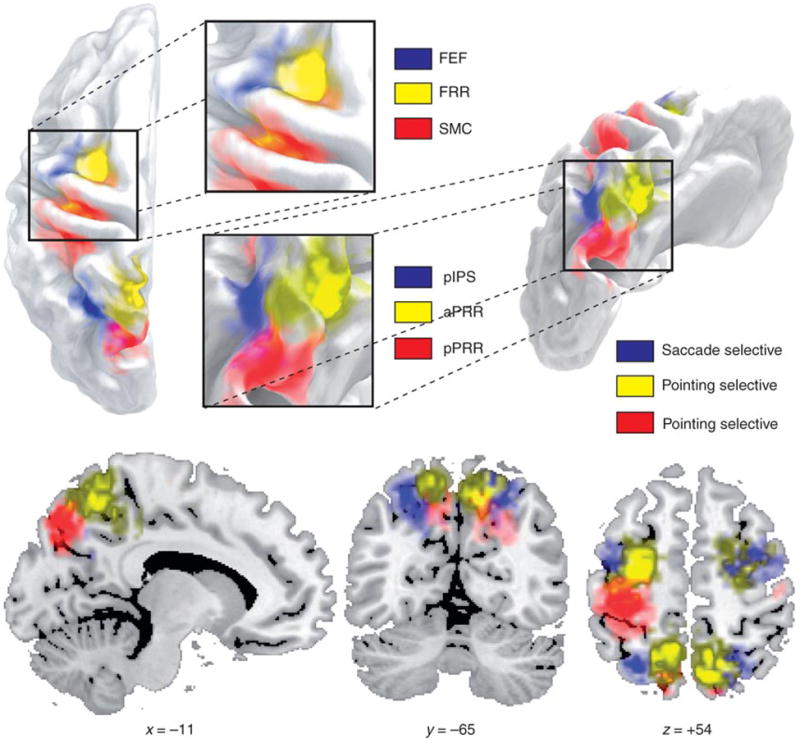
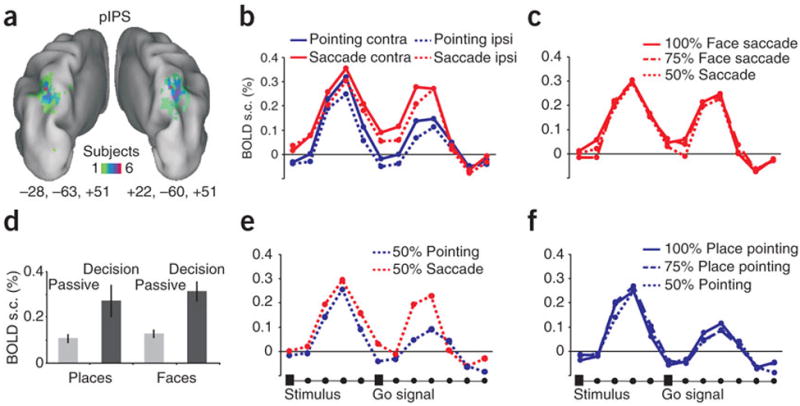
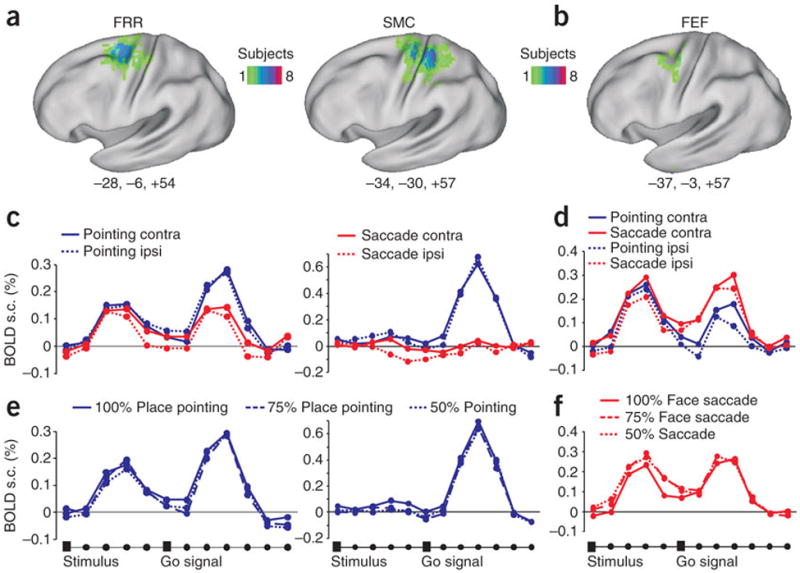
The neural mechanism underlying simple perceptual decision-making in monkeys has been recently conceptualized as an integrative process in which sensory evidence supporting different response options accumulates gradually over time. For example, intraparietal neurons accumulate motion information in favor of a specific oculomotor choice over time. It is unclear, however, whether this mechanism generalizes to more complex decisions that are based on arbitrary stimulus-response associations. In a task requiring arbitrary association of visual stimuli (faces or places) with different actions (eye or hand-pointing movements), we found that activity of effector-specific regions in human posterior parietal cortex reflected the 'strength' of the sensory evidence in favor of the preferred response. These regions did not respond to sensory stimuli per se but integrated sensory evidence toward the decision outcome. We conclude that even arbitrary decisions can be mediated by sensory-motor mechanisms that are completely triggered by contextual stimulus-response associations.
猴子简单感知决策背后的神经机制最近被概念化为一个整合过程,在这个过程中,支持不同反应选项的感觉证据会随着时间逐渐积累。例如,顶内神经元会随着时间积累有利于特定眼动选择的运动信息。然而,尚不清楚这种机制是否适用于基于任意刺激-反应关联的更复杂决策。在一项要求将视觉刺激(面部或地点)与不同动作(眼睛或手指指向动作)进行任意关联的任务中,我们发现人类后顶叶皮层中效应器特异性区域的活动反映了支持首选反应的感觉证据的“强度”。这些区域本身对感觉刺激没有反应,而是将感觉证据整合到决策结果中。我们得出结论,即使是任意决策也可以由完全由情境刺激-反应关联触发的感觉运动机制介导。