Hong Dong-Pyo, Fink Anthony L, Uversky Vladimir N
Department of Chemistry and Biochemistry, University of California at Santa Cruz, Santa Cruz, California 95064, USA.
Biochim Biophys Acta. 2009 Feb;1794(2):282-90. doi: 10.1016/j.bbapap.2008.09.026. Epub 2008 Oct 25.
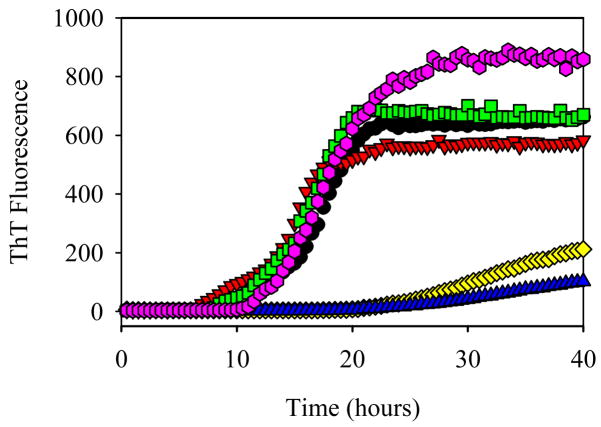
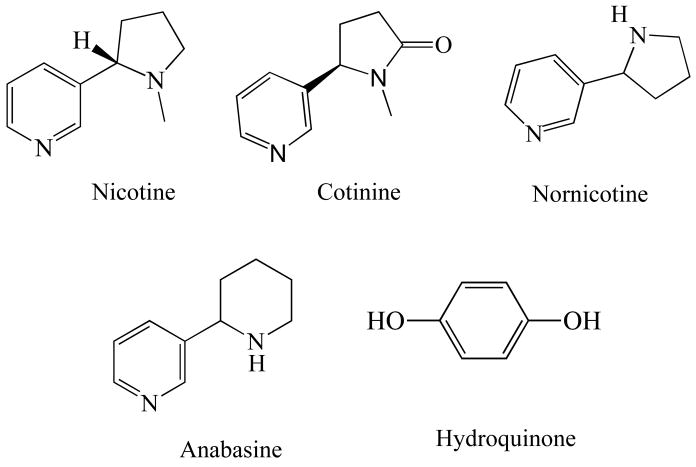
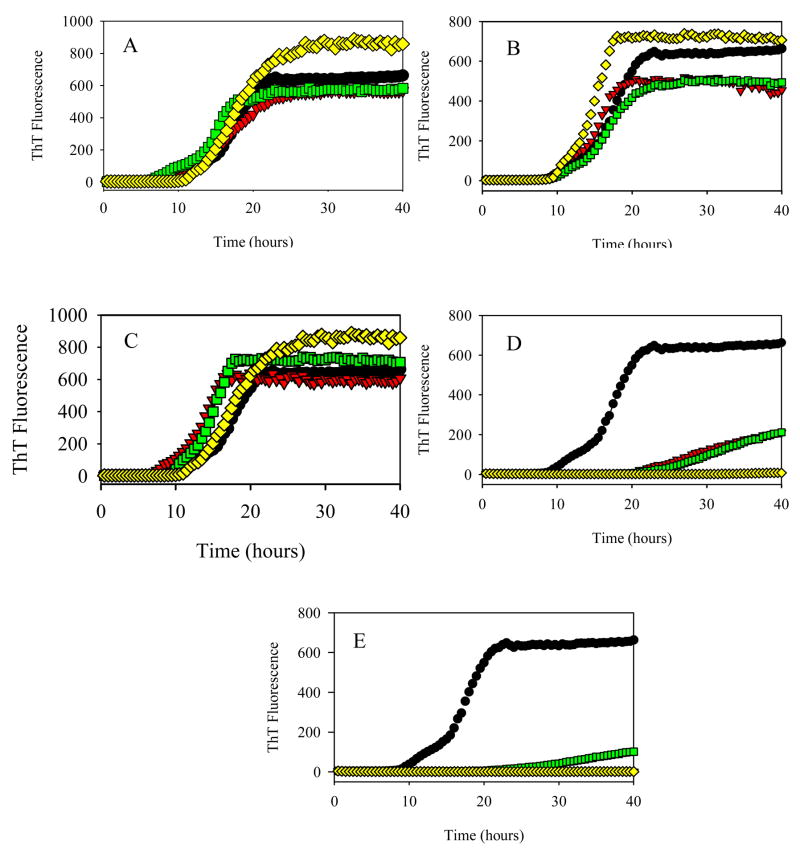
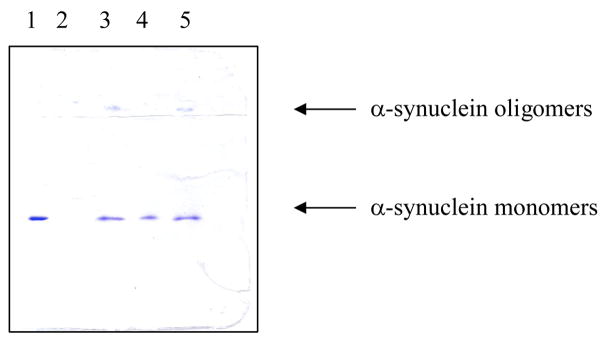
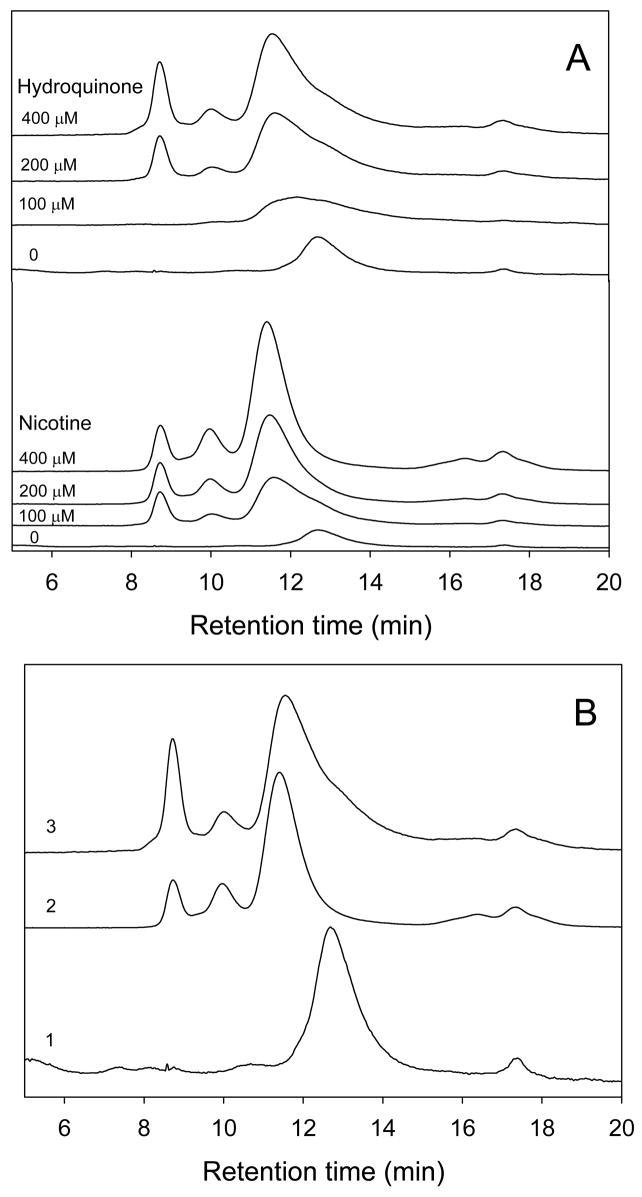
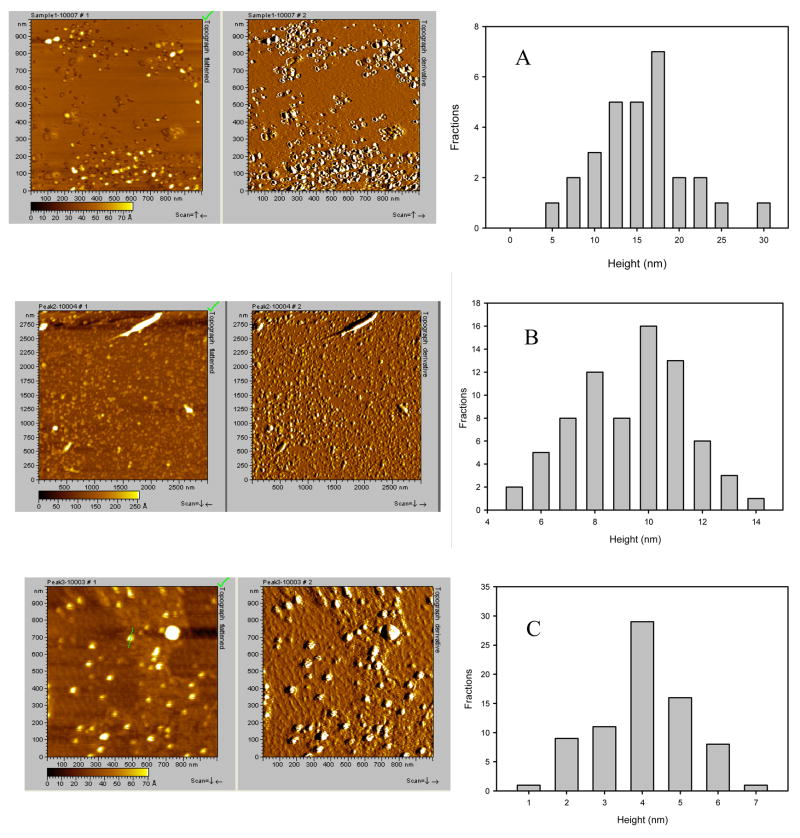
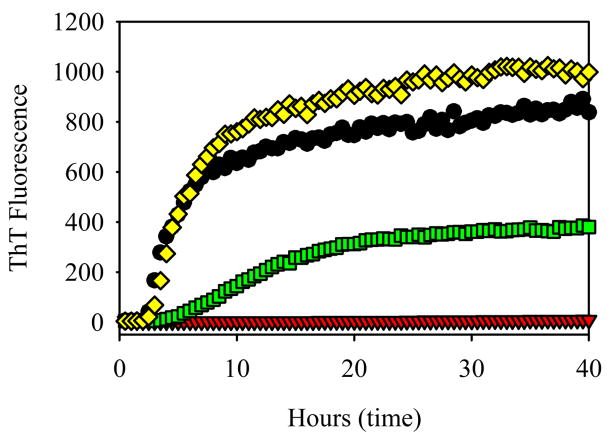
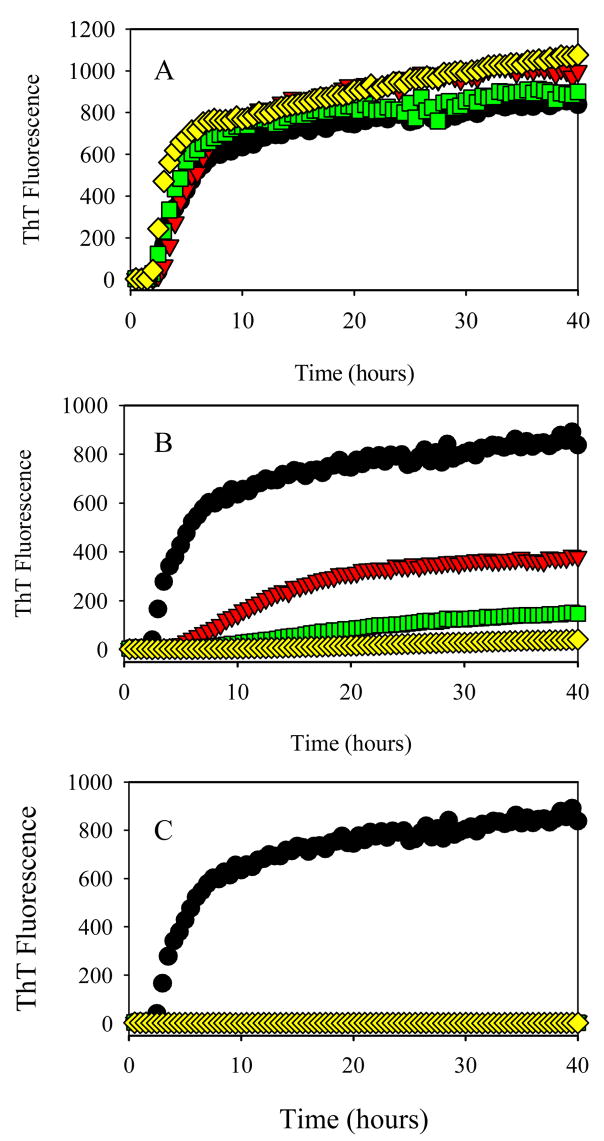
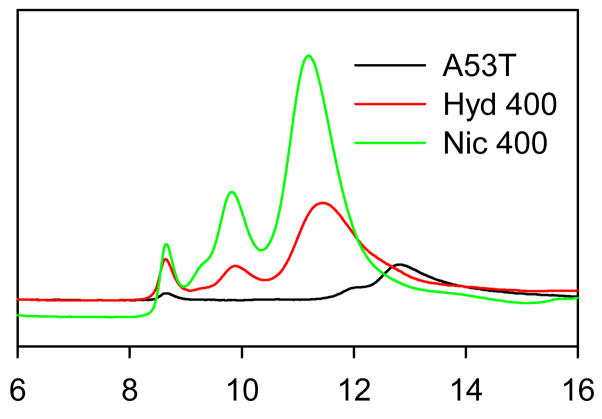
alpha-synuclein is a small presynaptic protein (14,460 D) that is abundantly distributed in the brain. Although, its function is unknown, the aggregated form of alpha-synuclein is a pathological hallmark of several neurodegenerative diseases, including Parkinson's disease (PD). Epidemiological studies have shown that smoking can lessen the incidence of Parkinson's disease, indicating that smoke may contain chemicals that are neuro-protective. The fibrillation of alpha-synuclein was studied in relation to five different compounds found in cigarette smoke: anabasine, cotinine, hydroquinone, nicotine and nornicotine. Thioflavin T assays, gel electrophoresis, size exclusion chromatography-high performance liquid chromatography (SEC-HPLC) and atomic force microscopy (AFM) were utilized to monitor the rate of alpha-synuclein fibrillation and the inhibitory effects of the cigarette smoke components. We show that nicotine and hydroquinone inhibit alpha-synuclein fibril formation in a concentration-dependent manner, with nicotine being more effective. The SEC-HPLC data show that nicotine and hydroquinone stabilize soluble oligomers. The morphology of the oligomers stabilized by nicotine was evaluated by AFM, which showed the presence of three stable oligomers with an average height of 16 nm, 10 nm and 4 nm. Comparable results were obtained for the effect of the cigarette smoke components on the A53T mutant fibrillation. These results show that nicotine and hydroquinone inhibit alpha-synuclein fibrillation and stabilize soluble oligomeric forms. This information can be used to understand the molecular mechanism of the nicotine and hydroquinone action to develop therapeutic solutions for PD.
α-突触核蛋白是一种小的突触前蛋白(14,460道尔顿),在大脑中广泛分布。尽管其功能尚不清楚,但α-突触核蛋白的聚集形式是包括帕金森病(PD)在内的几种神经退行性疾病的病理标志。流行病学研究表明,吸烟可降低帕金森病的发病率,这表明烟雾中可能含有具有神经保护作用的化学物质。研究了α-突触核蛋白的纤维化与香烟烟雾中发现的五种不同化合物的关系:新烟草碱、可替宁、对苯二酚、尼古丁和去甲烟碱。利用硫黄素T检测、凝胶电泳、尺寸排阻色谱-高效液相色谱(SEC-HPLC)和原子力显微镜(AFM)来监测α-突触核蛋白的纤维化速率以及香烟烟雾成分的抑制作用。我们发现尼古丁和对苯二酚以浓度依赖的方式抑制α-突触核蛋白纤维的形成,其中尼古丁更有效。SEC-HPLC数据表明尼古丁和对苯二酚可稳定可溶性寡聚体。通过AFM评估了由尼古丁稳定的寡聚体的形态,结果显示存在三种稳定的寡聚体,平均高度分别为16纳米、10纳米和4纳米。对于香烟烟雾成分对A53T突变体纤维化的影响也获得了类似的结果。这些结果表明尼古丁和对苯二酚抑制α-突触核蛋白纤维化并稳定可溶性寡聚体形式。这些信息可用于理解尼古丁和对苯二酚作用的分子机制,以开发针对帕金森病的治疗方案。