Philibert Robert A, Zadorozhnyaya Olga, Beach Steven R H, Brody Gene H
Department of Psychiatry, The University of Iowa, Iowa City, IA, 52242-1000, USA.
Psychiatr Genet. 2008 Dec;18(6):275-81. doi: 10.1097/YPG.0b013e3283060f81.
Traditionally, large scale genotyping projects have used DNA derived from whole-blood or lymphoblast cell lines. But over the past several years, a number of investigators have begun to use DNA prepared from saliva for genotyping studies, particularly for use in behavioral genetic studies. However, the comparability of DNA from these two sources has not been rigorously analyzed by unbiased sources.
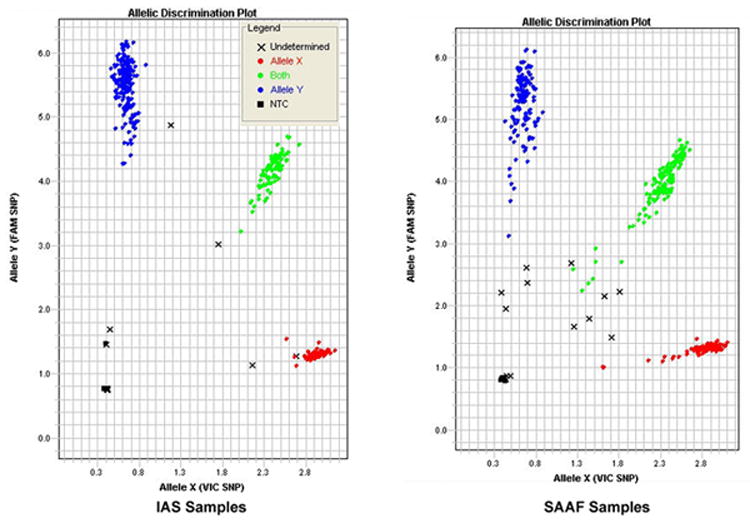
In this communication, we compare the single nucleotide polymorphism genotyping results from DNA derived from whole-blood samples obtained from 474 participants from the Iowa Adoption Studies with that of saliva samples prepared from 555 members of the Strong African-American Families project.
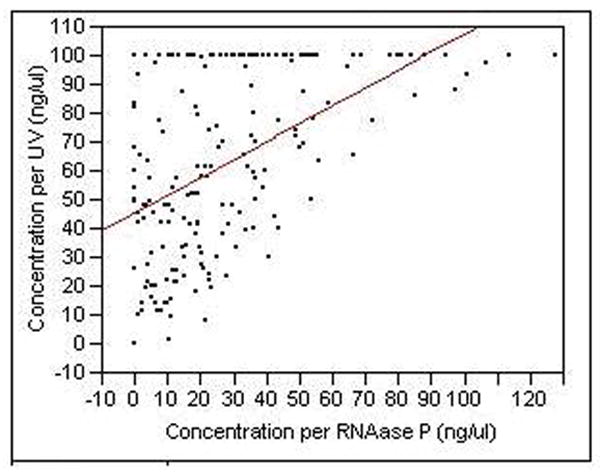
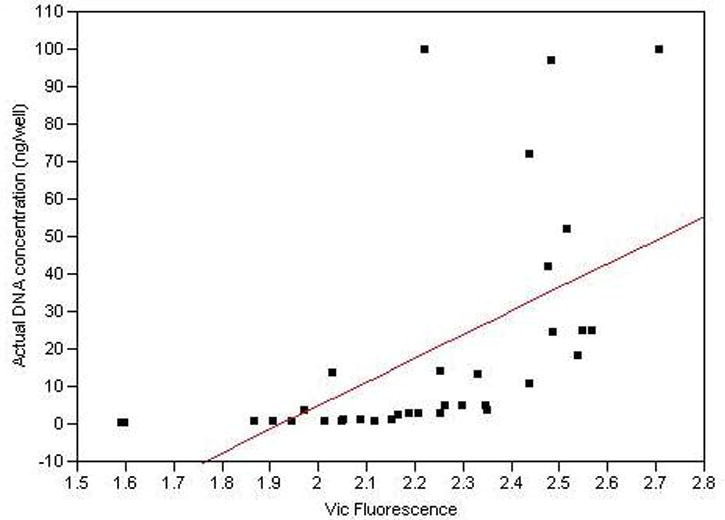
We found that DNA prepared from whole-blood performed significantly better than that prepared from saliva. Genotyping success was significantly associated with the concentration of human DNA in the saliva sample as determined by quantitative PCR, but not with the total amount of DNA as determined by UV spectroscopy.
We conclude that investigators contemplating the choice of source materials of DNA for genotyping studies will need to balance the ease and economy of saliva-based DNA collection methods with the higher yields and rates of genotyping calls associated with DNA prepared from whole-blood.
传统上,大规模基因分型项目使用来自全血或淋巴母细胞系的DNA。但在过去几年中,一些研究人员已开始使用从唾液中提取的DNA进行基因分型研究,特别是用于行为遗传学研究。然而,来自这两种来源的DNA的可比性尚未得到无偏倚来源的严格分析。
在本交流中,我们比较了来自爱荷华收养研究的474名参与者全血样本的DNA与来自强大非裔美国家庭项目的555名成员唾液样本的单核苷酸多态性基因分型结果。
我们发现,从全血中提取的DNA表现明显优于从唾液中提取的DNA。基因分型成功率与通过定量PCR测定的唾液样本中人类DNA浓度显著相关,但与通过紫外光谱测定的DNA总量无关。
我们得出结论,考虑为基因分型研究选择DNA来源材料的研究人员需要在基于唾液的DNA收集方法的简便性和经济性与从全血中提取的DNA更高的产量和基因分型检出率之间进行权衡。