Qu P, Chu H, Ibrahim J G, Peacock J, Shen X J, Tepper J, Sandler R S, Keku T O
Cancer Research and Biostatistics (CRAB), 1730 Minor Ave Suite 1900, Seattle, WA 98101, USA.
Br J Cancer. 2008 Dec 16;99(12):2001-5. doi: 10.1038/sj.bjc.6604792. Epub 2008 Nov 18.
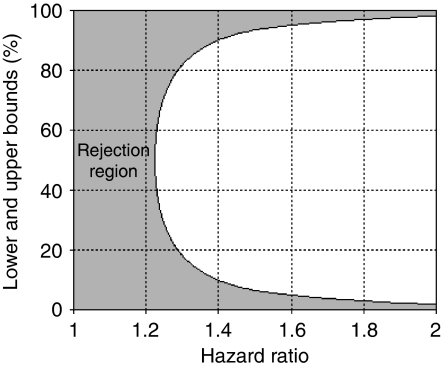
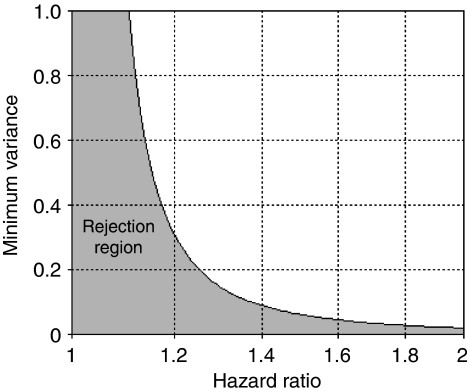
The evaluation of tumour molecular markers may be beneficial in prognosis and predictive in therapy. We develop a stopping rule approach to assist in the efficient utilisation of resources and samples involved in such evaluations. This approach has application in determining whether a specific molecular marker has sufficient variability to yield meaningful results after the evaluation of molecular markers in the first n patients in a study of sample size N (n</=N). We evaluated colorectal tumours for mutations (microsatellite instability, K-ras, B-raf, PI3 kinase, and TGFbetaR-II) by PCR and protein markers (Bcl2, cyclin D1, E-cadherin, hMLH1, ki67, MDM2, and P53) by immunohistochemistry. Using this method, we identified and abandoned potentially uninformative molecular markers in favour of more promising candidates. This approach conserves tissue resources, time, and money, and may be applicable to other studies.
肿瘤分子标志物的评估在预后判断和治疗预测方面可能具有重要意义。我们开发了一种停止规则方法,以协助有效利用此类评估中涉及的资源和样本。该方法可用于确定在样本量为N(n≤N)的研究中,对前n例患者进行分子标志物评估后,特定分子标志物是否具有足够的变异性以产生有意义的结果。我们通过聚合酶链反应(PCR)评估结直肠癌肿瘤的突变(微卫星不稳定性、K-ras、B-raf、PI3激酶和TGFβR-II),并通过免疫组织化学评估蛋白质标志物(Bcl2、细胞周期蛋白D1、E-钙黏蛋白、hMLH1、ki67、MDM2和P53)。使用这种方法,我们识别并舍弃了潜在无信息价值的分子标志物,转而选择更有前景的候选标志物。这种方法节省了组织资源、时间和金钱,并且可能适用于其他研究。