Oshima Shigeru, Turer Emre E, Callahan Joseph A, Chai Sophia, Advincula Rommel, Barrera Julio, Shifrin Nataliya, Lee Bettina, Benedict Yen T S, Woo Tammy, Malynn Barbara A, Ma Averil
Department of Medicine, University of California at San Francisco, 513 Parnassus Avenue, S-1057, San Francisco, California 94143-0451, USA.
Nature. 2009 Feb 12;457(7231):906-9. doi: 10.1038/nature07575. Epub 2008 Dec 7.
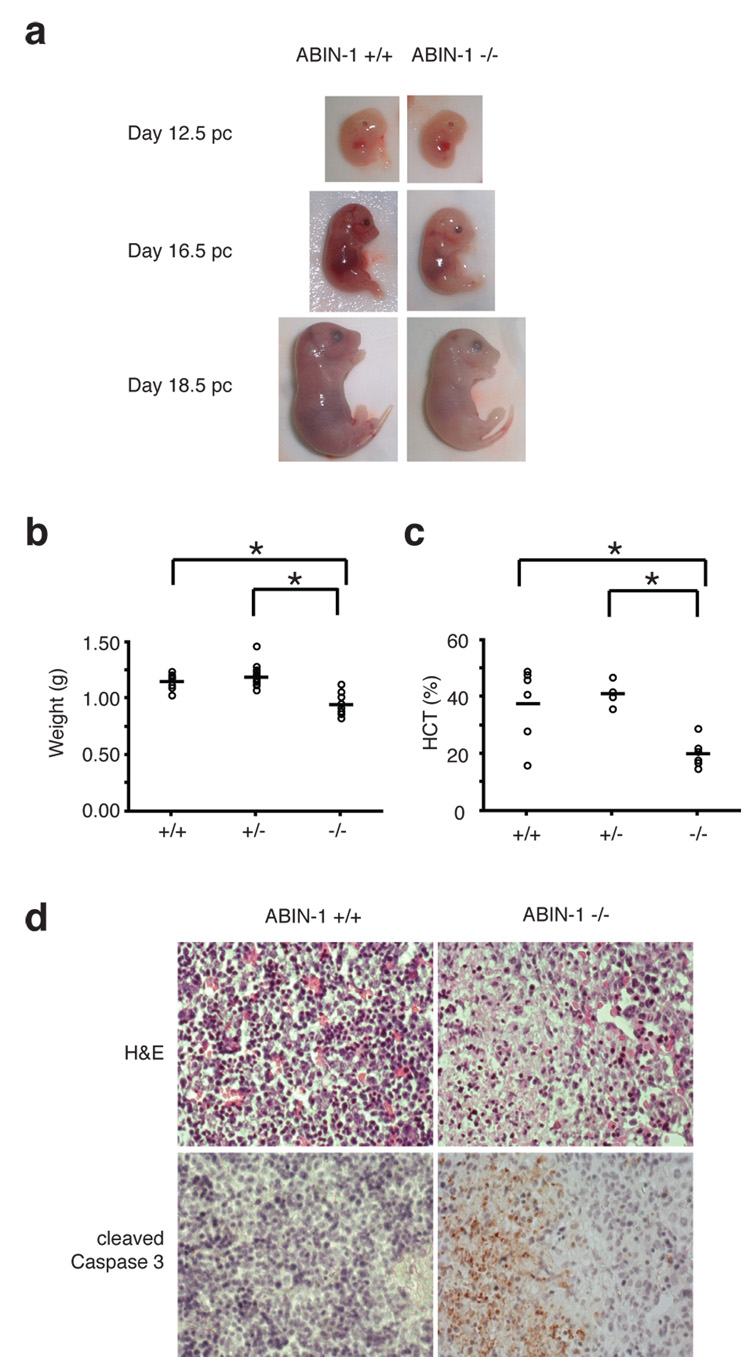
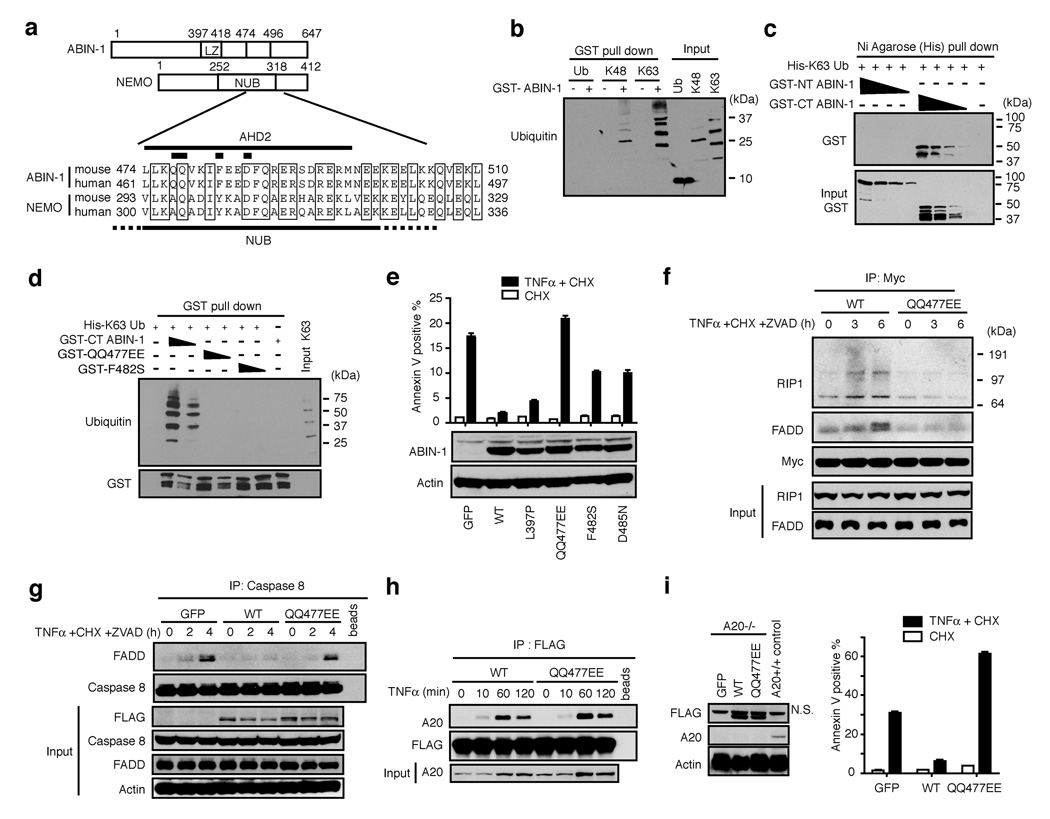
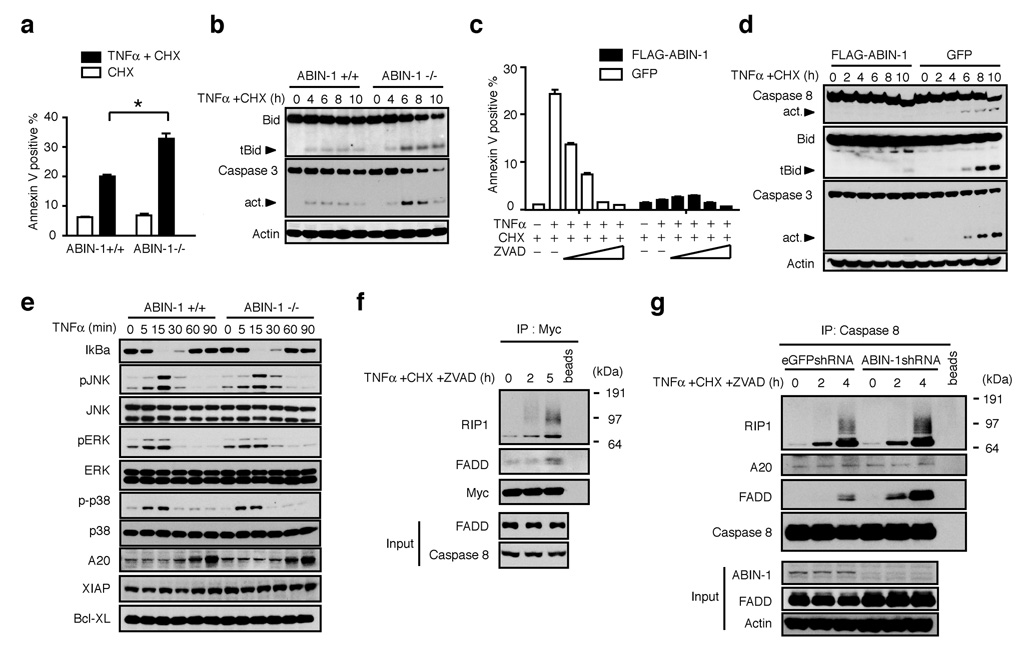
Proteins that directly regulate tumour necrosis factor receptor (TNFR) signalling have critical roles in regulating cellular activation and survival. ABIN-1 (A20 binding and inhibitor of NF-kappaB) is a novel protein that is thought to inhibit NF-kappaB signalling. Here we show that mice deficient for ABIN-1 die during embryogenesis with fetal liver apoptosis, anaemia and hypoplasia. ABIN-1 deficient cells are hypersensitive to tumour necrosis factor (TNF)-induced programmed cell death, and TNF deficiency rescues ABIN-1 deficient embryos. ABIN-1 inhibits caspase 8 recruitment to FADD (Fas-associated death domain-containing protein) in TNF-induced signalling complexes, preventing caspase 8 cleavage and programmed cell death. Moreover, ABIN-1 directly binds polyubiquitin chains and this ubiquitin sensing activity is required for ABIN-1's anti-apoptotic activity. These studies provide insights into how ubiquitination and ubiquitin sensing proteins regulate cellular and organismal survival.
直接调节肿瘤坏死因子受体(TNFR)信号传导的蛋白质在调节细胞活化和存活中起关键作用。ABIN-1(A20结合蛋白及核因子κB抑制剂)是一种新型蛋白质,被认为可抑制核因子κB信号传导。我们在此表明,ABIN-1基因缺陷的小鼠在胚胎发育过程中因胎儿肝脏凋亡、贫血和发育不全而死亡。ABIN-1基因缺陷的细胞对肿瘤坏死因子(TNF)诱导的程序性细胞死亡高度敏感,而TNF缺陷可挽救ABIN-1基因缺陷的胚胎。ABIN-1在TNF诱导的信号复合物中抑制半胱天冬酶8募集至FADD(含Fas相关死亡结构域蛋白),从而防止半胱天冬酶8裂解和程序性细胞死亡。此外,ABIN-1直接结合多聚泛素链,这种泛素感知活性是ABIN-1抗凋亡活性所必需的。这些研究为泛素化和泛素感知蛋白如何调节细胞和机体存活提供了见解。