Lyssenko Valeriya, Nagorny Cecilia L F, Erdos Michael R, Wierup Nils, Jonsson Anna, Spégel Peter, Bugliani Marco, Saxena Richa, Fex Malin, Pulizzi Nicolo, Isomaa Bo, Tuomi Tiinamaija, Nilsson Peter, Kuusisto Johanna, Tuomilehto Jaakko, Boehnke Michael, Altshuler David, Sundler Frank, Eriksson Johan G, Jackson Anne U, Laakso Markku, Marchetti Piero, Watanabe Richard M, Mulder Hindrik, Groop Leif
Department of Clinical Sciences in Malmoe, Unit of Diabetes and Endocrinology, Lund University Diabetes Centre, University Hospital, Malmoe, Sweden.
Nat Genet. 2009 Jan;41(1):82-8. doi: 10.1038/ng.288. Epub 2008 Dec 7.
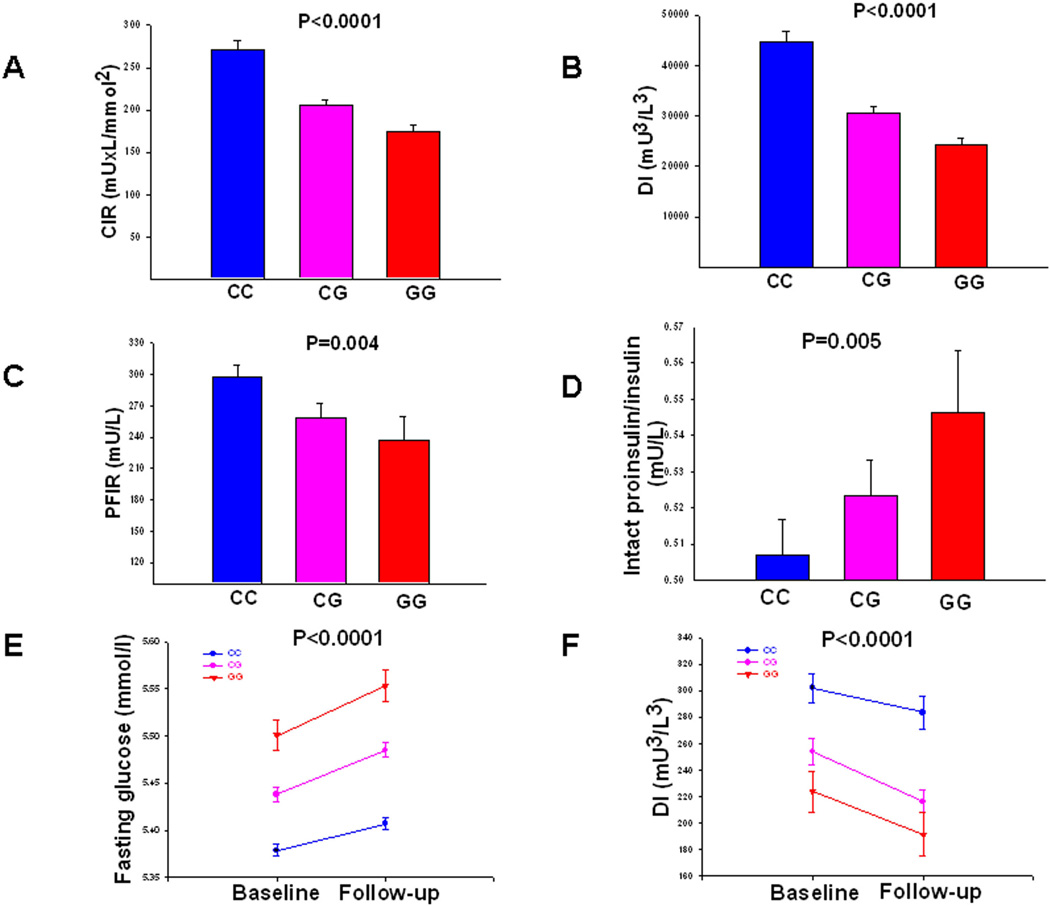
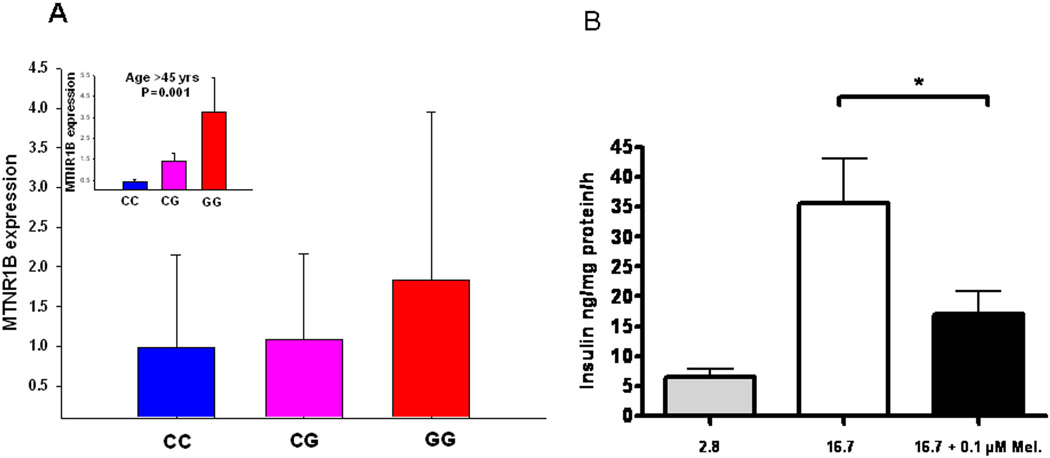
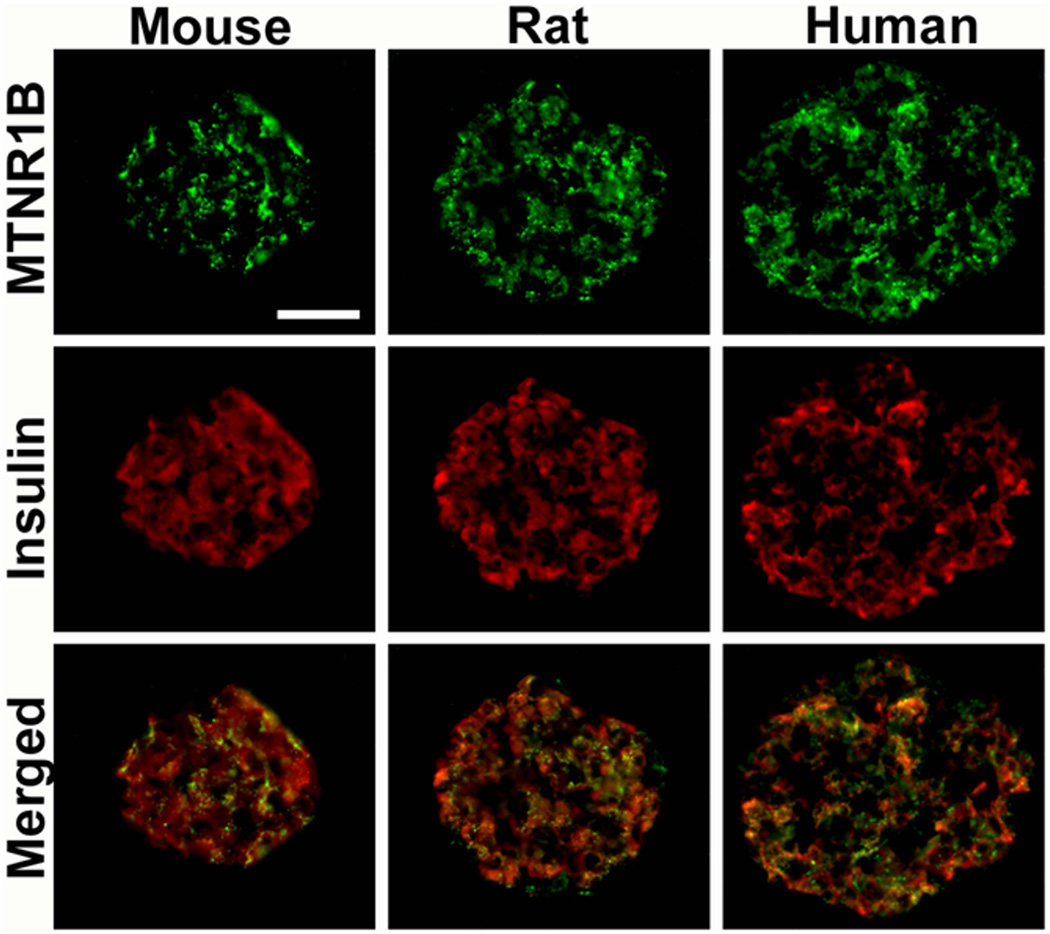
Genome-wide association studies have shown that variation in MTNR1B (melatonin receptor 1B) is associated with insulin and glucose concentrations. Here we show that the risk genotype of this SNP predicts future type 2 diabetes (T2D) in two large prospective studies. Specifically, the risk genotype was associated with impairment of early insulin response to both oral and intravenous glucose and with faster deterioration of insulin secretion over time. We also show that the MTNR1B mRNA is expressed in human islets, and immunocytochemistry confirms that it is primarily localized in beta cells in islets. Nondiabetic individuals carrying the risk allele and individuals with T2D showed increased expression of the receptor in islets. Insulin release from clonal beta cells in response to glucose was inhibited in the presence of melatonin. These data suggest that the circulating hormone melatonin, which is predominantly released from the pineal gland in the brain, is involved in the pathogenesis of T2D. Given the increased expression of MTNR1B in individuals at risk of T2D, the pathogenic effects are likely exerted via a direct inhibitory effect on beta cells. In view of these results, blocking the melatonin ligand-receptor system could be a therapeutic avenue in T2D.
全基因组关联研究表明,MTNR1B(褪黑素受体1B)的变异与胰岛素和葡萄糖浓度有关。在此我们表明,在两项大型前瞻性研究中,该单核苷酸多态性的风险基因型可预测未来的2型糖尿病(T2D)。具体而言,风险基因型与口服和静脉注射葡萄糖后早期胰岛素反应受损以及胰岛素分泌随时间的更快恶化有关。我们还表明,MTNR1B mRNA在人胰岛中表达,免疫细胞化学证实其主要定位于胰岛中的β细胞。携带风险等位基因的非糖尿病个体和T2D个体的胰岛中该受体的表达增加。在褪黑素存在的情况下,克隆β细胞对葡萄糖的胰岛素释放受到抑制。这些数据表明,主要由大脑中的松果体释放的循环激素褪黑素参与了T2D的发病机制。鉴于MTNR1B在T2D风险个体中的表达增加,其致病作用可能是通过对β细胞的直接抑制作用来发挥的。鉴于这些结果,阻断褪黑素配体 - 受体系统可能是T2D的一种治疗途径。