Urbonaviciute Vilma, Fürnrohr Barbara G, Meister Silke, Munoz Luis, Heyder Petra, De Marchis Francesco, Bianchi Marco E, Kirschning Carsten, Wagner Hermann, Manfredi Angelo A, Kalden Joachim R, Schett Georg, Rovere-Querini Patrizia, Herrmann Martin, Voll Reinhard E
Interdisciplinary Center of Clinical Research (IZKF), Research Group N2, Nikolaus Fiebiger Center of Molecular Medicine, University Hospital Erlangen, University of Erlangen-Nuremberg, Erlangen, Germany.
J Exp Med. 2008 Dec 22;205(13):3007-18. doi: 10.1084/jem.20081165. Epub 2008 Dec 8.
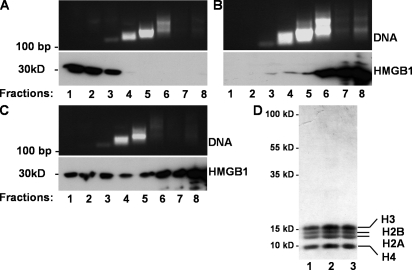
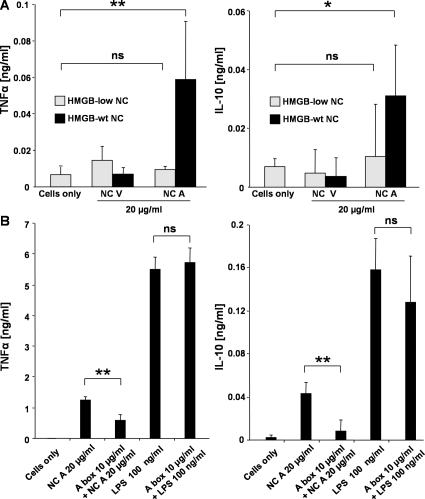
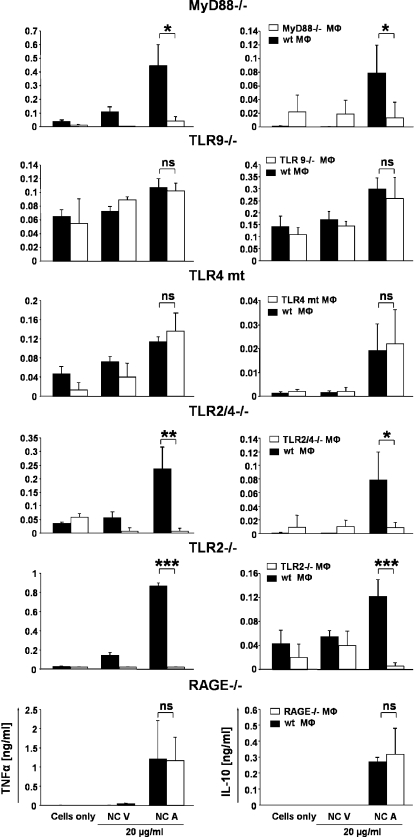
Autoantibodies against double-stranded DNA (dsDNA) and nucleosomes represent a hallmark of systemic lupus erythematosus (SLE). However, the mechanisms involved in breaking the immunological tolerance against these poorly immunogenic nuclear components are not fully understood. Impaired phagocytosis of apoptotic cells with consecutive release of nuclear antigens may contribute to the immune pathogenesis. The architectural chromosomal protein and proinflammatory mediator high mobility group box protein 1 (HMGB1) is tightly attached to the chromatin of apoptotic cells. We demonstrate that HMGB1 remains bound to nucleosomes released from late apoptotic cells in vitro. HMGB1-nucleosome complexes were also detected in plasma from SLE patients. HMGB1-containing nucleosomes from apoptotic cells induced secretion of interleukin (IL) 1beta, IL-6, IL-10, and tumor necrosis factor (TNF) alpha and expression of costimulatory molecules in macrophages and dendritic cells (DC), respectively. Neither HMGB1-free nucleosomes from viable cells nor nucleosomes from apoptotic cells lacking HMGB1 induced cytokine production or DC activation. HMGB1-containing nucleosomes from apoptotic cells induced anti-dsDNA and antihistone IgG responses in a Toll-like receptor (TLR) 2-dependent manner, whereas nucleosomes from living cells did not. In conclusion, HMGB1-nucleosome complexes activate antigen presenting cells and, thereby, may crucially contribute to the pathogenesis of SLE via breaking the immunological tolerance against nucleosomes/dsDNA.
抗双链DNA(dsDNA)和核小体的自身抗体是系统性红斑狼疮(SLE)的一个标志。然而,打破对这些免疫原性较差的核成分的免疫耐受所涉及的机制尚未完全明确。凋亡细胞吞噬功能受损并随之释放核抗原可能参与了免疫发病机制。构架染色体蛋白和促炎介质高迁移率族蛋白1(HMGB1)紧密附着于凋亡细胞的染色质。我们证明,在体外HMGB1仍与晚期凋亡细胞释放的核小体结合。在SLE患者的血浆中也检测到了HMGB1-核小体复合物。凋亡细胞中含HMGB1的核小体分别诱导巨噬细胞和树突状细胞(DC)分泌白细胞介素(IL)-1β、IL-6、IL-10和肿瘤坏死因子(TNF)α,并诱导共刺激分子表达。来自活细胞的不含HMGB1的核小体或缺乏HMGB1的凋亡细胞的核小体均未诱导细胞因子产生或DC活化。凋亡细胞中含HMGB1的核小体以Toll样受体(TLR)2依赖的方式诱导抗dsDNA和抗组蛋白IgG反应,而活细胞的核小体则无此作用。总之,HMGB1-核小体复合物激活抗原呈递细胞,从而可能通过打破对核小体/dsDNA的免疫耐受对SLE的发病机制起关键作用。