Beyrouthy Maroun J, Alexander Karen E, Baldwin Amy, Whitfield Michael L, Bass Hank W, McGee Dan, Hurt Myra M
Department of Biomedical Sciences, College of Medicine, Florida State University, Tallahassee, Florida, United States of America.
PLoS One. 2008;3(12):e3943. doi: 10.1371/journal.pone.0003943. Epub 2008 Dec 15.
Obtaining synchronous cell populations is essential for cell-cycle studies. Methods such as serum withdrawal or use of drugs which block cells at specific points in the cell cycle alter cellular events upon re-entry into the cell cycle. Regulatory events occurring in early G1 phase of a new cell cycle could have been overlooked.
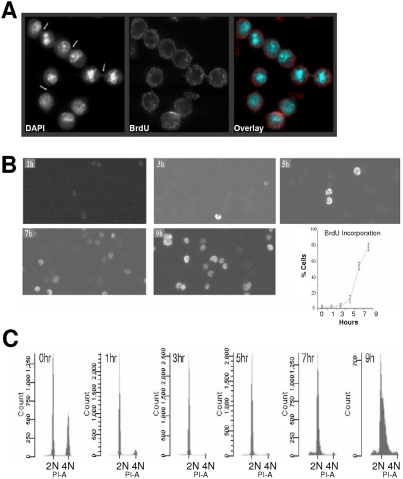
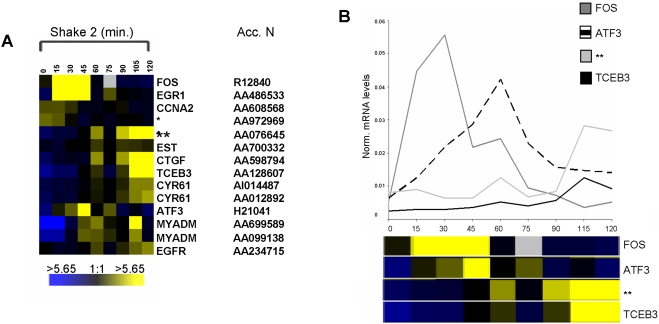
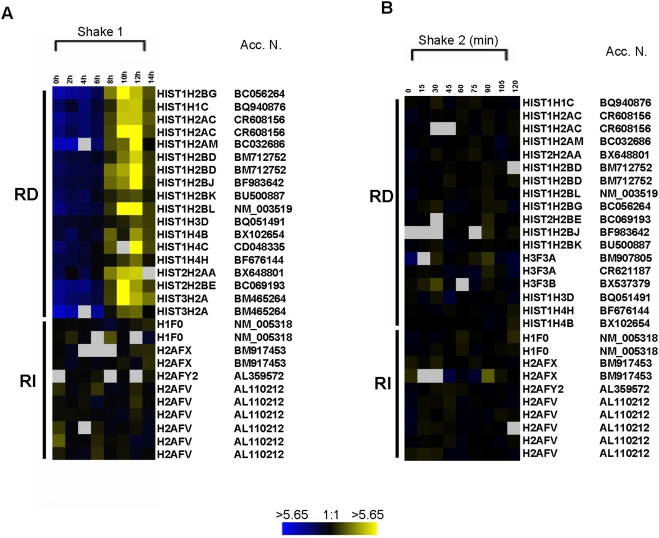
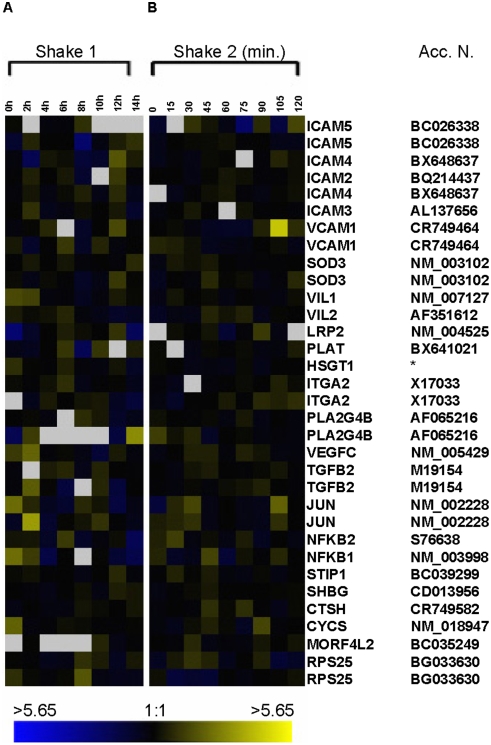
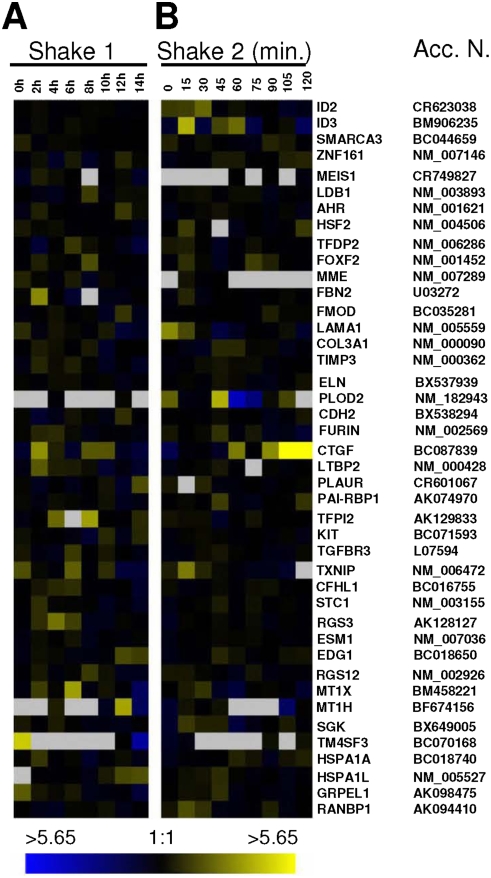
We used a robotic mitotic shake-off apparatus to select cells in late mitosis for genome-wide gene expression studies. Two separate microarray experiments were conducted, one which involved isolation of RNA hourly for several hours from synchronous cell populations, and one experiment which examined gene activity every 15 minutes from late telophase of mitosis into G1 phase. To verify synchrony of the cell populations under study, we utilized methods including BrdU uptake, FACS, and microarray analyses of histone gene activity. We also examined stress response gene activity. Our analysis enabled identification of 200 early G1-regulated genes, many of which currently have unknown functions. We also confirmed the expression of a set of genes candidates (fos, atf3 and tceb) by qPCR to further validate the newly identified genes.
Genome-scale expression analyses of the first two hours of G1 in naturally cycling cells enabled the discovery of a unique set of G1-regulated genes, many of which currently have unknown functions, in cells progressing normally through the cell division cycle. This group of genes may contain future targets for drug development and treatment of human disease.
获取同步细胞群体对于细胞周期研究至关重要。诸如血清饥饿或使用能在细胞周期特定点阻断细胞的药物等方法,会在细胞重新进入细胞周期时改变细胞事件。新细胞周期早期G1期发生的调控事件可能被忽视了。
我们使用了一种机器人有丝分裂振荡分离装置来选择处于有丝分裂后期的细胞进行全基因组基因表达研究。进行了两项独立的微阵列实验,一项是从同步细胞群体中每小时分离RNA,持续数小时;另一项实验是从有丝分裂末期到G1期每15分钟检测一次基因活性。为了验证所研究细胞群体的同步性,我们采用了包括BrdU摄取、流式细胞术以及组蛋白基因活性的微阵列分析等方法。我们还检测了应激反应基因活性。我们的分析鉴定出了200个早期G1调控基因,其中许多目前功能未知。我们还通过定量PCR证实了一组候选基因(fos、atf3和tceb)的表达,以进一步验证新鉴定的基因。
对自然循环细胞G1期最初两小时进行的全基因组表达分析,使得在正常通过细胞分裂周期的细胞中发现了一组独特的G1调控基因,其中许多目前功能未知。这组基因可能包含未来药物开发和人类疾病治疗的靶点。