Kweku Margaret, Liu Dongmei, Adjuik Martin, Binka Fred, Seidu Mahmood, Greenwood Brian, Chandramohan Daniel
London School of Hygiene and Tropical Medicine, London, United Kingdom.
PLoS One. 2008;3(12):e4000. doi: 10.1371/journal.pone.0004000. Epub 2008 Dec 22.
Malaria and anaemia are the leading causes of morbidity and mortality in children in sub-Saharan Africa. We have investigated the effect of intermittent preventive treatment with sulphadoxine-pyrimethamine or artesunate plus amodiaquine on anaemia and malaria in children in an area of intense, prolonged, seasonal malaria transmission in Ghana.
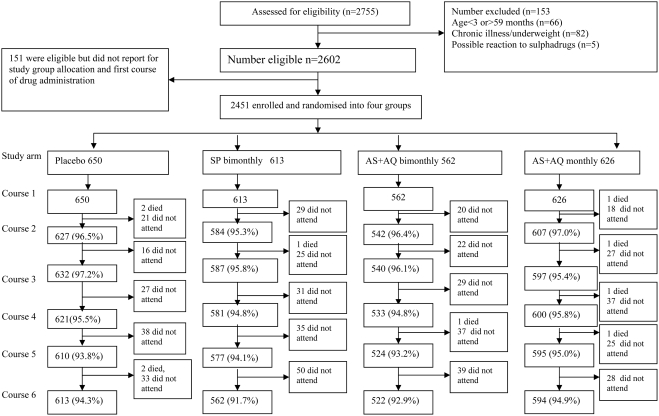
2451 children aged 3-59 months from 30 villages were individually randomised to receive placebo or artesunate plus amodiaquine (AS+AQ) monthly or bimonthly, or sulphadoxine-pyrimethamine (SP) bimonthly over a period of six months. The primary outcome measures were episodes of anaemia (Hb<8.0 g/dl) or malaria detected through passive surveillance.
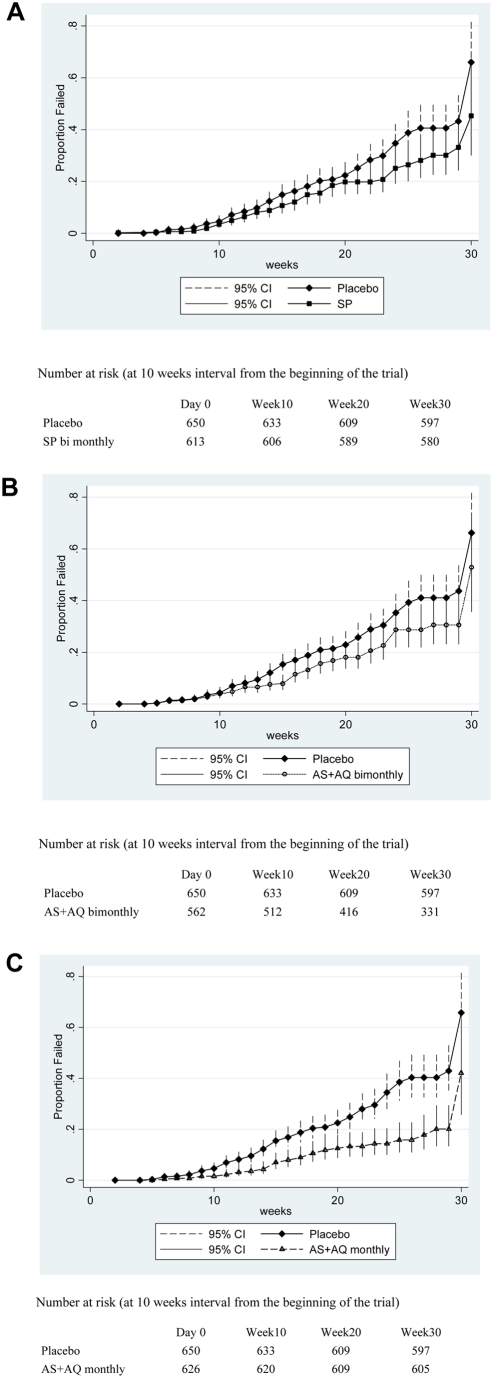
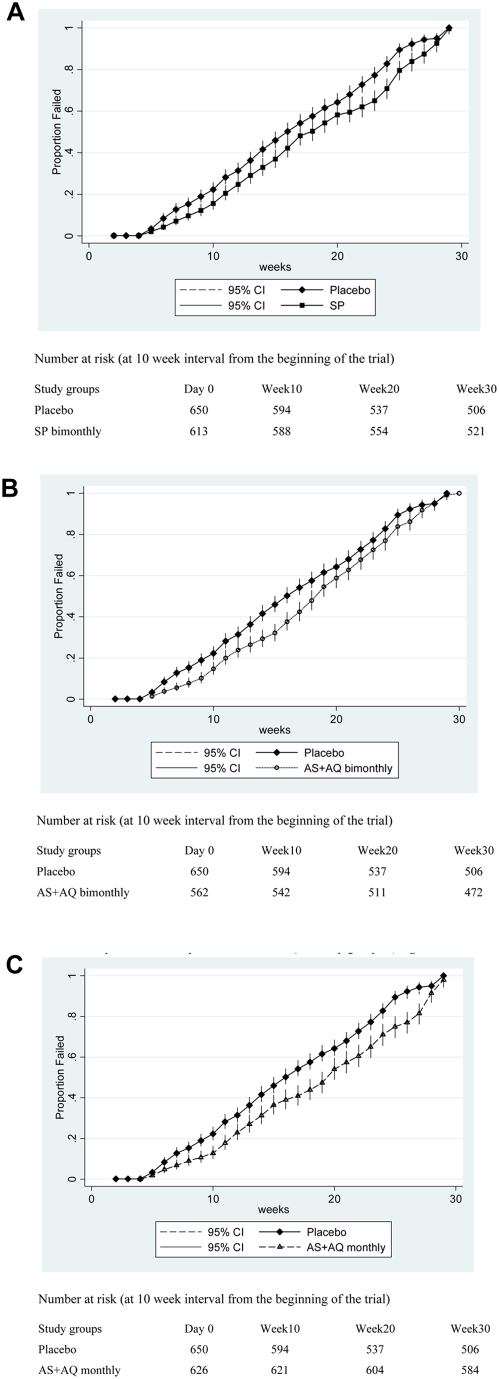
Monthly artesunate plus amodiaquine reduced the incidence of malaria by 69% (95% CI: 63%, 74%) and anaemia by 45% (95% CI: 25%,60%), bimonthly sulphadoxine-pyrimethamine reduced the incidence of malaria by 24% (95% CI: 14%,33%) and anaemia by 30% (95% CI: 6%, 49%) and bimonthly artesunate plus amodiaquine reduced the incidence of malaria by 17% (95% CI: 6%, 27%) and anaemia by 32% (95% CI: 7%, 50%) compared to placebo. There were no statistically significant reductions in the episodes of all cause or malaria specific hospital admissions in any of the intervention groups compared to the placebo group. There was no significant increase in the incidence of clinical malaria in the post intervention period in children who were >1 year old when they received IPTc compared to the placebo group. However the incidence of malaria in the post intervention period was higher in children who were <1 year old when they received AS+AQ monthly compared to the placebo group.
IPTc is safe and efficacious in reducing the burden of malaria in an area of Ghana with a prolonged, intense malaria transmission season.
ClinicalTrials.gov NCT00119132.
疟疾和贫血是撒哈拉以南非洲儿童发病和死亡的主要原因。我们在加纳一个疟疾长期高强度季节性传播的地区,研究了磺胺多辛-乙胺嘧啶或青蒿琥酯加阿莫地喹间歇预防性治疗对儿童贫血和疟疾的影响。
来自30个村庄的2451名3至59个月大的儿童被单独随机分组,在六个月的时间里,每月或每两个月接受安慰剂、青蒿琥酯加阿莫地喹(AS+AQ)或每两个月接受一次磺胺多辛-乙胺嘧啶(SP)治疗。主要结局指标是通过被动监测检测到的贫血(血红蛋白<8.0 g/dl)或疟疾发作情况。
与安慰剂相比,每月服用青蒿琥酯加阿莫地喹可使疟疾发病率降低69%(95%可信区间:63%,74%),贫血发病率降低45%(95%可信区间:25%,60%);每两个月服用一次磺胺多辛-乙胺嘧啶可使疟疾发病率降低24%(95%可信区间:14%,33%),贫血发病率降低30%(95%可信区间:6%,49%);每两个月服用一次青蒿琥酯加阿莫地喹可使疟疾发病率降低17%(95%可信区间:6%,27%),贫血发病率降低32%(95%可信区间:7%,50%)。与安慰剂组相比,任何干预组的全因或疟疾特异性住院发作次数均无统计学显著降低。与安慰剂组相比,接受间歇性预防治疗性化疗(IPTc)时年龄>1岁的儿童在干预后期临床疟疾发病率没有显著增加。然而,与安慰剂组相比,接受每月一次青蒿琥酯加阿莫地喹治疗时年龄<1岁的儿童在干预后期疟疾发病率更高。
在加纳一个疟疾传播季节延长且强度大的地区,IPTc在减轻疟疾负担方面是安全有效的。
ClinicalTrials.gov NCT00119132。