Segatto Emil, Lippold Carsten, Végh András
Department of Orofacial Orthopedics and Orthodontics, Heim Pál Children's Hospital, Zoltán u 18, 1054 Budapest, Hungary.
BMC Musculoskelet Disord. 2008 Dec 22;9:169. doi: 10.1186/1471-2474-9-169.
The objective of this epidemiological study is to map the dentofacial anomalies that can be correlated to the two most frequent spinal diseases responsible for postural abnormalities and that can be clinically identified by the orthodontic examination.
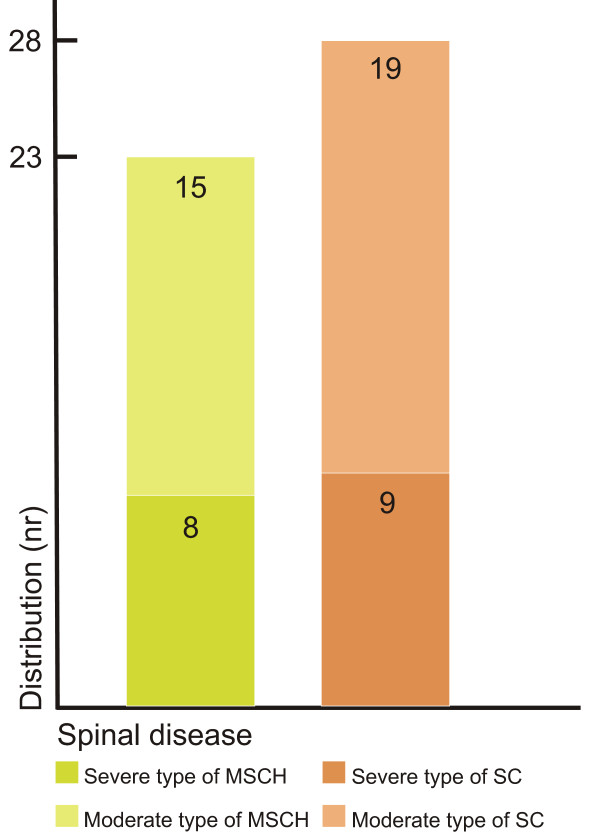
Twenty-three children with Scheuermann's disease participated in the study (mean age: 14Y8M; SD: 1Y8M), 28 with Scoliosis (mean age: 14Y7M; SD: 2Y3M) and a control group of 68 orthopedically healthy children (mean age: 14Y8M; SD: 0Y11M). Standardized orthodontic screening protocols were used to map the occlusal relations in the sagittal, vertical, and transversal dimensions, space relations of the maxillary and mandibular frontal segment, and the TMJ status and function. The examinations for the children with orthopedic disorders were supplemented by the evaluation of routine orthodontic radiograms - lateral cephalograms and panoramic X-rays.
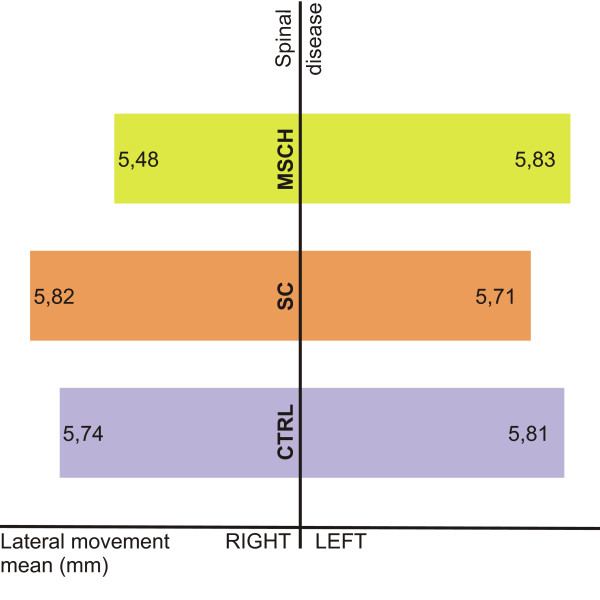
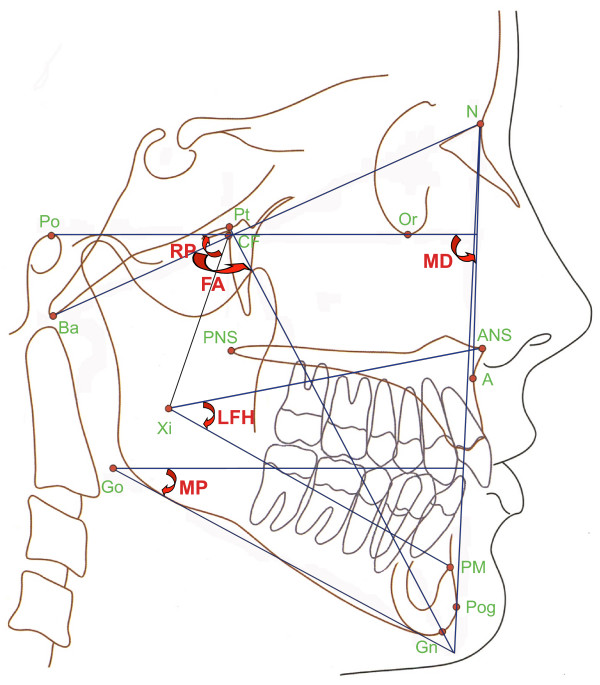
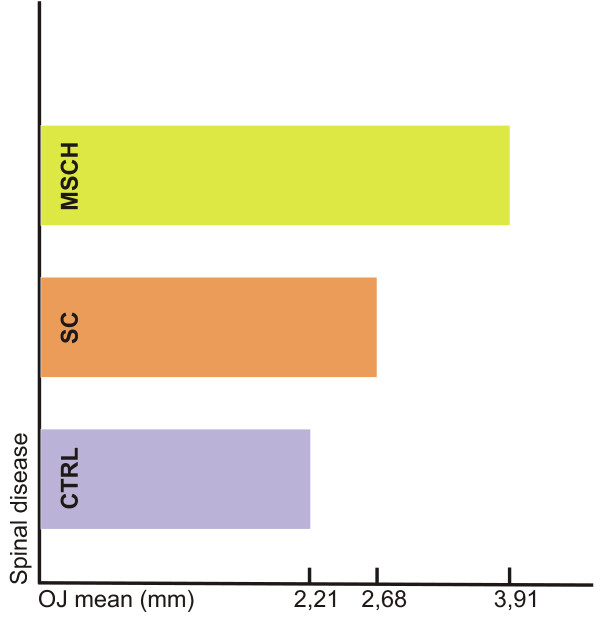
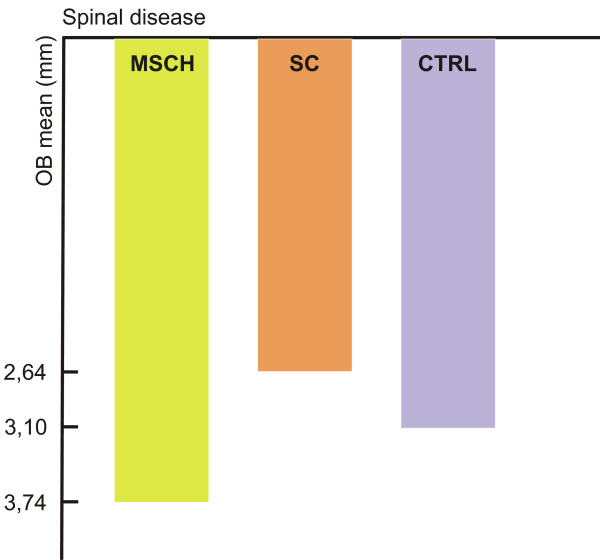
The majority of the dentofacial features examined revealed more and greater abnormalities among patients in the Scheuermann's disease group than in the scoliosis group. In the latter group the proportion of the TMJ symptoms and the consecutive functional deviations were greater. When comparing the values of the two spinal-disorder groups and the control group, statistically significant differences (p < .05) occurred for the following measurements: frequency of unilateral Cl.II. molar occlusion, overjet and extreme overjet mean value (Scheuermann's disease group), as well as the frequency of TMJ pathological symptoms (scoliosis group). The evaluation of the panoramic X-rays showed significant differences among the mandibular measurements of the two spinal-disorder groups. Within the framework of the evaluation of the cephalograms significant differences (p < .05) were found only in the case of dental relations. However, several values differed significantly from the Ricketts' norms, none of the indices strictly characterized any of the groups with spinal disorders.
The more extended treatment of the malocclusions closely correlated to postural disorders draws attention to the indicators of a higher frequency and severity occurring in the case of the dentofacial deviations in the patients of the MSCH group who had previously been less examined.
本流行病学研究的目的是梳理出那些可能与导致姿势异常的两种最常见脊柱疾病相关,且能通过正畸检查在临床上予以识别的牙颌面异常情况。
23名患有休曼病的儿童参与了本研究(平均年龄:14岁8个月;标准差:1岁8个月),28名患有脊柱侧弯的儿童(平均年龄:14岁7个月;标准差:2岁3个月),以及一个由68名骨骼健康儿童组成的对照组(平均年龄:14岁8个月;标准差:0岁11个月)。采用标准化的正畸筛查方案来梳理矢状、垂直和横向维度的咬合关系、上颌和下颌前部节段的空间关系以及颞下颌关节的状态和功能。对患有骨科疾病的儿童的检查还辅以常规正畸X光片——头颅侧位片和全景X光片的评估。
在大多数所检查的牙颌面特征方面,休曼病组患者比脊柱侧弯组患者表现出更多、更严重的异常情况。在后一组中,颞下颌关节症状及相关功能偏差的比例更高。在比较两个脊柱疾病组和对照组的值时,以下测量结果出现了统计学上的显著差异(p < 0.05):单侧安氏II类磨牙咬合的频率、覆盖及极度覆盖平均值(休曼病组),以及颞下颌关节病理症状的频率(脊柱侧弯组)。全景X光片的评估显示,两个脊柱疾病组在下颌测量方面存在显著差异。在头颅侧位片评估框架内,仅在牙关系方面发现了显著差异(p < 0.05)。然而,有几个值与里氏标准有显著差异,没有任何指标能严格区分任何一个脊柱疾病组。
与姿势紊乱密切相关的错牙合畸形的更广泛治疗,使人们关注到MSCH组患者牙颌面偏差情况下出现频率更高、严重程度更大的指标,而此前该组患者较少受到检查。