
一项关于组蛋白去乙酰化酶抑制剂丙戊酸联合化学免疫疗法治疗晚期黑色素瘤患者的I-II期研究。
A phase I-II study of the histone deacetylase inhibitor valproic acid plus chemoimmunotherapy in patients with advanced melanoma.
作者信息
Rocca A, Minucci S, Tosti G, Croci D, Contegno F, Ballarini M, Nolè F, Munzone E, Salmaggi A, Goldhirsch A, Pelicci P G, Testori A
机构信息
Department of Medicine, European Institute of Oncology, Via Ripamonti 435, Milan 20141, Italy.
出版信息
Br J Cancer. 2009 Jan 13;100(1):28-36. doi: 10.1038/sj.bjc.6604817.
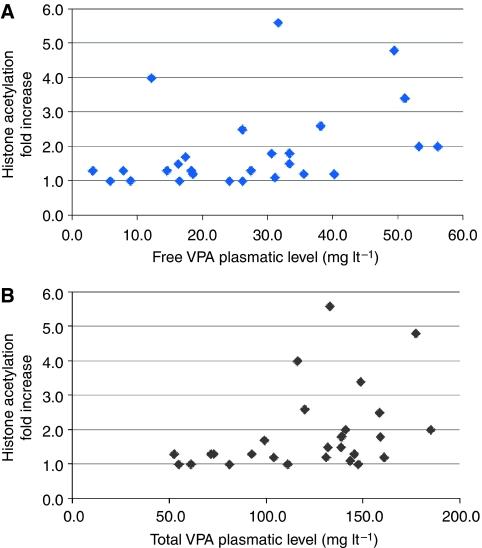
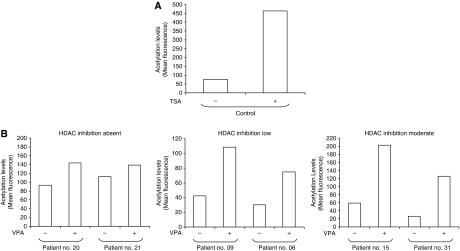
We explored in a phase I/II clinical trial the combination of valproic acid (VPA), a clinically available histone deacetylase inhibitor, with standard chemoimmunotherapy in patients with advanced melanoma, to evaluate its clinical activity, to correlate the clinical response with the biological activity of VPA and to assess toxicity. Patients were treated initially with VPA alone for 6 weeks. The inhibition of the target in non-tumour peripheral blood cells (taken as a potential surrogate marker) was measured periodically, and valproate dosing adjusted with the attempt to reach a measurable inhibition. After the treatment with valproate alone, dacarbazine plus interferon-alpha was started in combination with valproate. Twenty-nine eligible patients started taking valproate and 18 received chemoimmunotherapy and are assessable for response. We observed one complete response, two partial remissions and three disease stabilisations lasting longer than 24 weeks. With the higher valproate dosages needed to reach a measurable inhibition of the target, we observed an increase of side effects in those patients who received chemoimmunotherapy. The combination of VPA and chemoimmunotherapy did not produce results overtly superior to standard therapy in patients with advanced melanoma and toxicity was not negligible, casting some doubts on the clinical use of VPA in this setting (at least in the administration schedule adopted).
我们在一项I/II期临床试验中,探究了临床上可用的组蛋白脱乙酰酶抑制剂丙戊酸(VPA)与标准化学免疫疗法联合用于晚期黑色素瘤患者的情况,以评估其临床活性,将临床反应与VPA的生物学活性相关联,并评估毒性。患者最初单独接受VPA治疗6周。定期测量非肿瘤外周血细胞(作为潜在替代标志物)中靶点的抑制情况,并调整丙戊酸盐剂量以试图达到可测量的抑制效果。在单独使用丙戊酸盐治疗后,开始使用达卡巴嗪加干扰素-α与丙戊酸盐联合治疗。29名符合条件的患者开始服用丙戊酸盐,18名接受了化学免疫疗法且可评估反应。我们观察到1例完全缓解、2例部分缓解和3例疾病稳定持续超过24周。随着需要更高剂量的丙戊酸盐才能达到对靶点的可测量抑制,我们观察到接受化学免疫疗法的患者副作用增加。在晚期黑色素瘤患者中,VPA与化学免疫疗法的联合并未产生明显优于标准疗法的结果,且毒性不可忽视,这对VPA在此情况下的临床应用(至少在所采用的给药方案中)产生了一些疑问。

 Zotero 插件