Plowright L, Harrington K J, Pandha H S, Morgan R
Postgraduate Medical School, Faculty of Health and Medical Sciences, University of Surrey, Surrey, UK.
Br J Cancer. 2009 Feb 10;100(3):470-5. doi: 10.1038/sj.bjc.6604857. Epub 2009 Jan 20.
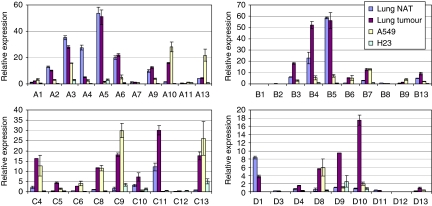
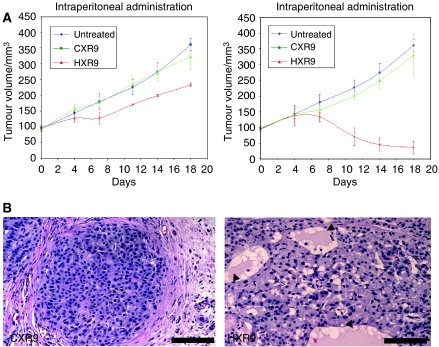
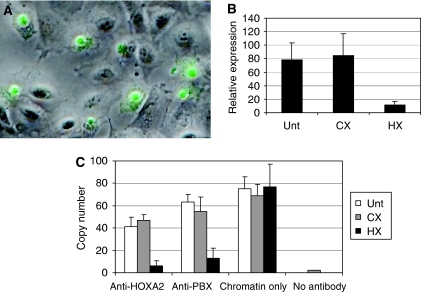
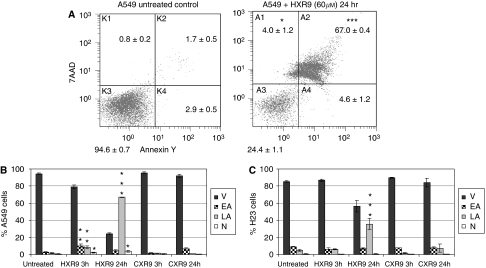
The HOX genes are a family of homeodomain-containing transcription factors that determine the identity of cells and tissues during embryonic development. They are also known to behave as oncogenes in some haematological malignancies. In this study, we show that the expression of many of the HOX genes is highly elevated in primary non-small-cell lung cancers (NSCLCs) and in the derived cell lines A549 and H23. Furthermore, blocking the activity of HOX proteins by interfering with their binding to the PBX co-factor causes these cells to undergo apoptosis in vitro and reduces the growth of A549 tumours in vivo. These findings suggest that the interaction between HOX and PBX proteins is a potential therapeutic target in NSCLC.
HOX基因是一类含同源结构域的转录因子家族,在胚胎发育过程中决定细胞和组织的特性。已知它们在某些血液系统恶性肿瘤中表现为癌基因。在本研究中,我们发现许多HOX基因在原发性非小细胞肺癌(NSCLC)及其衍生细胞系A549和H23中表达高度升高。此外,通过干扰HOX蛋白与PBX辅因子的结合来阻断其活性,可使这些细胞在体外发生凋亡,并在体内减少A549肿瘤的生长。这些发现表明,HOX与PBX蛋白之间的相互作用是NSCLC的一个潜在治疗靶点。