Prinzen Claudia, Trümbach Dietrich, Wurst Wolfgang, Endres Kristina, Postina Rolf, Fahrenholz Falk
Johannes Gutenberg-University, Institute of Biochemistry, Mainz, Mainz, Germany.
BMC Genomics. 2009 Feb 5;10:66. doi: 10.1186/1471-2164-10-66.
In a transgenic mouse model of Alzheimer disease (AD), cleavage of the amyloid precursor protein (APP) by the alpha-secretase ADAM10 prevented amyloid plaque formation, and alleviated cognitive deficits. Furthermore, ADAM10 overexpression increased the cortical synaptogenesis. These results suggest that upregulation of ADAM10 in the brain has beneficial effects on AD pathology.
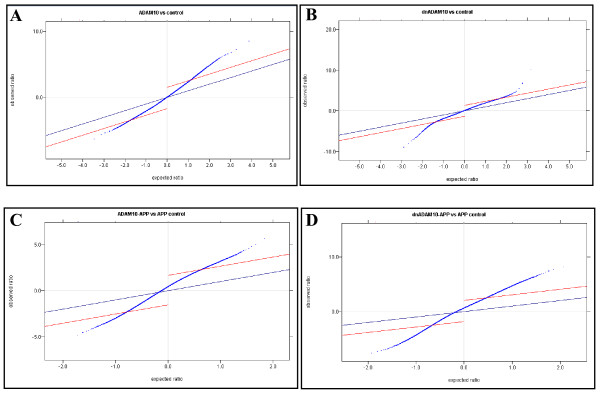
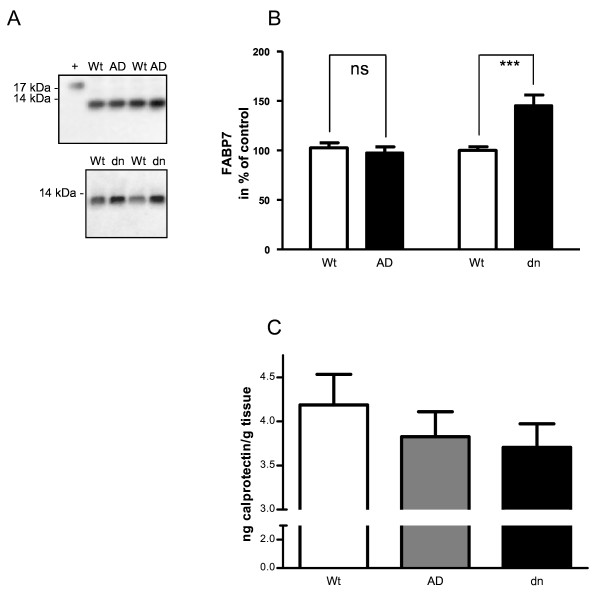
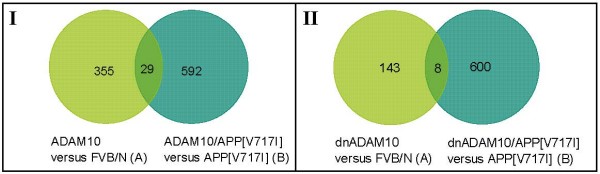
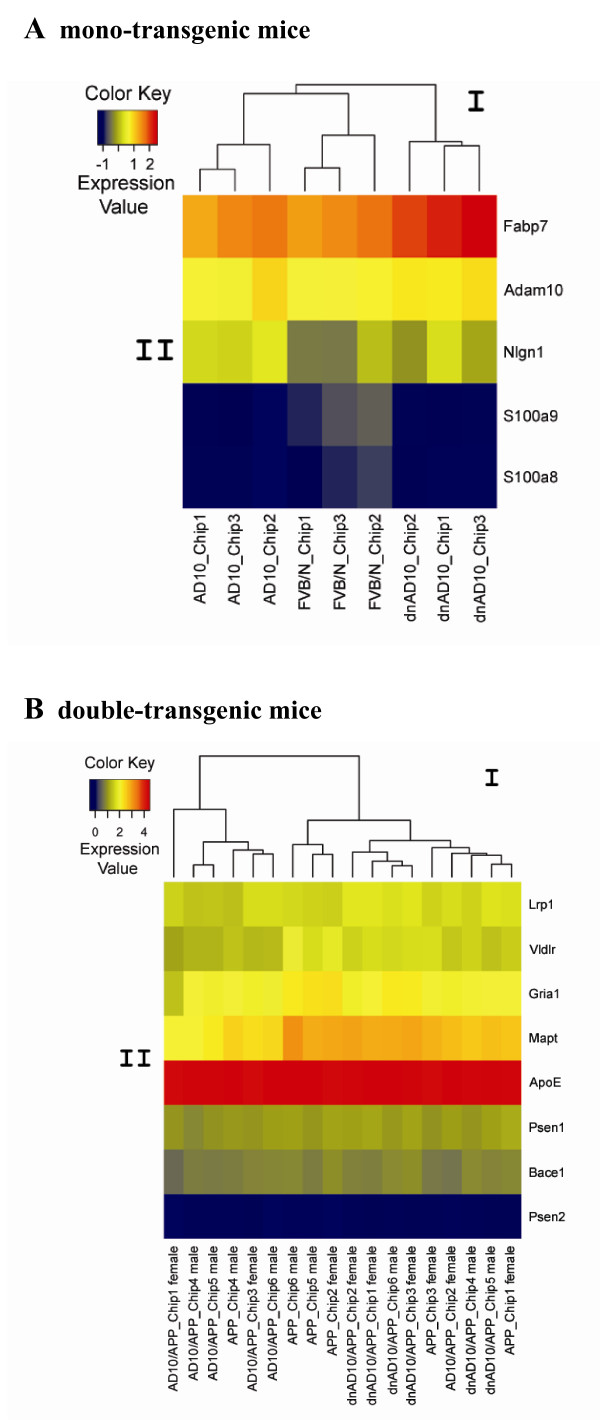
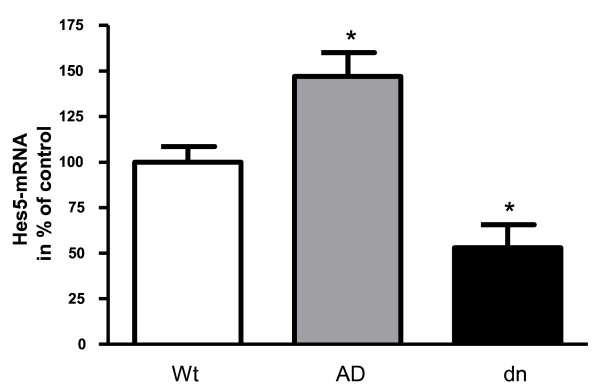
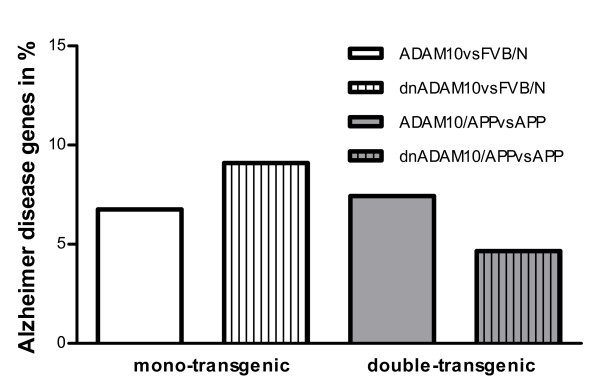
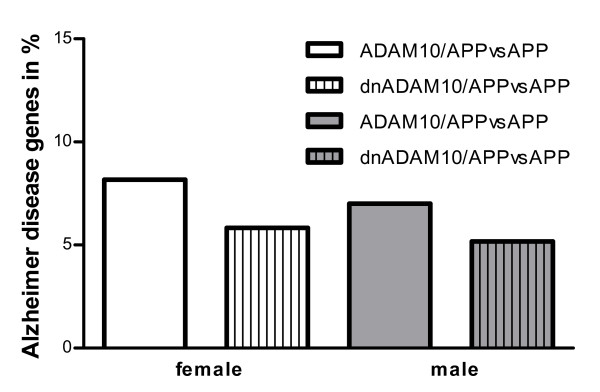
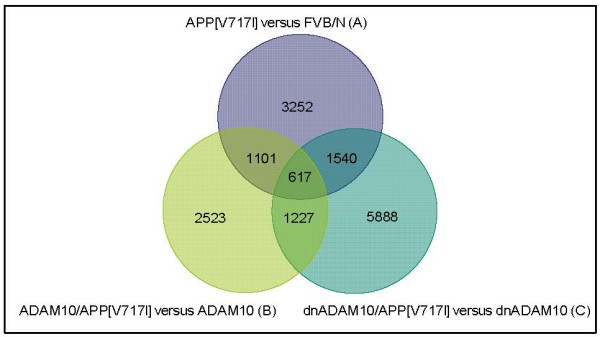
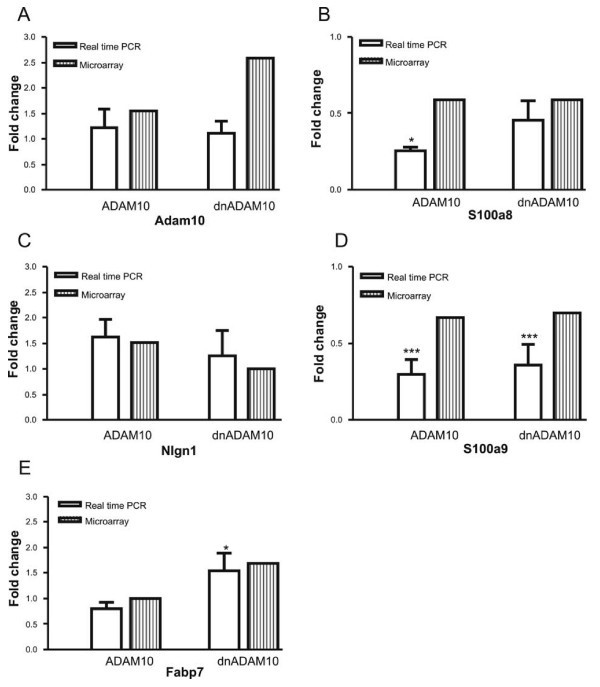
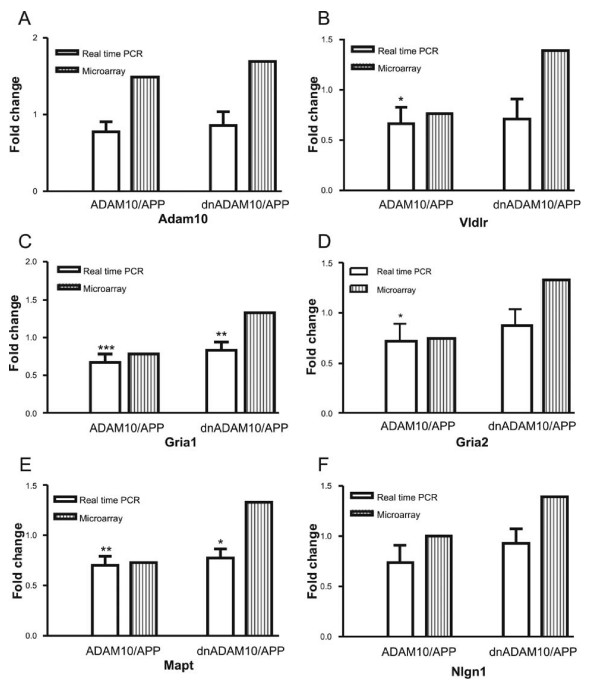
To assess the influence of ADAM10 on the gene expression profile in the brain, we performed a microarray analysis using RNA isolated from brains of five months old mice overexpressing either the alpha-secretase ADAM10, or a dominant-negative mutant (dn) of this enzyme. As compared to non-transgenic wild-type mice, in ADAM10 transgenic mice 355 genes, and in dnADAM10 mice 143 genes were found to be differentially expressed. A higher number of genes was differentially regulated in double-transgenic mouse strains additionally expressing the human APP[V717I] mutant.Overexpression of proteolytically active ADAM10 affected several physiological pathways, such as cell communication, nervous system development, neuron projection as well as synaptic transmission. Although ADAM10 has been implicated in Notch and beta-catenin signaling, no significant changes in the respective target genes were observed in adult ADAM10 transgenic mice.Real-time RT-PCR confirmed a downregulation of genes coding for the inflammation-associated proteins S100a8 and S100a9 induced by moderate ADAM10 overexpression. Overexpression of the dominant-negative form dnADAM10 led to a significant increase in the expression of the fatty acid-binding protein Fabp7, which also has been found in higher amounts in brains of Down syndrome patients.
In general, there was only a moderate alteration of gene expression in ADAM10 overexpressing mice. Genes coding for pro-inflammatory or pro-apoptotic proteins were not over-represented among differentially regulated genes. Even a decrease of inflammation markers was observed. These results are further supportive for the strategy to treat AD by increasing the alpha-secretase activity.
在阿尔茨海默病(AD)的转基因小鼠模型中,α-分泌酶ADAM10对淀粉样前体蛋白(APP)的切割可防止淀粉样斑块形成,并减轻认知缺陷。此外,ADAM10的过表达增加了皮质突触的形成。这些结果表明,大脑中ADAM10的上调对AD病理具有有益作用。
为了评估ADAM10对大脑基因表达谱的影响,我们使用从过表达α-分泌酶ADAM10或该酶的显性负性突变体(dn)的五个月龄小鼠大脑中分离的RNA进行了微阵列分析。与非转基因野生型小鼠相比,在ADAM10转基因小鼠中有355个基因,在dnADAM10小鼠中有143个基因被发现差异表达。在额外表达人APP[V717I]突变体的双转基因小鼠品系中,有更多的基因受到差异调节。具有蛋白水解活性的ADAM10的过表达影响了几个生理途径,如细胞通讯、神经系统发育、神经元投射以及突触传递。尽管ADAM10与Notch和β-连环蛋白信号传导有关,但在成年ADAM10转基因小鼠中未观察到各自靶基因的显著变化。实时RT-PCR证实,适度的ADAM10过表达可导致编码炎症相关蛋白S100a8和S100a9的基因下调。显性负性形式dnADAM10的过表达导致脂肪酸结合蛋白Fabp7的表达显著增加,在唐氏综合征患者的大脑中也发现该蛋白含量较高。
总体而言,ADAM10过表达小鼠的基因表达仅有适度改变。在差异调节的基因中,编码促炎或促凋亡蛋白的基因并未过度表达。甚至观察到炎症标志物有所下降。这些结果进一步支持了通过增加α-分泌酶活性来治疗AD的策略。