Olmstead Mary C, Ouagazzal Abdel-Mouttalib, Kieffer Brigitte L
Department of Psychology, Queen's University, Kingston, Ontario, Canada.
PLoS One. 2009;4(2):e4410. doi: 10.1371/journal.pone.0004410. Epub 2009 Feb 9.
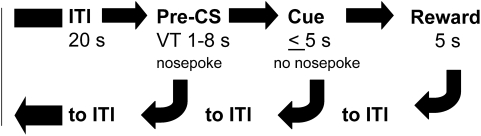
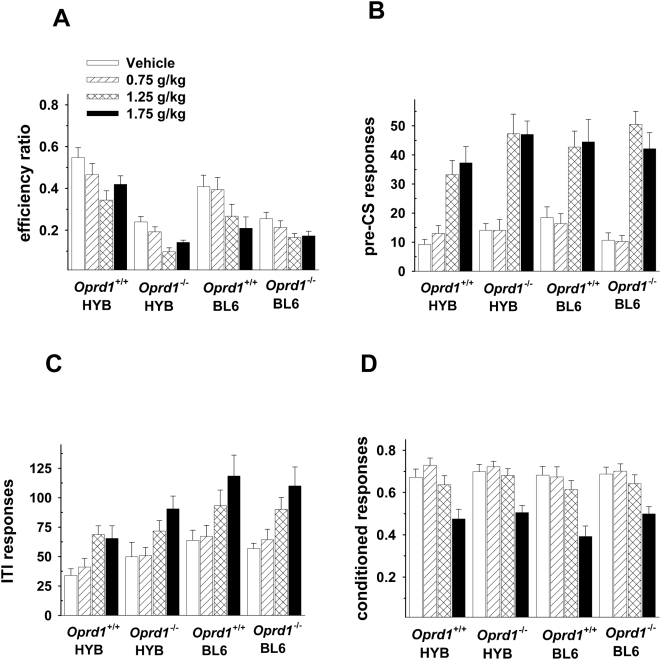
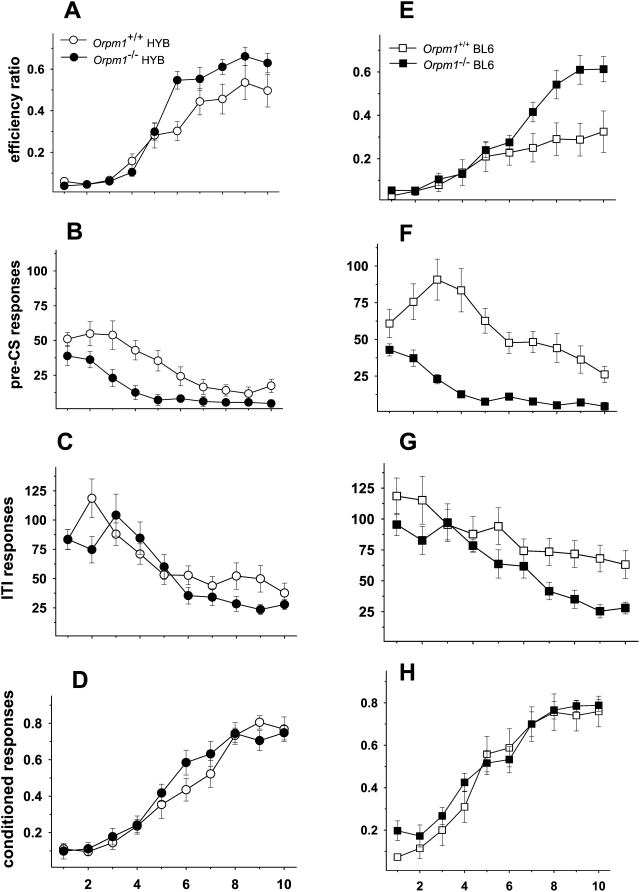
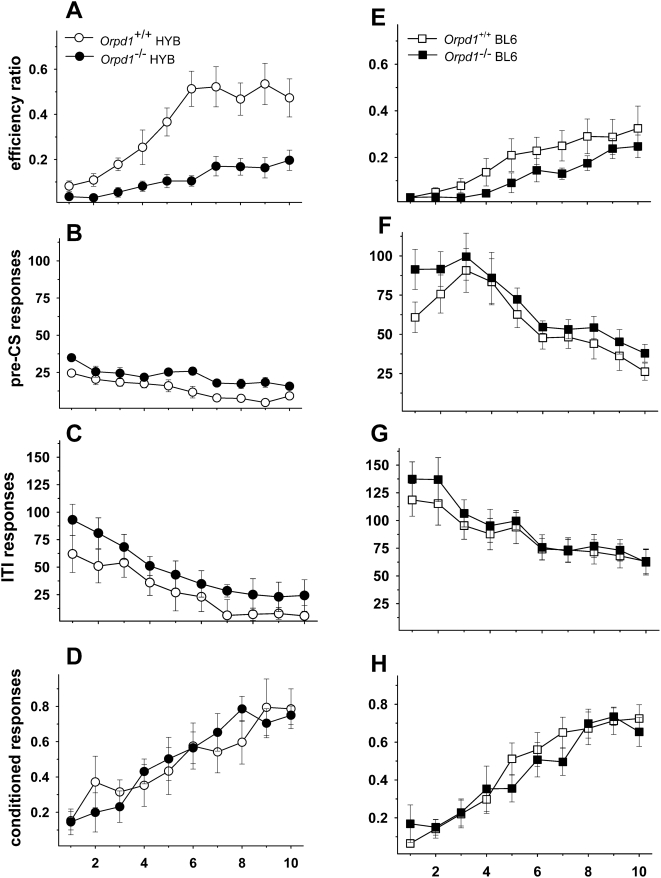
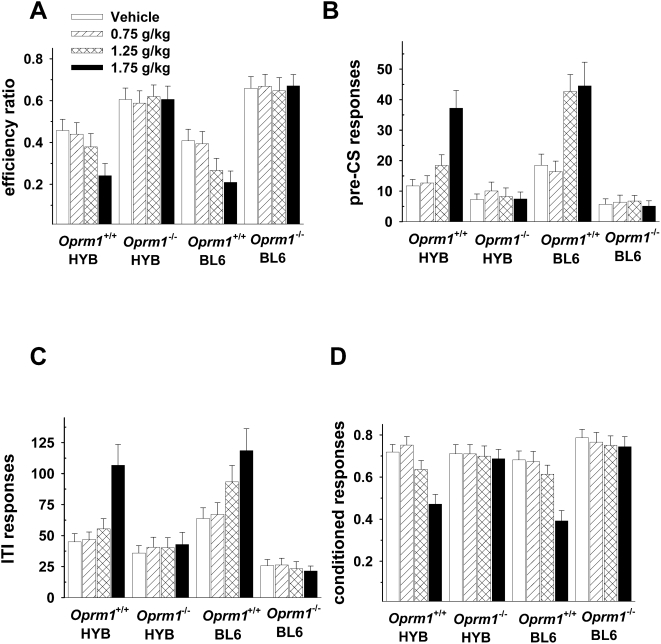
Impulsivity is a primary feature of many psychiatric disorders, most notably attention deficit hyperactivity disorder and drug addiction. Impulsivity includes a number of processes such as the inability to delay gratification, the inability to withhold a motor response, or acting before all of the relevant information is available. These processes are mediated by neural systems that include dopamine, serotonin, norepinephrine, glutamate and cannabinoids. We examine, for the first time, the role of opioid systems in impulsivity by testing whether inactivation of the mu- (Oprm1) or delta- (Oprd1) opioid receptor gene alters motor impulsivity in mice. Wild-type and knockout mice were examined on either a pure C57BL6/J (BL6) or a hybrid 50% C57Bl/6J-50% 129Sv/pas (HYB) background. Mice were trained to respond for sucrose in a signaled nose poke task that provides independent measures of associative learning (responses to the reward-paired cue) and motor impulsivity (premature responses). Oprm1 knockout mice displayed a remarkable decrease in motor impulsivity. This was observed on the two genetic backgrounds and did not result from impaired associative learning, as responses to the cue signaling reward did not differ across genotypes. Furthermore, mutant mice were insensitive to the effects of ethanol, which increased disinhibition and decreased conditioned responding in wild-type mice. In sharp contrast, mice lacking the Oprd1 gene were more impulsive than controls. Again, mutant animals showed no deficit in associative learning. Ethanol completely disrupted performance in these animals. Together, our results suggest that mu-opioid receptors enhance, whereas delta-opioid receptors inhibit, motor impulsivity. This reveals an unanticipated contribution of endogenous opioid receptor activity to disinhibition. In a broader context, these data suggest that alterations in mu- or delta-opioid receptor function may contribute to impulse control disorders.
冲动性是许多精神疾病的主要特征,最显著的是注意力缺陷多动障碍和药物成瘾。冲动性包括一系列过程,如无法延迟满足、无法抑制运动反应或在所有相关信息可用之前就采取行动。这些过程由包括多巴胺、血清素、去甲肾上腺素、谷氨酸和大麻素在内的神经系统介导。我们首次通过测试μ-(Oprm1)或δ-(Oprd1)阿片受体基因的失活是否会改变小鼠的运动冲动性,来研究阿片系统在冲动性中的作用。在纯C57BL6/J(BL6)或50% C57Bl/6J - 50% 129Sv/pas(HYB)杂交背景下检查野生型和基因敲除小鼠。小鼠在一个有信号提示的鼻戳任务中接受训练以获取蔗糖,该任务提供了联想学习(对奖励配对线索的反应)和运动冲动性(过早反应)的独立测量指标。Oprm1基因敲除小鼠的运动冲动性显著降低。在两种遗传背景下均观察到这一现象,且并非由联想学习受损导致,因为对奖励信号线索的反应在不同基因型之间并无差异。此外,突变小鼠对乙醇的作用不敏感,而乙醇会增加野生型小鼠的去抑制作用并降低条件反应。形成鲜明对比的是,缺乏Oprd1基因的小鼠比对照组更冲动。同样,突变动物在联想学习方面没有缺陷。乙醇完全破坏了这些动物的表现。总之,我们的结果表明μ-阿片受体增强运动冲动性,而δ-阿片受体抑制运动冲动性。这揭示了内源性阿片受体活性对去抑制作用的意外贡献。在更广泛的背景下,这些数据表明μ-或δ-阿片受体功能的改变可能导致冲动控制障碍。