Liu Haiyan, Song Xianrang, Liu Chunxi, Xie Li, Wei Ling, Sun Ruopeng
Department of Pediatrics, Qilu Hospital of Shandong University, Jinan, PR China.
J Exp Clin Cancer Res. 2009 Feb 15;28(1):19. doi: 10.1186/1756-9966-28-19.
Astrocyte elevated gene-1 (AEG-1) was originally characterized as a HIV-1-inducible gene in primary human fetal astrocyte. Recent studies highlight a potential role of AEG-1 in promoting tumor progression and metastasis. The aim of this study was to investigate if AEG-1 serves as a potential therapeutic target of human neuroblastoma.
We employed RNA interference to reduce AEG-1 expression in human neuroblastoma cell lines and analyzed their phenotypic changes.
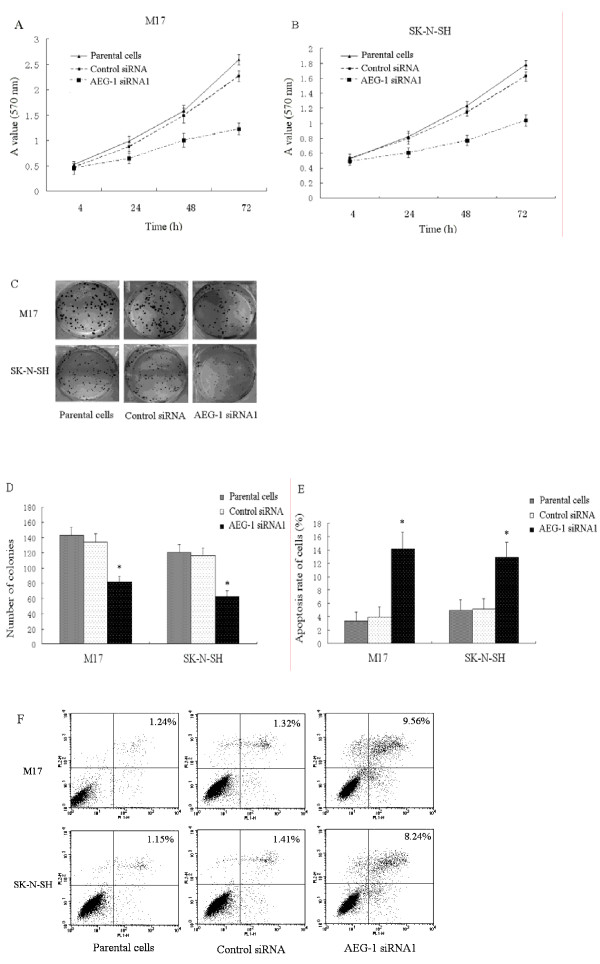
We found that the knockdown of AEG-1 expression in human neuroblastoma cells significantly inhibited cell proliferation and apoptosis. The specific downregulation induced cell arrest in the G0/G1 phase of cell cycle. In the present study, we also observed a significant enhancement of chemo-sensitivity to cisplatin and doxorubicin by knockdown of AEG-1.
Our study suggests that overexpressed AEG-1 enhance the tumorogenic properties of neuroblastoma cells. The inhibition of AEG-1 expression could be a new adjuvant therapy for neuroblastoma.
星形胶质细胞上调基因1(AEG-1)最初被鉴定为原代人胎儿星形胶质细胞中一种HIV-1诱导基因。近期研究突出了AEG-1在促进肿瘤进展和转移方面的潜在作用。本研究的目的是调查AEG-1是否作为人类神经母细胞瘤的一个潜在治疗靶点。
我们采用RNA干扰来降低人类神经母细胞瘤细胞系中AEG-1的表达,并分析其表型变化。
我们发现,在人类神经母细胞瘤细胞中敲低AEG-1表达可显著抑制细胞增殖并诱导凋亡。特异性下调导致细胞周期停滞于G0/G1期。在本研究中,我们还观察到敲低AEG-1可显著增强对顺铂和阿霉素的化疗敏感性。
我们的研究表明,过表达的AEG-1增强了神经母细胞瘤细胞的致瘤特性。抑制AEG-1表达可能成为神经母细胞瘤的一种新辅助治疗方法。