Breinich Manuela S, Ferguson David J P, Foth Bernardo J, van Dooren Giel G, Lebrun Maryse, Quon Doris V, Striepen Boris, Bradley Peter J, Frischknecht Friedrich, Carruthers Vern B, Meissner Markus
Hygiene Institute, Department of Parasitology, Heidelberg University School of Medicine, Germany.
Curr Biol. 2009 Feb 24;19(4):277-86. doi: 10.1016/j.cub.2009.01.039. Epub 2009 Feb 12.
Apicomplexans contain only a core set of factors involved in vesicular traffic. Yet these obligate intracellular parasites evolved a set of unique secretory organelles (micronemes, rhoptries, and dense granules) that are required for invasion and modulation of the host cell. Apicomplexa replicate by budding from or within a single mother cell, and secretory organelles are synthesized de novo at the final stage of division. To date, the molecular basis for their biogenesis is unknown.
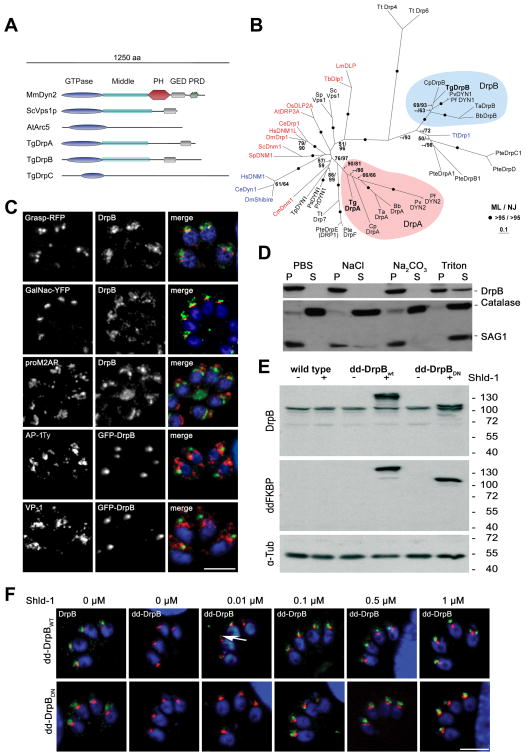
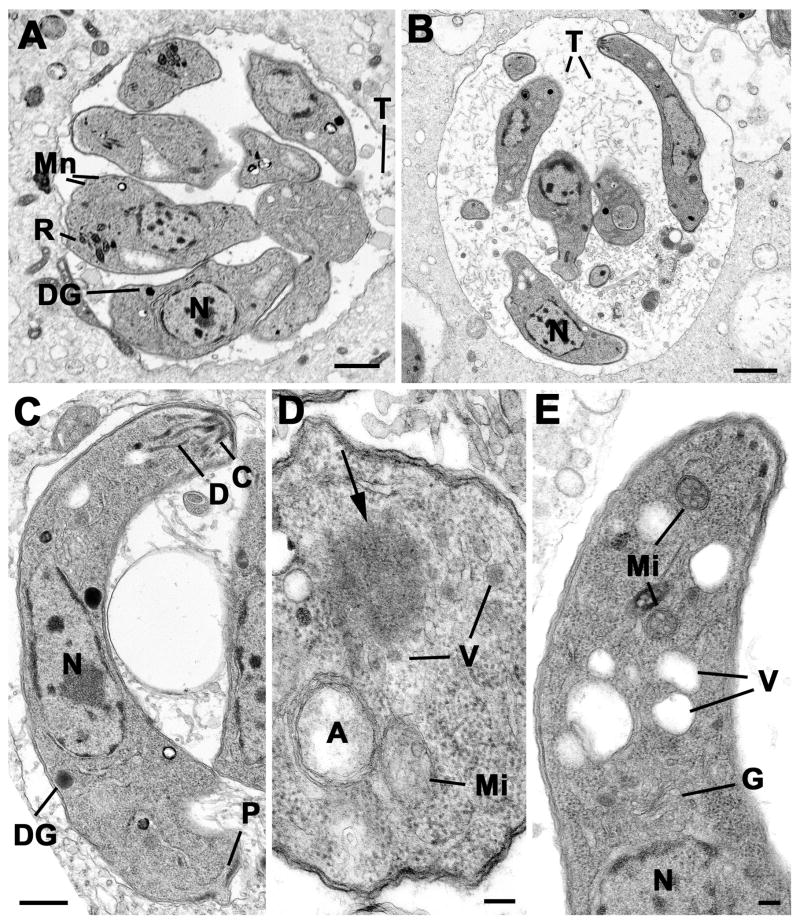
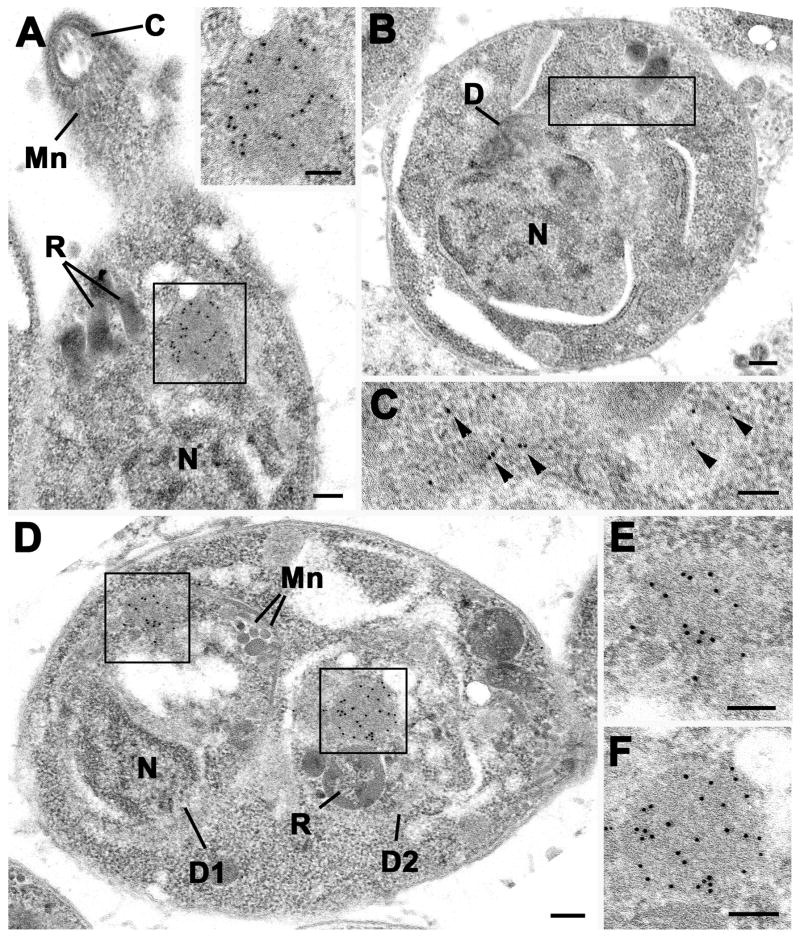
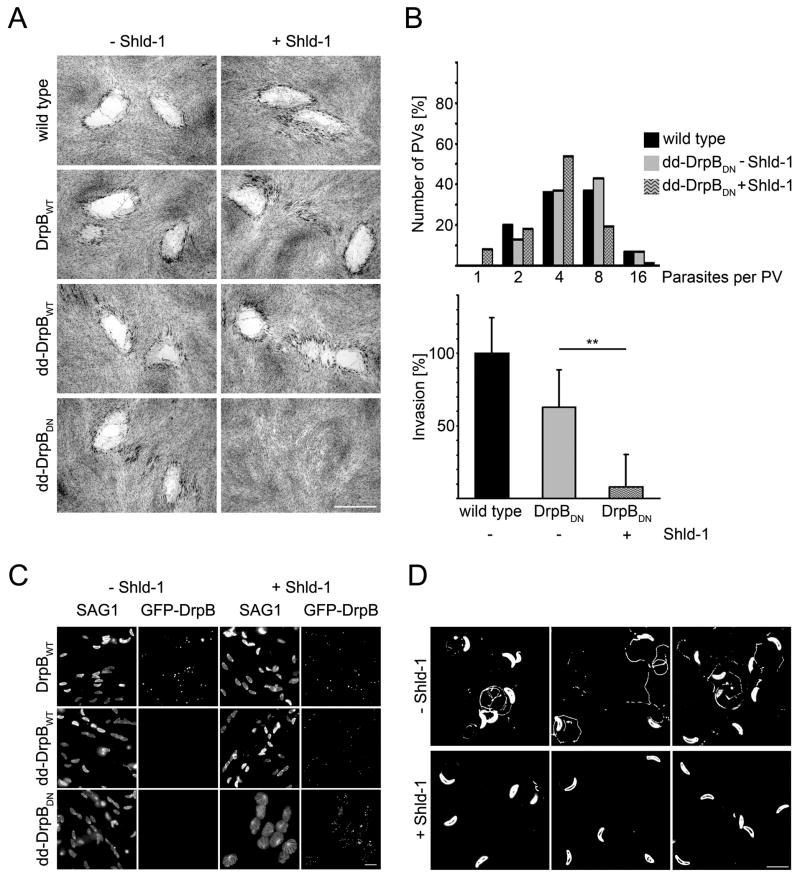
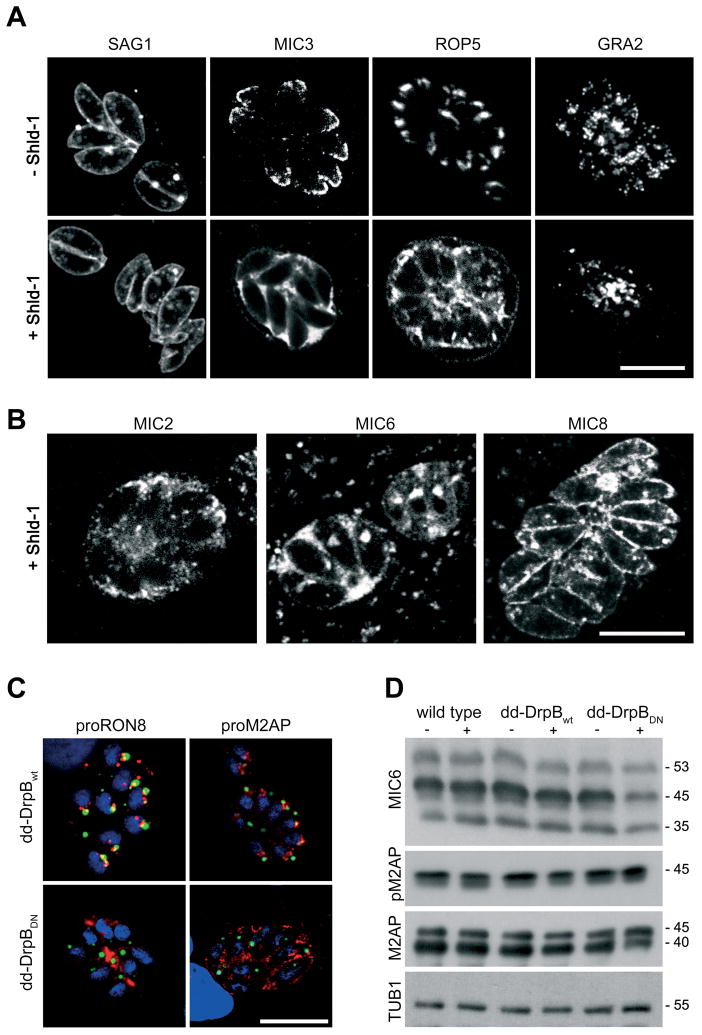
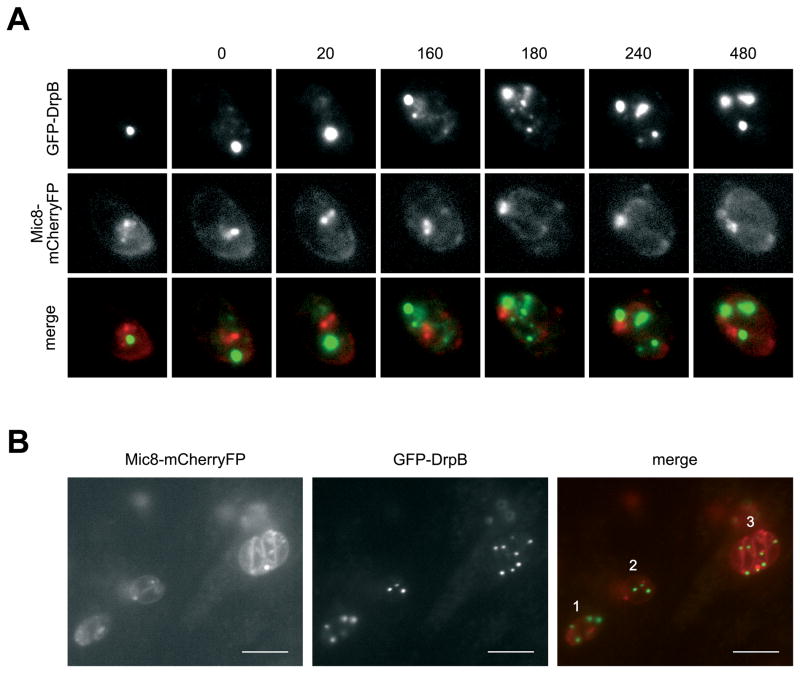
We demonstrate that the apicomplexan dynamin-related protein B (DrpB) belongs to an alveolate specific family of dynamins that is expanded in ciliates. DrpB accumulates in a cytoplasmic region close to the Golgi that breaks up during replication and reforms after assembly of the daughter cells. Conditional ablation of DrpB function results in mature daughter parasites that are devoid of micronemes and rhoptries. In the absence of these organelles, invasion-related secretory proteins are mistargeted to the constitutive secretory pathway. Mutant parasites are able to replicate but are unable to escape from or invade into host cells.
DrpB is the essential mechanoenzyme for the biogenesis of secretory organelles in Apicomplexa. We suggest that DrpB is required during replication to generate vesicles for the regulated secretory pathway that form the unique secretory organelles. Our study supports a role of an alveolate-specific dynamin that was required for the evolution of novel, secretory organelles. In the case of Apicomplexa, these organelles further evolved to enable a parasitic lifestyle.
顶复门原虫仅含有一套参与囊泡运输的核心因子。然而,这些专性细胞内寄生虫进化出了一套独特的分泌细胞器(微线体、棒状体和致密颗粒),这些细胞器是侵袭和调节宿主细胞所必需的。顶复门原虫通过从单个母细胞出芽或在母细胞内进行复制,分泌细胞器在分裂的最后阶段重新合成。迄今为止,它们生物发生的分子基础尚不清楚。
我们证明,顶复门原虫动力蛋白相关蛋白B(DrpB)属于在纤毛虫中扩展的特定于囊泡虫类的动力蛋白家族。DrpB在靠近高尔基体的细胞质区域积累,在复制过程中该区域会解体,并在子细胞组装后重新形成。有条件地敲除DrpB功能会导致成熟的子寄生虫缺乏微线体和棒状体。在没有这些细胞器的情况下,与侵袭相关的分泌蛋白被错误靶向到组成型分泌途径。突变寄生虫能够复制,但无法从宿主细胞中逸出或侵入宿主细胞。
DrpB是顶复门原虫分泌细胞器生物发生所必需的机械酶。我们认为,在复制过程中需要DrpB来产生用于调节分泌途径的囊泡,这些囊泡形成独特的分泌细胞器。我们的研究支持了一种特定于囊泡虫类的动力蛋白在新型分泌细胞器进化过程中的作用。就顶复门原虫而言,这些细胞器进一步进化以适应寄生生活方式。