Ruggieri Alessia, Maldener Esther, Sauter Marlies, Mueller-Lantzsch Nikolaus, Meese Eckart, Fackler Oliver T, Mayer Jens
Department of Human Genetics, Medical Faculty, University of Saarland, Homburg, Germany.
Retrovirology. 2009 Feb 16;6:17. doi: 10.1186/1742-4690-6-17.
The human endogenous retrovirus HERV-K(HML-2) family is associated with testicular germ cell tumors (GCT). Various HML-2 proviruses encode viral proteins such as Env and Rec.
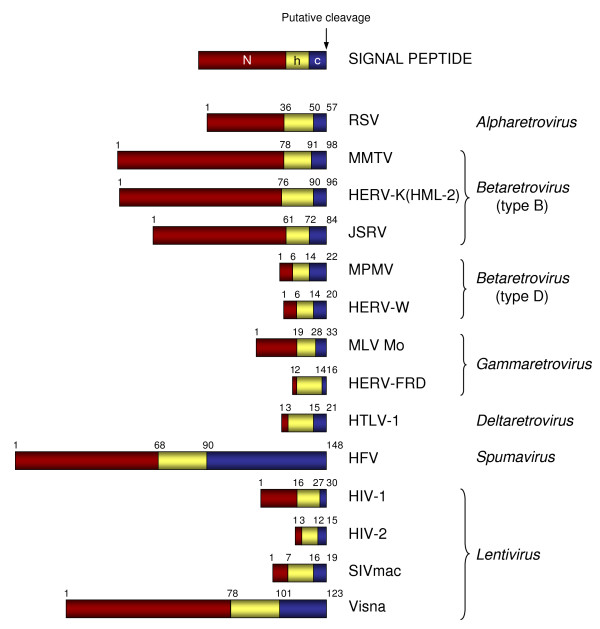
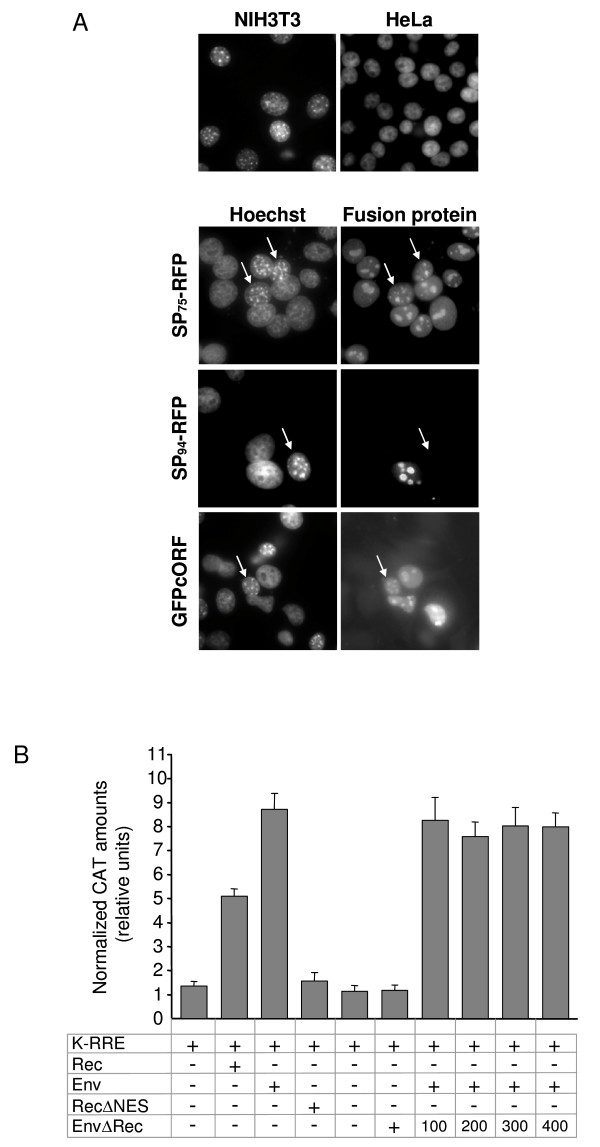
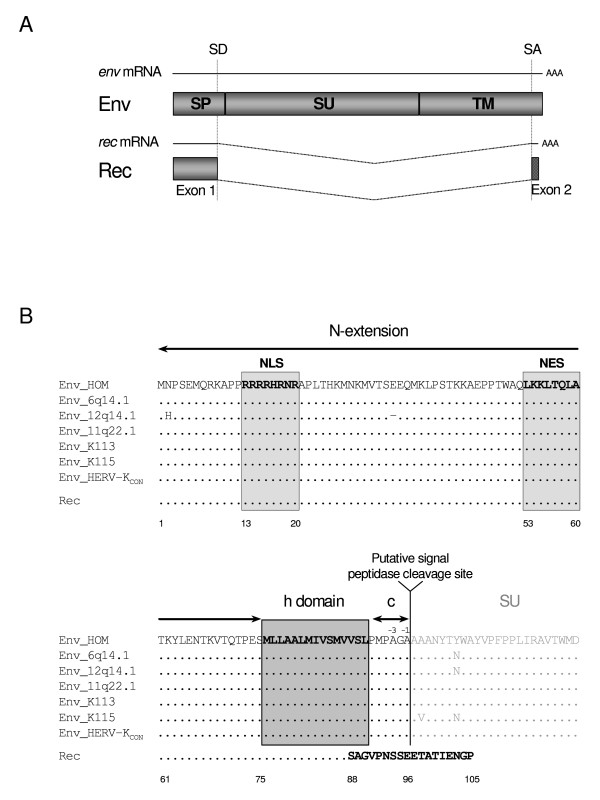
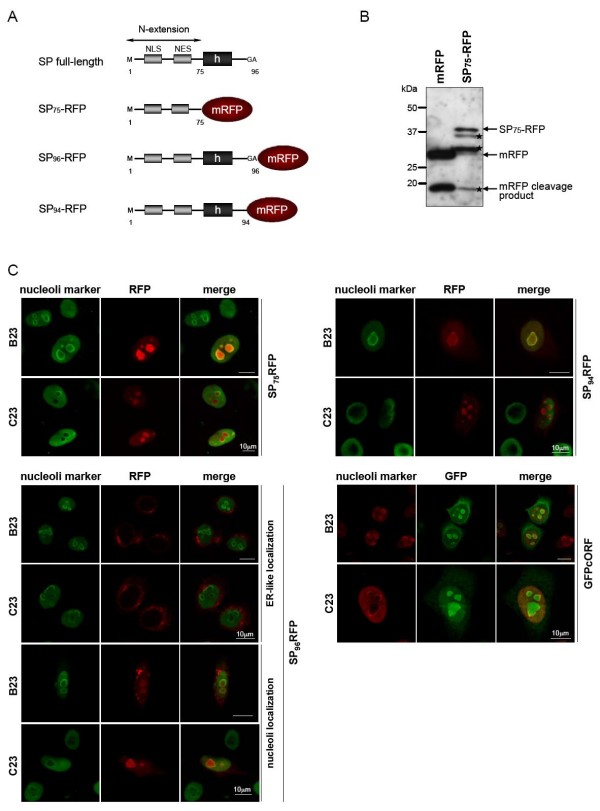
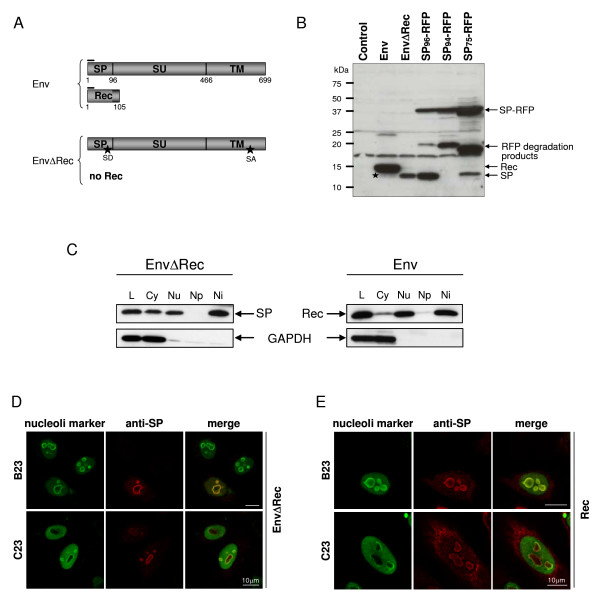
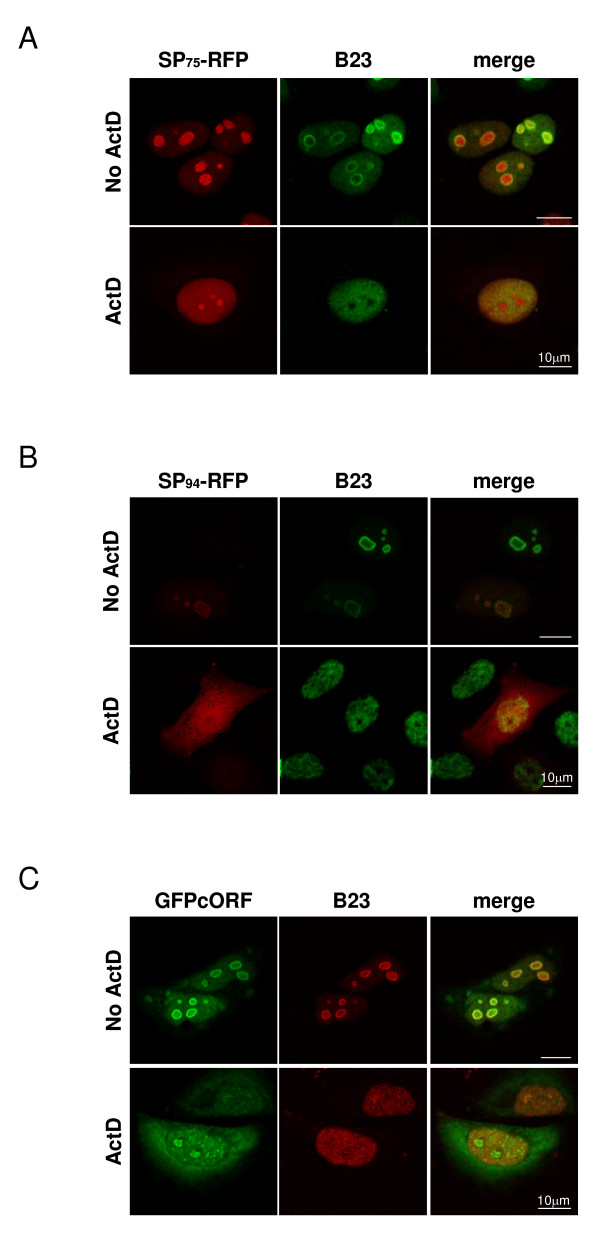
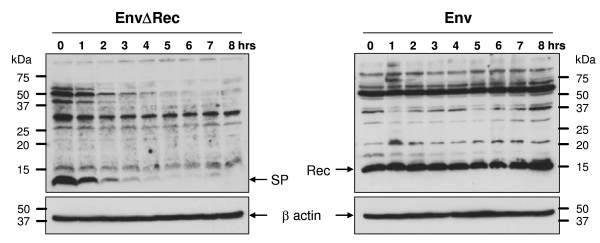
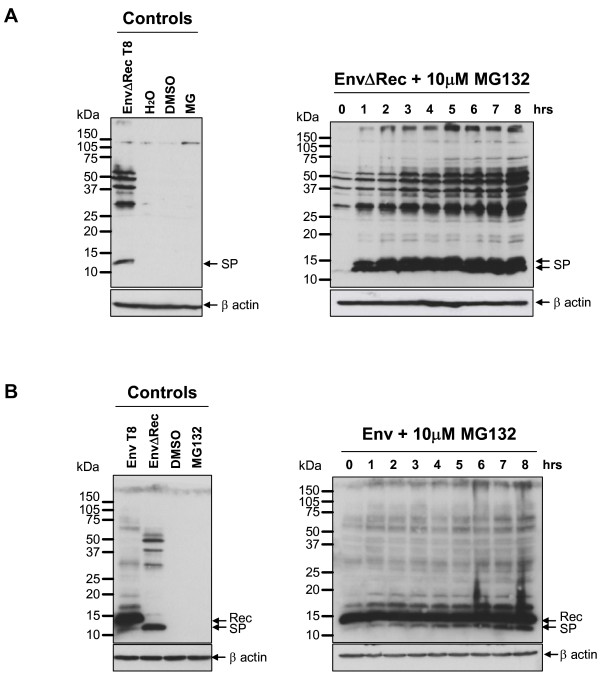
We describe here that HML-2 Env gives rise to a 13 kDa signal peptide (SP) that harbors a different C-terminus compared to Rec. Subsequent to guiding Env to the endoplasmatic reticulum (ER), HML-2 SP is released into the cytosol. Biochemical analysis and confocal microscopy demonstrated that similar to Rec, SP efficiently translocates to the granular component of nucleoli. Unlike Rec, SP does not shuttle between nucleus and cytoplasm. SP is less stable than Rec as it is subjected to proteasomal degradation. Moreover, SP lacks export activity towards HML-2 genomic RNA, the main function of Rec in the original viral context, and SP does not interfere with Rec's RNA export activity.
SP is a previously unrecognized HML-2 protein that, besides targeting and translocation of Env into the ER lumen, may exert biological functions distinct from Rec. HML-2 SP represents another functional similarity with the closely related Mouse Mammary Tumor Virus that encodes an Env-derived SP named p14. Our findings furthermore support the emerging concept of bioactive SPs as a conserved retroviral strategy to modulate their host cell environment, evidenced here by a "retroviral fossil". While the specific role of HML-2 SP remains to be elucidated in the context of human biology, we speculate that it may be involved in immune evasion of GCT cells or tumorigenesis.
人类内源性逆转录病毒HERV-K(HML-2)家族与睾丸生殖细胞肿瘤(GCT)相关。多种HML-2前病毒编码病毒蛋白,如Env和Rec。
我们在此描述,HML-2 Env产生一个13 kDa的信号肽(SP),与Rec相比,其C末端不同。在将Env引导至内质网(ER)后,HML-2 SP被释放到细胞质中。生化分析和共聚焦显微镜显示,与Rec相似,SP能有效地转运到核仁的颗粒成分中。与Rec不同,SP不会在细胞核和细胞质之间穿梭。SP比Rec更不稳定,因为它会被蛋白酶体降解。此外,SP缺乏对HML-2基因组RNA的输出活性,这是Rec在原始病毒环境中的主要功能,并且SP不会干扰Rec的RNA输出活性。
SP是一种先前未被识别的HML-2蛋白,除了将Env靶向并转运到内质网腔中外,可能还发挥着与Rec不同的生物学功能。HML-2 SP代表了与密切相关的小鼠乳腺肿瘤病毒的另一个功能相似性,后者编码一种名为p14的Env衍生SP。我们的发现进一步支持了生物活性信号肽作为一种保守的逆转录病毒策略来调节其宿主细胞环境这一新兴概念,此处通过一个“逆转录病毒化石”得以证明。虽然HML-2 SP在人类生物学背景下的具体作用仍有待阐明,但我们推测它可能参与了GCT细胞的免疫逃逸或肿瘤发生。