Liu Jie, Qu Wei, Kadiiska Maria B
Inorganic Carcinogenesis Section, Laboratory of Comparative Carcinogenesis, NCI at NIEHS, Research Triangle Park, NC 27709, USA.
Toxicol Appl Pharmacol. 2009 Aug 1;238(3):209-14. doi: 10.1016/j.taap.2009.01.029. Epub 2009 Feb 21.
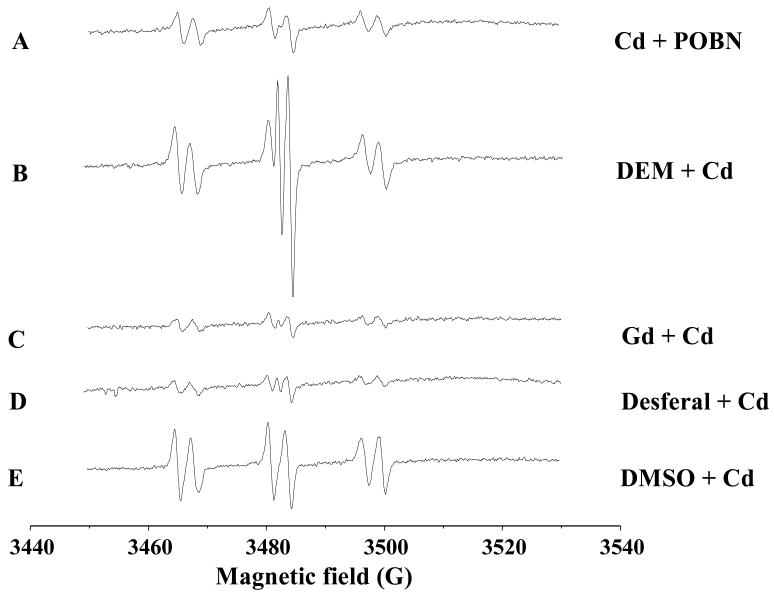
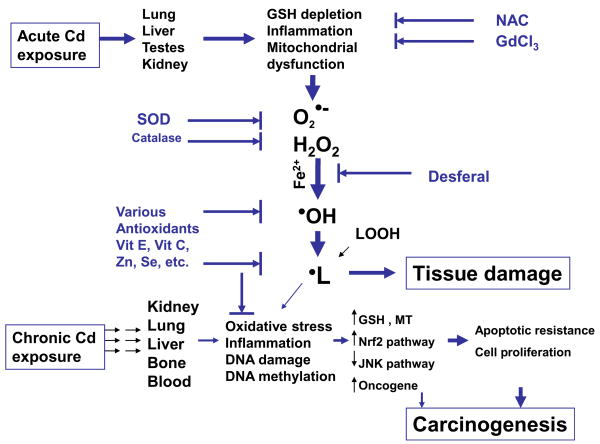
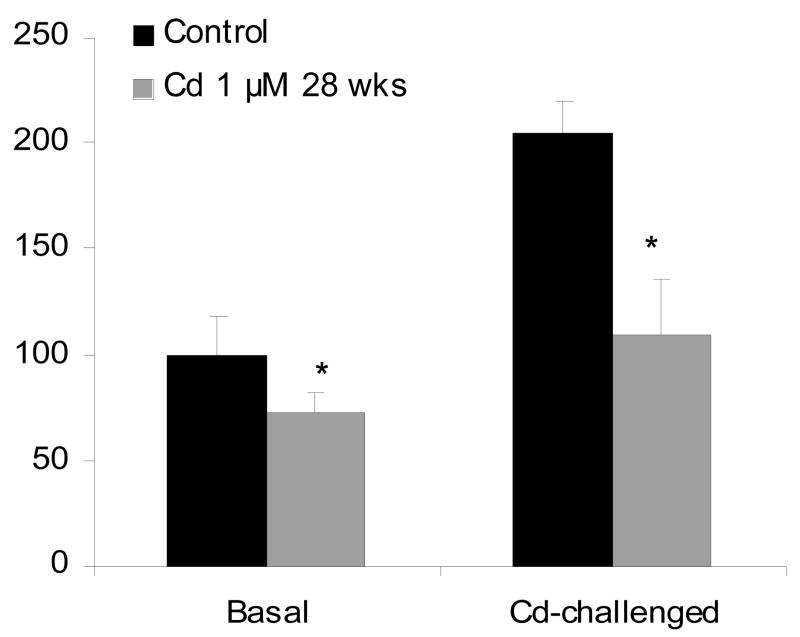
Cadmium (Cd) is a toxic metal, targeting the lung, liver, kidney, and testes following acute intoxication, and causing nephrotoxicity, immunotoxicity, osteotoxicity and tumors after prolonged exposures. Reactive oxygen species (ROS) are often implicated in Cd toxicology. This minireview focused on direct evidence for the generation of free radicals in intact animals following acute Cd overload and discussed the association of ROS in chronic Cd toxicity and carcinogenesis. Cd-generated superoxide anion, hydrogen peroxide, and hydroxyl radicals in vivo have been detected by the electron spin resonance spectra, which are often accompanied by activation of redox sensitive transcription factors (e.g., NF-kappaB, AP-1 and Nrf2) and alteration of ROS-related gene expression. It is generally agreed upon that oxidative stress plays important roles in acute Cd poisoning. However, following long-term Cd exposure at environmentally-relevant low levels, direct evidence for oxidative stress is often obscure. Alterations in ROS-related gene expression during chronic exposures are also less significant compared to acute Cd poisoning. This is probably due to induced adaptation mechanisms (e.g., metallothionein and glutathione) following chronic Cd exposures, which in turn diminish Cd-induced oxidative stress. In chronic Cd-transformed cells, less ROS signals are detected with fluorescence probes. Acquired apoptotic tolerance renders damaged cells to proliferate with inherent oxidative DNA lesions, potentially leading to tumorigenesis. Thus, ROS are generated following acute Cd overload and play important roles in tissue damage. Adaptation to chronic Cd exposure reduces ROS production, but acquired Cd tolerance with aberrant gene expression plays important roles in chronic Cd toxicity and carcinogenesis.
镉(Cd)是一种有毒金属,急性中毒时会靶向肺、肝、肾和睾丸,长期接触后会导致肾毒性、免疫毒性、骨毒性和肿瘤。活性氧(ROS)常与镉毒理学有关。本综述聚焦于急性镉过载后完整动物体内自由基生成的直接证据,并讨论了ROS在慢性镉毒性和致癌作用中的关联。通过电子自旋共振光谱已检测到体内镉生成的超氧阴离子、过氧化氢和羟基自由基,这些通常伴随着氧化还原敏感转录因子(如核因子κB、激活蛋白-1和核因子E2相关因子2)的激活以及ROS相关基因表达的改变。人们普遍认为氧化应激在急性镉中毒中起重要作用。然而,在与环境相关的低水平长期接触镉后,氧化应激的直接证据往往不明确。与急性镉中毒相比,慢性接触期间ROS相关基因表达的变化也不太显著。这可能是由于慢性镉接触后诱导的适应机制(如金属硫蛋白和谷胱甘肽),进而减少了镉诱导的氧化应激。在慢性镉转化的细胞中,用荧光探针检测到的ROS信号较少。获得性凋亡耐受性使受损细胞能够带着固有的氧化性DNA损伤增殖,这可能导致肿瘤发生。因此,急性镉过载后会产生活性氧,并且在组织损伤中起重要作用。对慢性镉接触的适应会减少ROS的产生,但获得性镉耐受性及异常基因表达在慢性镉毒性和致癌作用中起重要作用。