Bhattacharyya Raja, Banerjee Jayashree, Khalili Kamel, Wedegaertner Philip B
Department of Biochemistry and Molecular Biology, Thomas Jefferson University, Philadelphia, PA 19107, USA.
Cell Signal. 2009 Jun;21(6):996-1006. doi: 10.1016/j.cellsig.2009.02.010. Epub 2009 Feb 25.
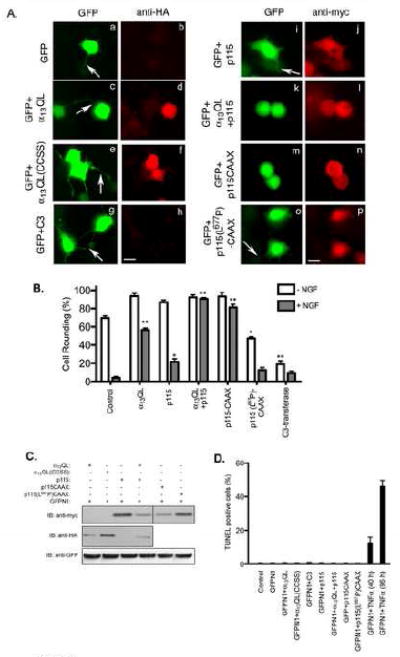
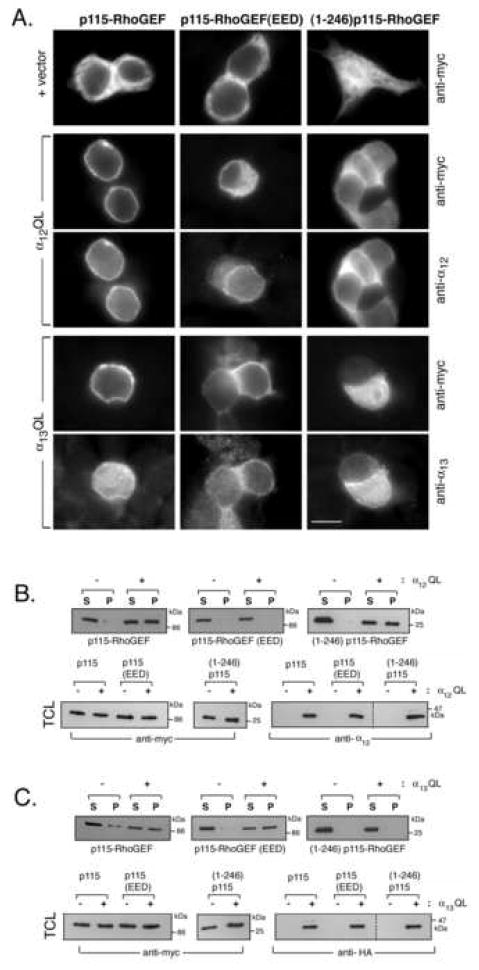
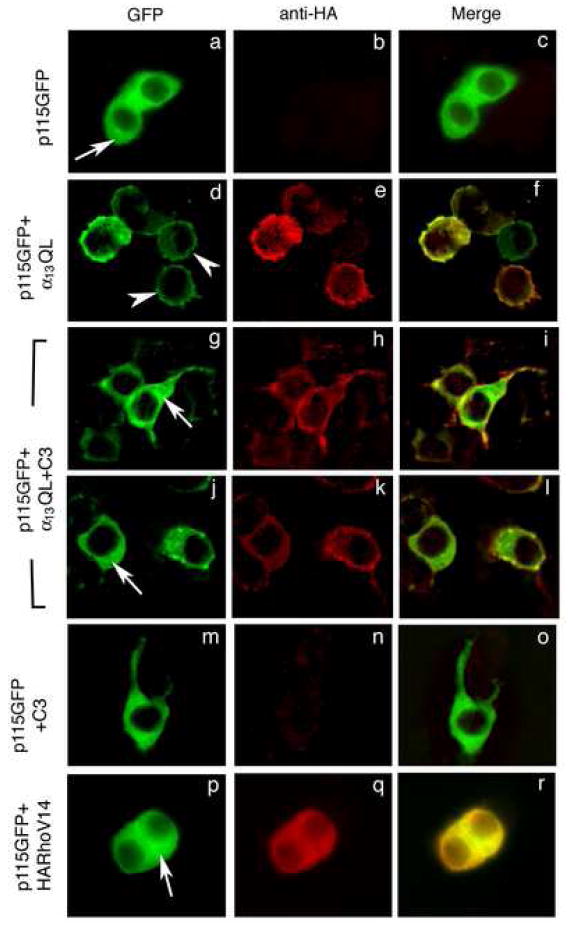
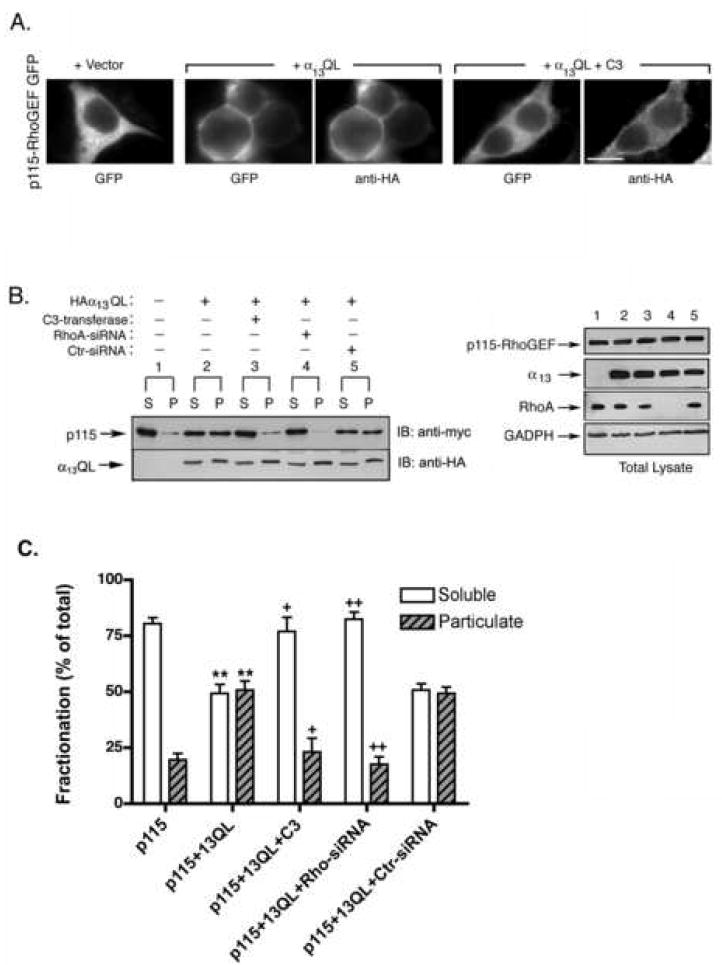
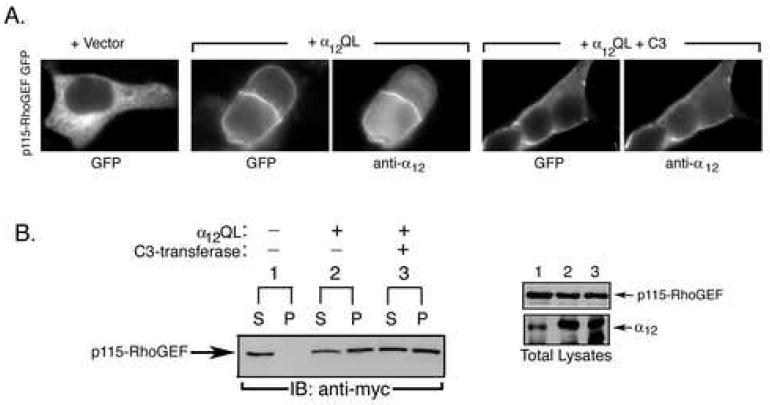
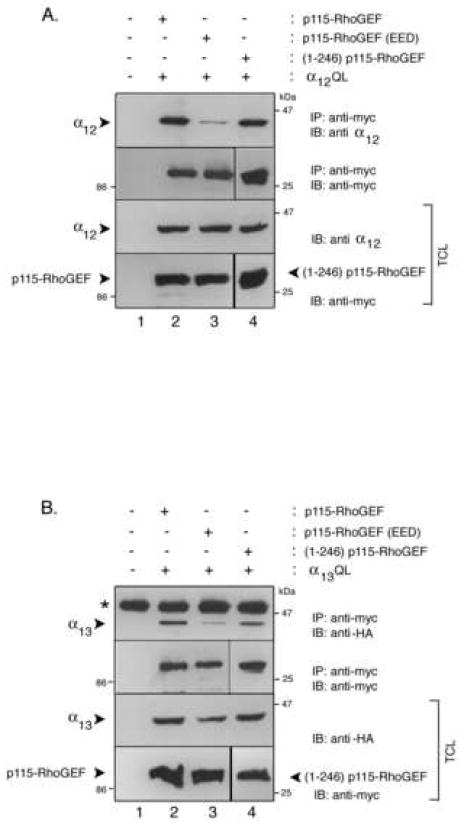
Regulator of G protein signaling domain-containing Rho guanine-nucleotide exchange factors (RGS-RhoGEFs) directly links activated forms of the G12 family of heterotrimeric G protein alpha subunits to the small GTPase Rho. Stimulation of G(12/13)-coupled GPCRs or expression of constitutively activated forms of alpha(12) and alpha(13) has been shown to induce the translocation of the RGS-RhoGEF, p115-RhoGEF, from the cytoplasm to the plasma membrane (PM). However, little is known regarding the functional importance and mechanisms of this regulated PM recruitment, and thus PM recruitment of p115-RhoGEF is the focus of this report. A constitutively PM-localized mutant of p115-RhoGEF shows a much greater activity compared to wild type p115-RhoGEF in promoting Rho-dependent neurite retraction of NGF-differentiated PC12 cells, providing the first evidence that PM localization can activate p115-RhoGEF signaling. Next, we uncovered the unexpected finding that Rho is required for alpha(13)-induced PM translocation of p115-RhoGEF. However, inhibition of Rho did not prevent alpha(12)-induced PM translocation of p115-RhoGEF. Additional differences between alpha(13) and alpha(12) in promoting PM recruitment of p115-RhoGEF were revealed by analyzing RGS domain mutants of p115-RhoGEF. Activated alpha(12) effectively recruits the isolated RGS domain of p115-RhoGEF to the PM, whereas alpha(13) only weakly does. On the other hand, alpha(13) strongly recruits to the PM a p115-RhoGEF mutant containing amino acid substitutions in an acidic region at the N-terminus of the RGS domain; however, alpha(12) is unable to recruit this p115-RhoGEF mutant to the PM. These studies provide new insight into the function and mechanisms of alpha(12/13)-mediated PM recruitment of p115-RhoGEF.
含G蛋白信号调节结构域的Rho鸟嘌呤核苷酸交换因子(RGS-RhoGEFs)直接将异源三聚体G蛋白α亚基G12家族的活化形式与小GTP酶Rho联系起来。已表明,刺激G(12/13)偶联的GPCR或表达α(12)和α(13)的组成型活化形式会诱导RGS-RhoGEF,即p115-RhoGEF从细胞质转运至质膜(PM)。然而,关于这种受调控的质膜募集的功能重要性和机制知之甚少,因此p115-RhoGEF的质膜募集是本报告的重点。与野生型p115-RhoGEF相比,p115-RhoGEF的一种组成型定位于质膜的突变体在促进NGF分化的PC12细胞的Rho依赖性神经突回缩方面表现出更高的活性,这提供了首个证据表明质膜定位可激活p115-RhoGEF信号传导。接下来,我们发现了一个意外的发现,即Rho是α(13)诱导p115-RhoGEF质膜转运所必需的。然而,抑制Rho并不能阻止α(12)诱导的p115-RhoGEF质膜转运。通过分析p115-RhoGEF的RGS结构域突变体,揭示了α(13)和α(12)在促进p115-RhoGEF质膜募集方面的其他差异。活化的α(12)有效地将p115-RhoGEF的分离RGS结构域募集到质膜,而α(13)则只能微弱地做到这一点。另一方面,α(13)强烈地将一个在RGS结构域N端酸性区域含有氨基酸取代的p115-RhoGEF突变体募集到质膜;然而,α(12)无法将这个p115-RhoGEF突变体募集到质膜。这些研究为α(12/13)介导的p115-RhoGEF质膜募集的功能和机制提供了新的见解。