Nakano Hideki, Lin Kaifeng Lisa, Yanagita Manabu, Charbonneau Chantal, Cook Donald N, Kakiuchi Terutaka, Gunn Michael D
Department of Medicine, Duke University Medical Center, Durham, North Carolina, USA.
Nat Immunol. 2009 Apr;10(4):394-402. doi: 10.1038/ni.1707. Epub 2009 Mar 1.
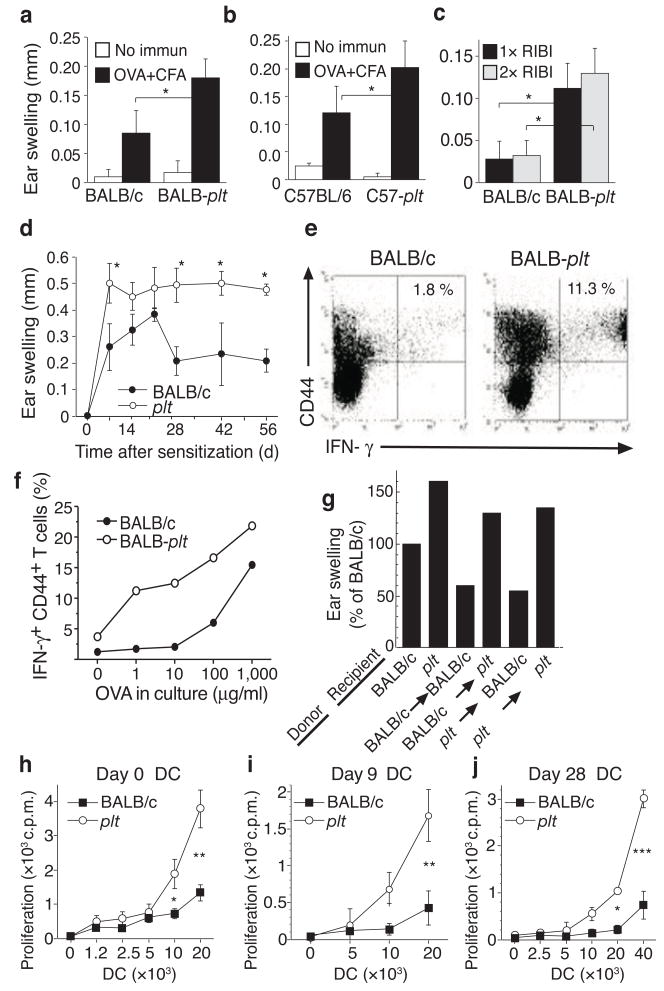
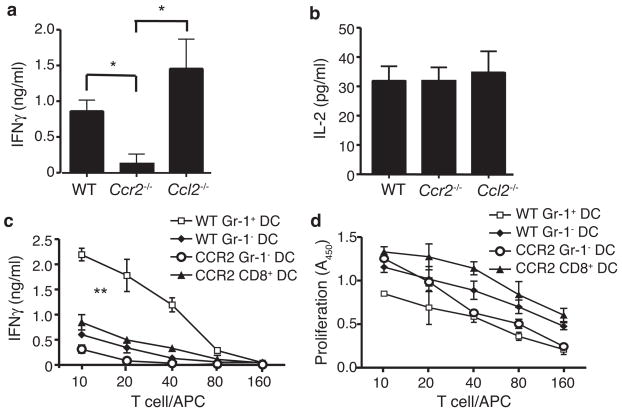
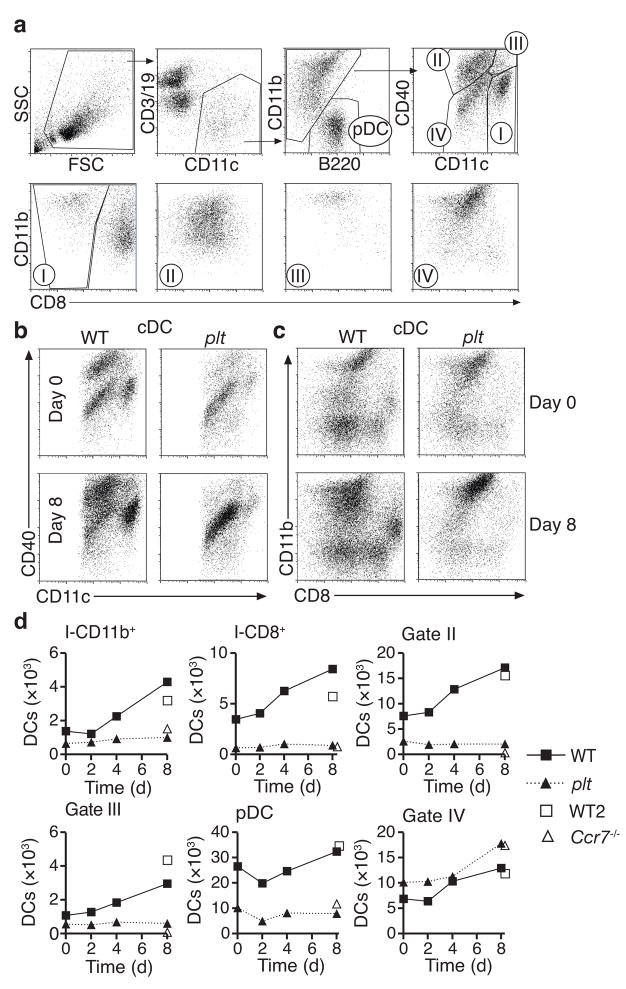
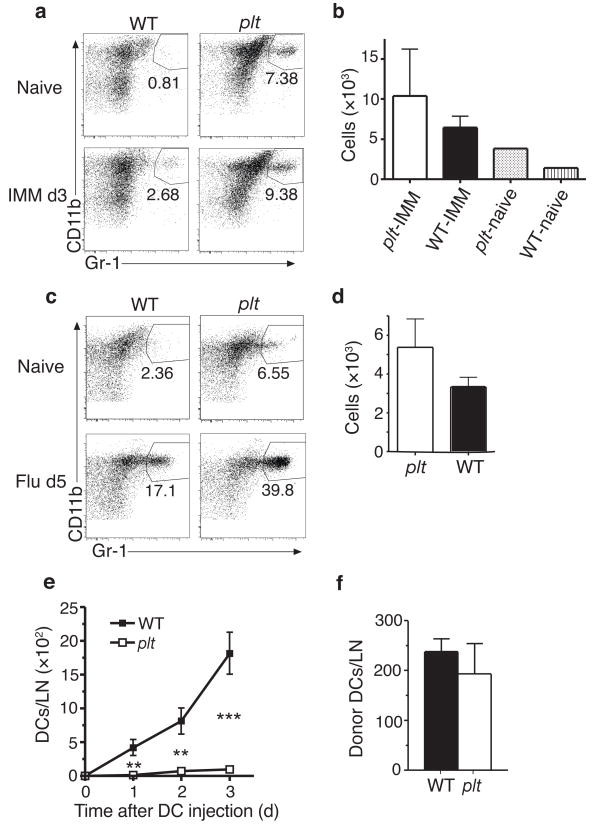
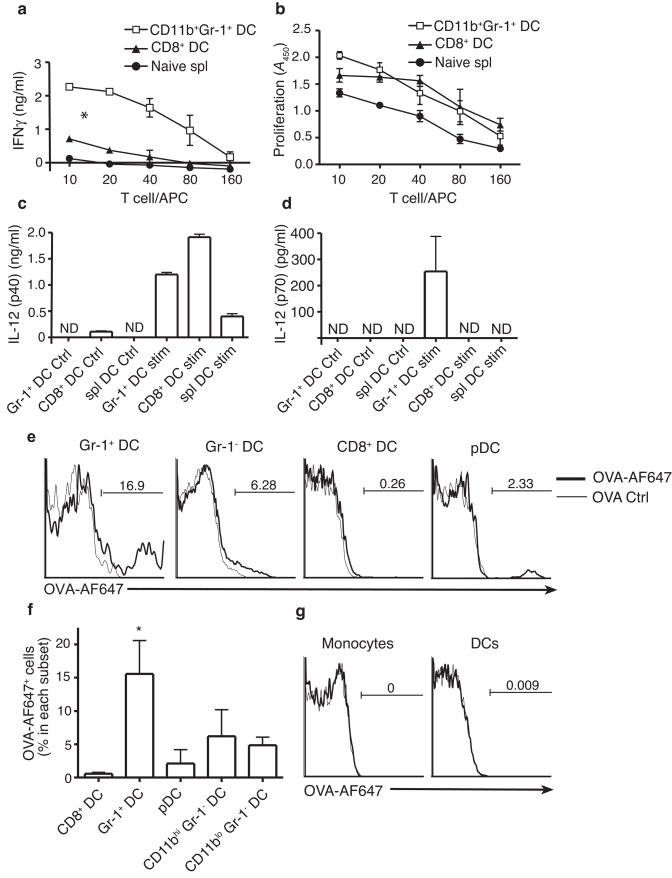
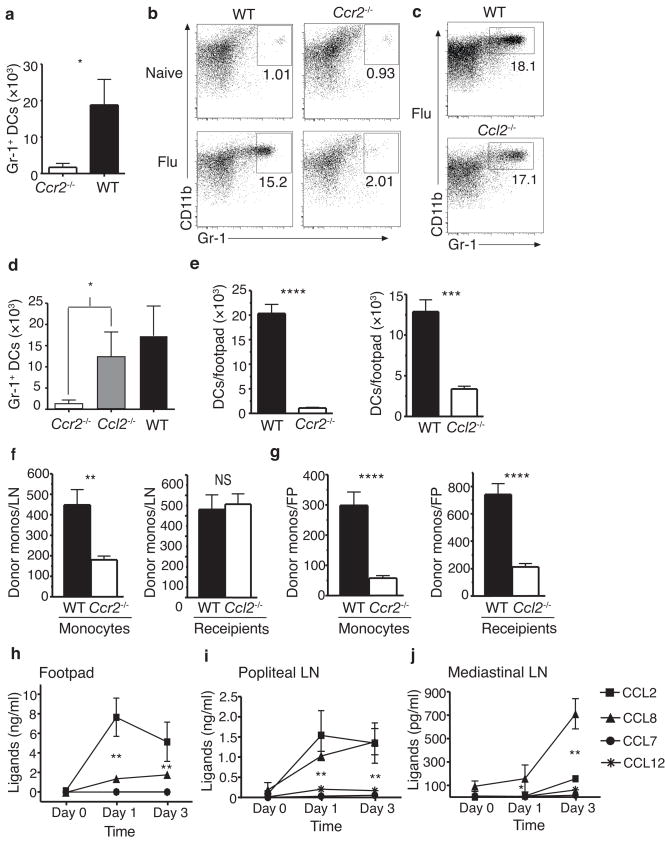
T helper type 1 (T(H)1)-polarized immune responses, which confer protection against intracellular pathogens, are thought to be initiated by dendritic cells (DCs) that enter lymph nodes from peripheral tissues. Here we found after viral infection or immunization, inflammatory monocytes were recruited into lymph nodes directly from the blood to become CD11c(+)CD11b(hi)Gr-1(+) inflammatory DCs, which produced abundant interleukin 12p70 and potently stimulated T(H)1 responses. This monocyte extravasation required the chemokine receptor CCR2 but not the chemokine CCL2 or receptor CCR7. Thus, the accumulation of inflammatory DCs and T(H)1 responses were much lower in Ccr2(-/-) mice, were preserved in Ccl2(-/-) mice and were relatively higher in CCL19-CCL21-Ser-deficient plt mutant mice, in which all other lymph node DC types were fewer in number. We conclude that blood-derived inflammatory DCs are important in the development of T(H)1 immune responses.
1型辅助性T细胞(T(H)1)极化的免疫反应可抵御细胞内病原体,据认为这种反应由从外周组织进入淋巴结的树突状细胞(DC)启动。我们发现,在病毒感染或免疫后,炎性单核细胞直接从血液被招募到淋巴结,成为CD11c(+)CD11b(hi)Gr-1(+)炎性DC,后者产生大量白细胞介素12p70并有力地刺激T(H)1反应。这种单核细胞外渗需要趋化因子受体CCR2,但不需要趋化因子CCL2或受体CCR7。因此,在Ccr2(-/-)小鼠中,炎性DC的积累和T(H)1反应要低得多,在Ccl2(-/-)小鼠中得以保留,而在CCL19-CCL21-Ser缺陷的plt突变小鼠中相对较高,在该小鼠中所有其他淋巴结DC类型数量较少。我们得出结论,源自血液的炎性DC在T(H)1免疫反应的发展中很重要。