Lince-Faria Mariana, Maffini Stefano, Orr Bernard, Ding Yun, Sunkel Claudio E, Tavares Alvaro, Johansen Jørgen, Johansen Kristen M, Maiato Helder
Instituto de Biologia Molecular e Celular, Faculdade de Medicina, Universidade do Porto, 4150-180 Porto, Portugal.
J Cell Biol. 2009 Mar 9;184(5):647-57. doi: 10.1083/jcb.200811012.
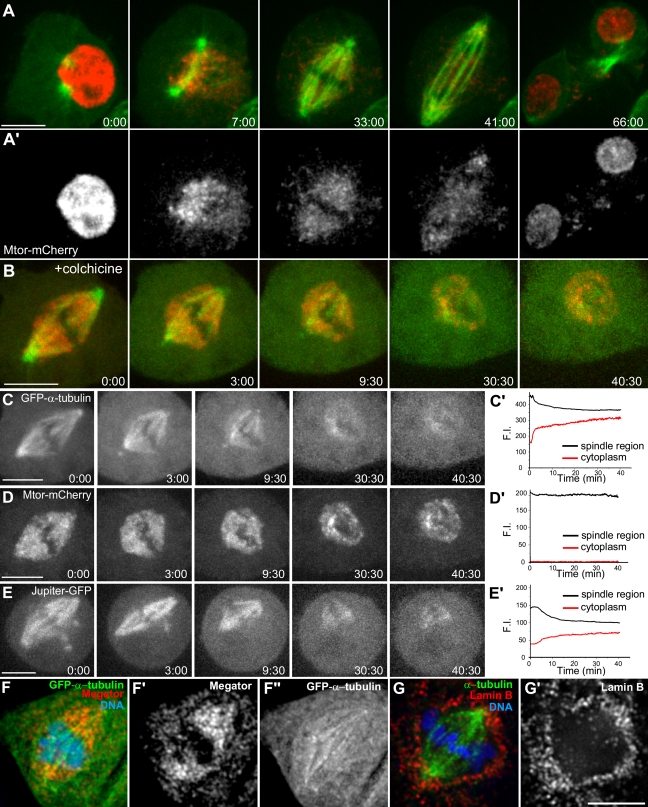
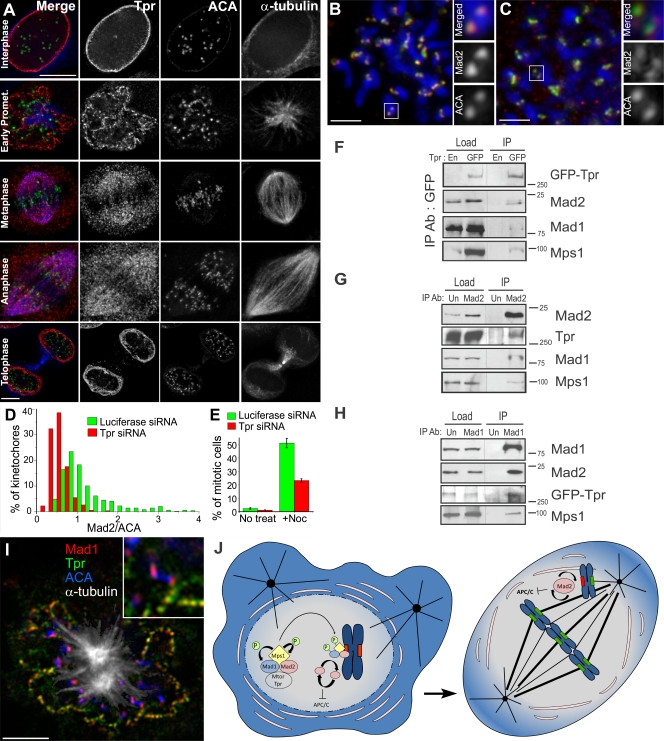
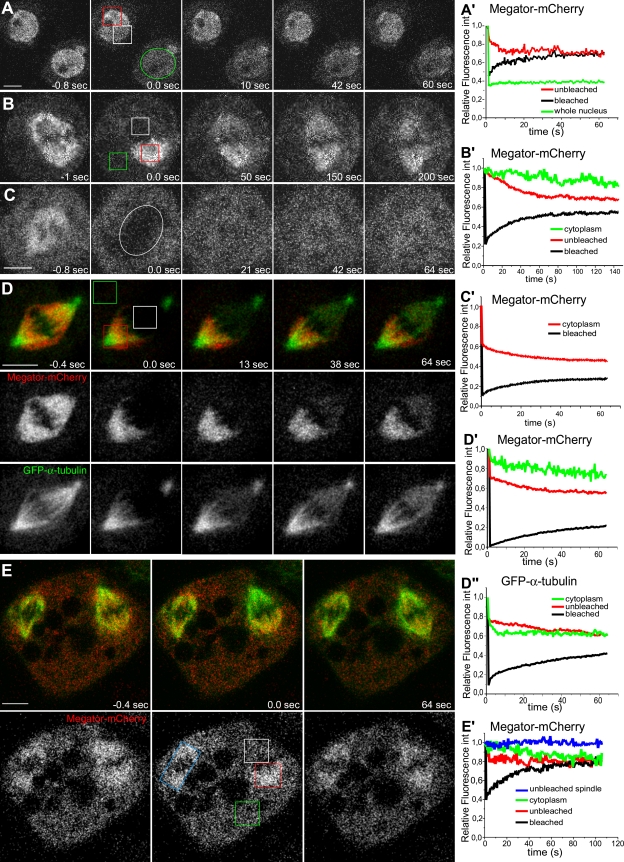
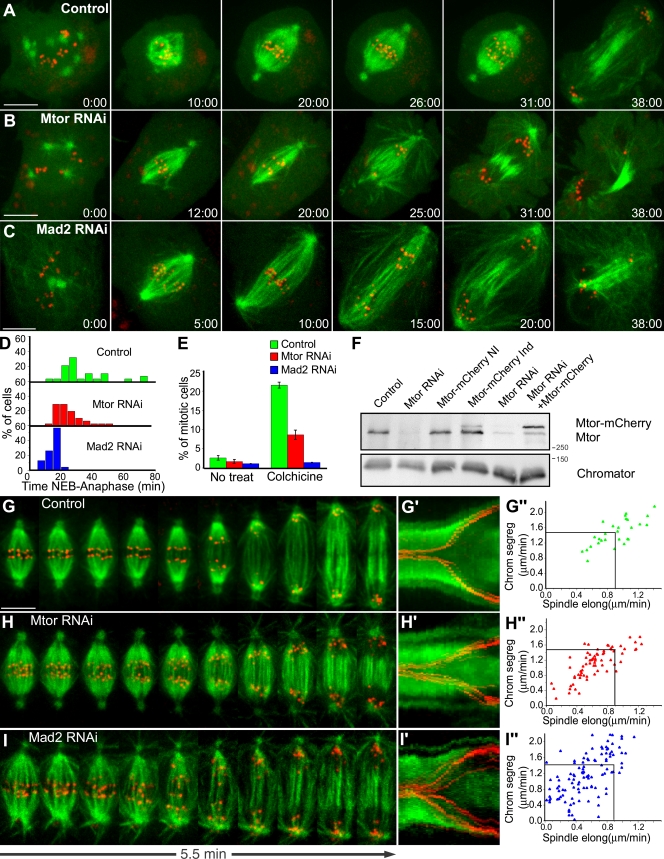
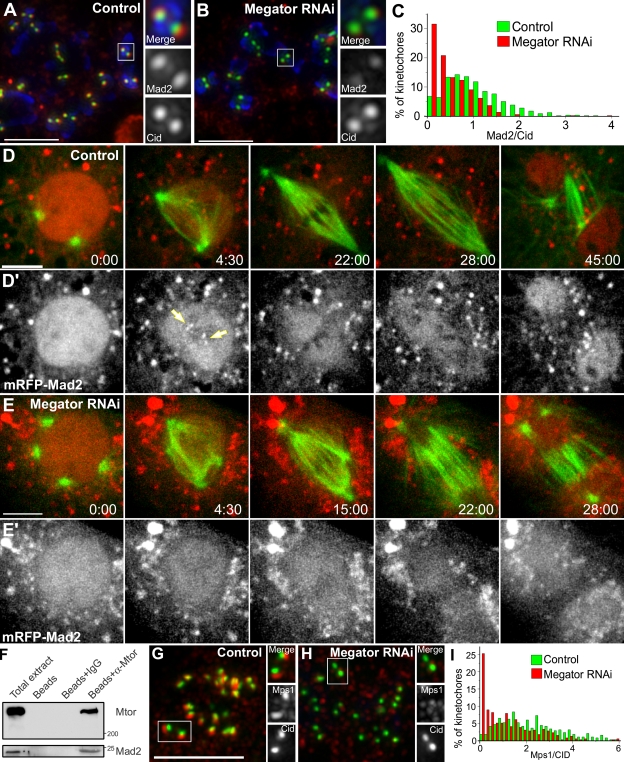
A putative spindle matrix has been hypothesized to mediate chromosome motion, but its existence and functionality remain controversial. In this report, we show that Megator (Mtor), the Drosophila melanogaster counterpart of the human nuclear pore complex protein translocated promoter region (Tpr), and the spindle assembly checkpoint (SAC) protein Mad2 form a conserved complex that localizes to a nuclear derived spindle matrix in living cells. Fluorescence recovery after photobleaching experiments supports that Mtor is retained around spindle microtubules, where it shows distinct dynamic properties. Mtor/Tpr promotes the recruitment of Mad2 and Mps1 but not Mad1 to unattached kinetochores (KTs), mediating normal mitotic duration and SAC response. At anaphase, Mtor plays a role in spindle elongation, thereby affecting normal chromosome movement. We propose that Mtor/Tpr functions as a spatial regulator of the SAC, which ensures the efficient recruitment of Mad2 to unattached KTs at the onset of mitosis and proper spindle maturation, whereas enrichment of Mad2 in a spindle matrix helps confine the action of a diffusible "wait anaphase" signal to the vicinity of the spindle.
一种假定的纺锤体基质被推测可介导染色体运动,但其存在和功能仍存在争议。在本报告中,我们表明,果蝇中的巨因子(Mtor),即人类核孔复合体蛋白转位启动子区域(Tpr)的对应物,与纺锤体组装检查点(SAC)蛋白Mad2形成一个保守的复合体,该复合体定位于活细胞中源自细胞核的纺锤体基质。光漂白后的荧光恢复实验表明,Mtor保留在纺锤体微管周围,并表现出独特的动态特性。Mtor/Tpr促进Mad2和Mps1而非Mad1募集到未附着的动粒(KTs),介导正常的有丝分裂持续时间和SAC反应。在后期,Mtor在纺锤体延长中发挥作用,从而影响正常的染色体运动。我们提出,Mtor/Tpr作为SAC的空间调节因子,可确保在有丝分裂开始时将Mad2有效地募集到未附着的KTs,并实现纺锤体的正常成熟,而Mad2在纺锤体基质中的富集有助于将可扩散的“等待后期”信号的作用限制在纺锤体附近。