Leon Michael, Johnson Brett A
Department of Neurobiology and Behavior, University of California Irvine, Irvine, CA 92697-4550, USA.
Cell Mol Life Sci. 2009 Jul;66(13):2135-50. doi: 10.1007/s00018-009-0011-9. Epub 2009 Mar 18.
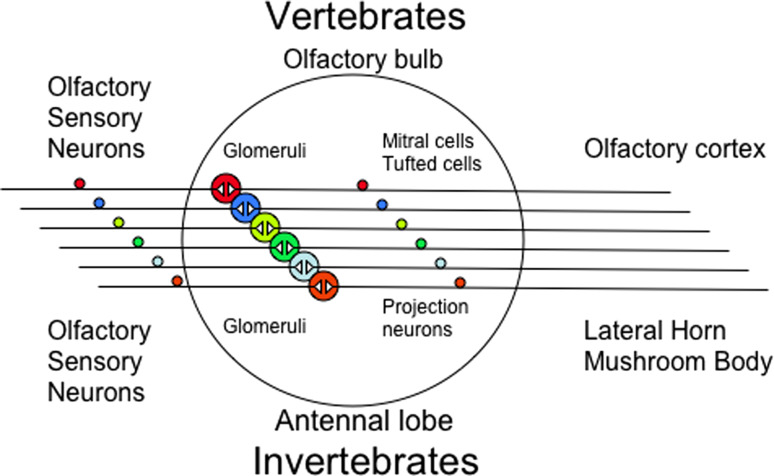
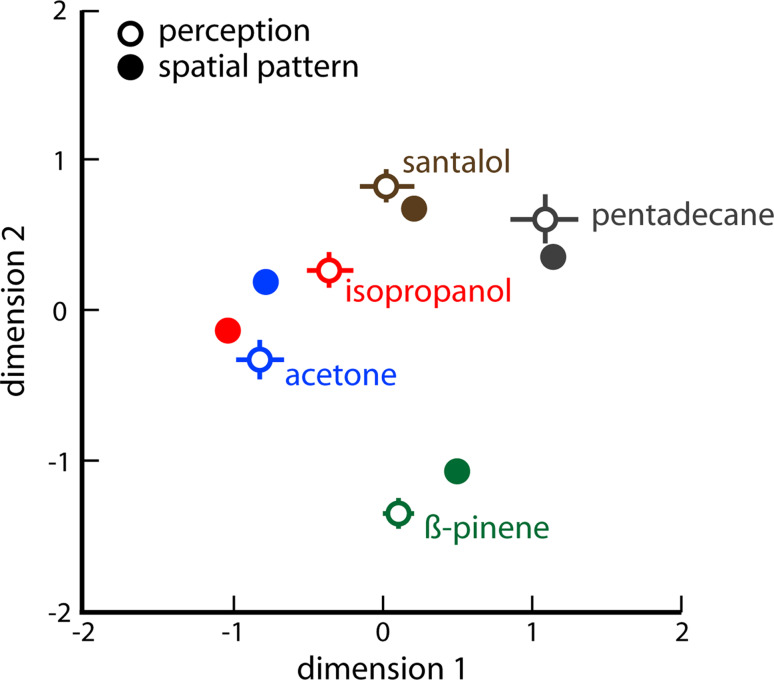
The coding of olfactory stimuli across a wide range of organisms may rely on fundamentally similar mechanisms in which a complement of specific odorant receptors on olfactory sensory neurons respond differentially to airborne chemicals to initiate the process by which specific odors are perceived. The question that we address in this review is the role of specific neurons in mediating this sensory system--an identity code--relative to the role that temporally specific responses across many neurons play in producing an olfactory perception--a temporal code. While information coded in specific neurons may be converted into a temporal code, it is also possible that temporal codes exist in the absence of response specificity for any particular neuron or subset of neurons. We review the data supporting these ideas, and we discuss the research perspectives that could help to reveal the mechanisms by which odorants become perceptions.
在广泛的生物体中,嗅觉刺激的编码可能依赖于基本相似的机制,即嗅觉感觉神经元上特定气味受体的互补体对空气中的化学物质做出不同反应,从而启动特定气味被感知的过程。我们在本综述中探讨的问题是,相对于许多神经元的时间特异性反应在产生嗅觉感知(一种时间编码)中所起的作用,特定神经元在介导这个感觉系统(一种身份编码)中所起的作用。虽然特定神经元中编码的信息可能会转换为时间编码,但在没有任何特定神经元或神经元子集的反应特异性的情况下,时间编码也可能存在。我们回顾了支持这些观点的数据,并讨论了有助于揭示气味如何变成感知的机制的研究前景。