Zhu Wuqiang, Hassink Rutger J, Rubart Michael, Field Loren J
The Riley Heart Research Center, Herman B Wells Center for Pediatric Research, Indiana University School of Medicine, 1044 West Walnut Street, R4 Building Room W376, Indianapolis, IN 46202-5225, USA.
Pediatr Cardiol. 2009 Jul;30(5):710-5. doi: 10.1007/s00246-009-9408-3. Epub 2009 Apr 2.
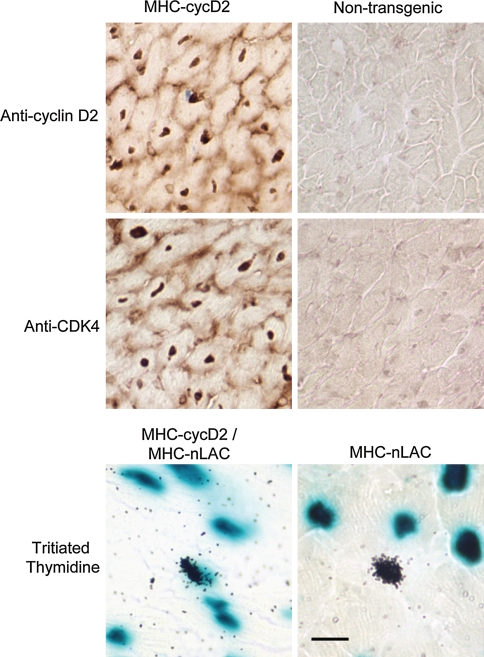
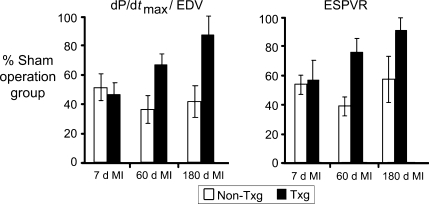
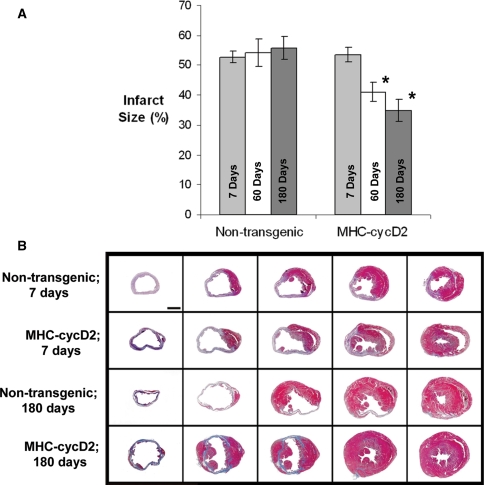
Cardiomyocytes exhibit robust proliferative activity during development. After birth, cardiomyocyte proliferation is markedly reduced. Consequently, regenerative growth in the postnatal heart via cardiomyocyte proliferation (and, by inference, proliferation of stem-cell-derived cardiomyocytes) is limited and often insufficient to affect repair following injury. Here, we review studies wherein cardiomyocyte cell cycle proliferation was induced via targeted expression of cyclin D2 in postnatal hearts. Cyclin D2 expression resulted in a greater than 500-fold increase in cell cycle activity in transgenic mice as compared to their nontransgenic siblings. Induced cell cycle activity resulted in infarct regression and concomitant improvement in cardiac hemodynamics following coronary artery occlusion. These studies support the notion that cell-cycle-based strategies can be exploited to drive myocardial repair following injury.
心肌细胞在发育过程中表现出强大的增殖活性。出生后,心肌细胞增殖显著减少。因此,出生后心脏通过心肌细胞增殖(以及由此推断的干细胞衍生心肌细胞的增殖)进行的再生性生长是有限的,通常不足以影响损伤后的修复。在此,我们综述了通过在出生后心脏中靶向表达细胞周期蛋白D2诱导心肌细胞周期增殖的研究。与非转基因同窝小鼠相比,细胞周期蛋白D2的表达导致转基因小鼠的细胞周期活性增加了500倍以上。诱导的细胞周期活性导致冠状动脉闭塞后梗死灶缩小,并伴随心脏血流动力学的改善。这些研究支持了这样一种观点,即基于细胞周期的策略可用于驱动损伤后的心肌修复。