Jourdi H, Hamo L, Oka T, Seegan A, Baudry M
Neurobiology, University of Southern California, 3641 Watt way, Los Angeles, CA 90089-2520, USA.
Neuropharmacology. 2009 Apr;56(5):876-85. doi: 10.1016/j.neuropharm.2009.01.015. Epub 2009 Jan 21.
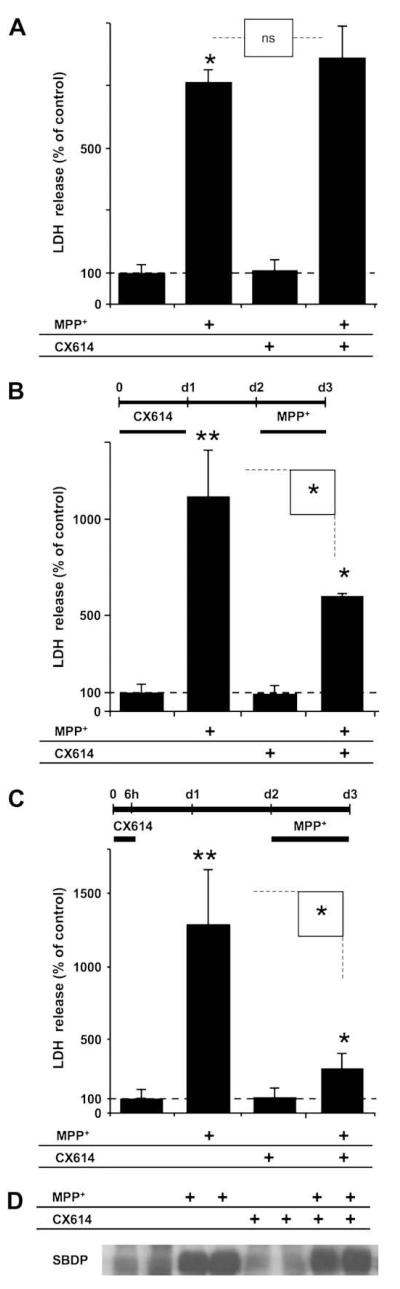
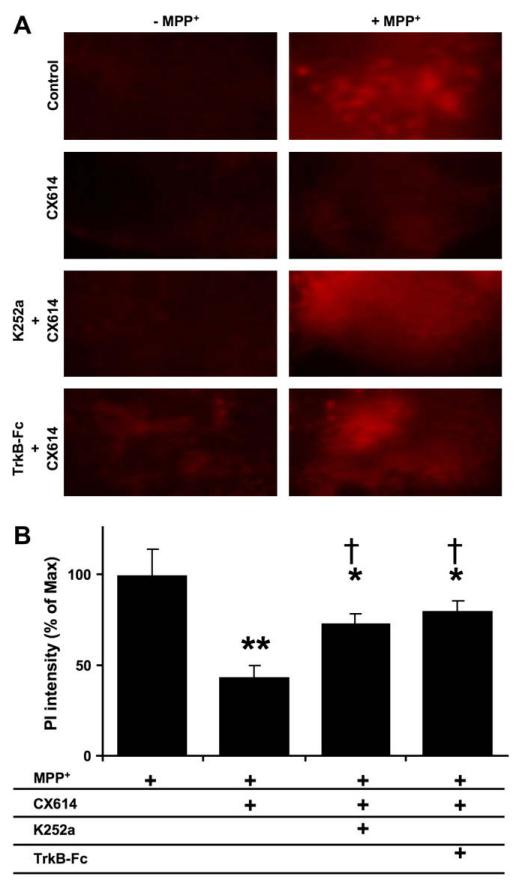
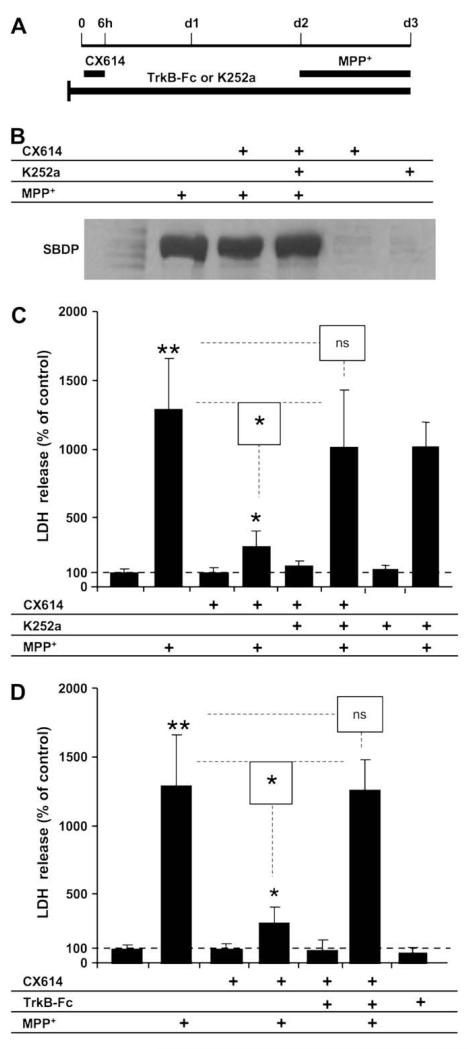
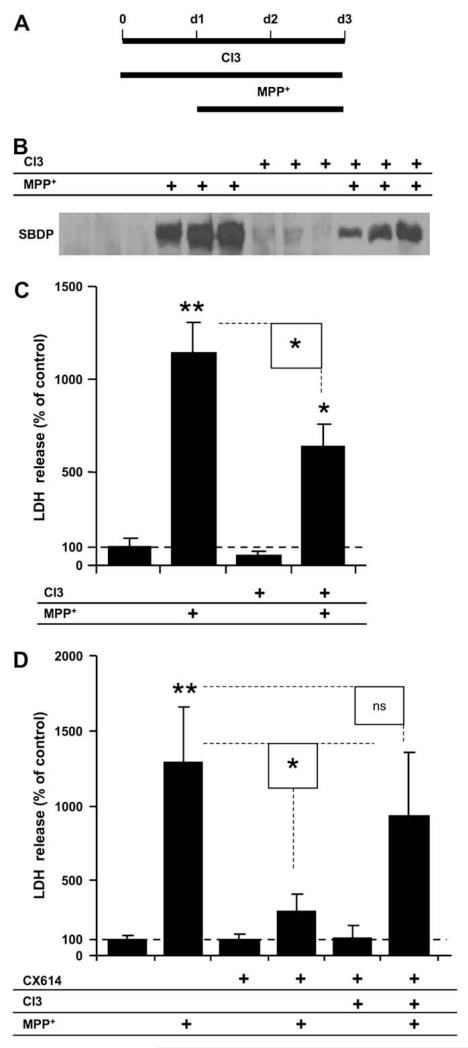
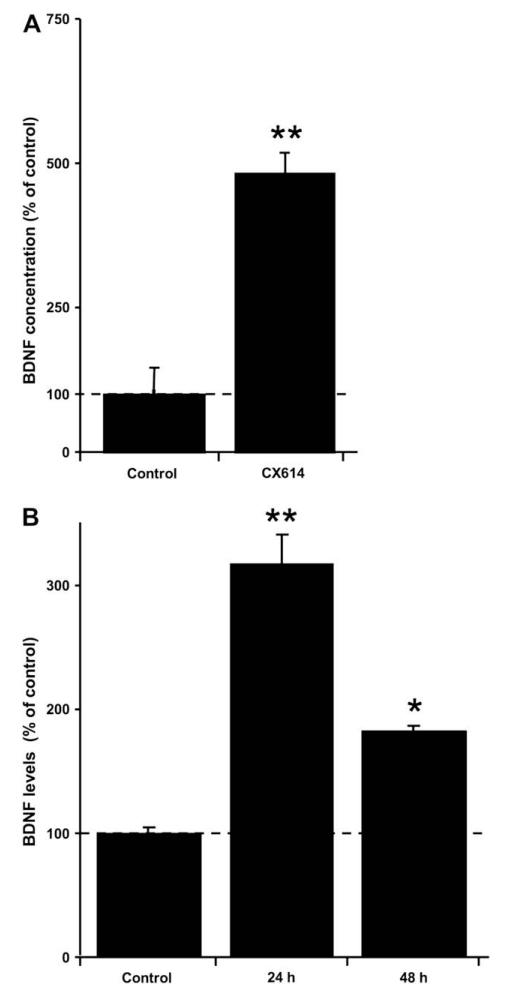
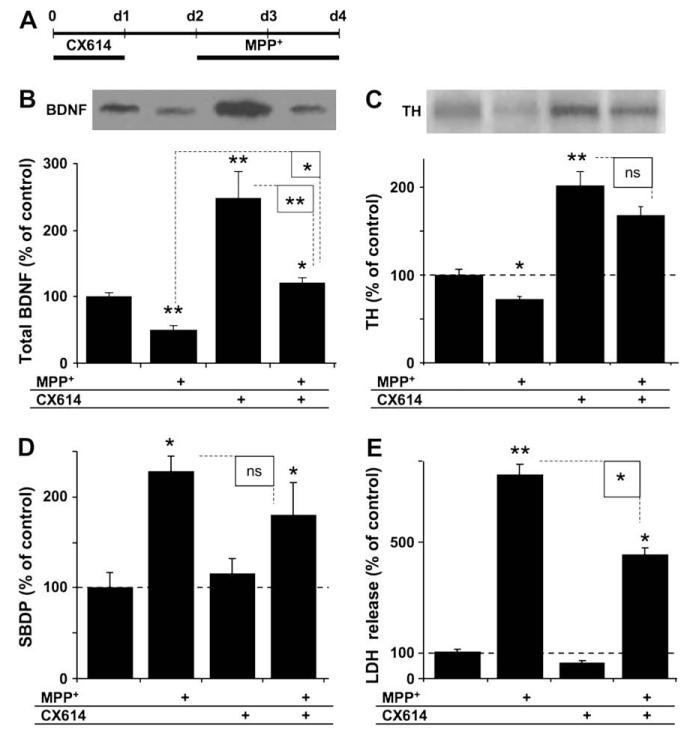
Neurotoxicity is involved in various neurodegenerative diseases including Parkinson's disease (PD), which affects mesencephalic dopaminergic neurons of the substantia nigra (SN). Positive alpha-Amino-3-hydroxy-5-methyl-4-isoxazolepropionic acid (AMPA) receptor modulators (PARMs, a.k.a. Ampakines, such as CX614) increase brain-derived neurotrophic factor (BDNF) protein levels in vivo and in cultured hippocampal slices. BDNF is a survival factor for various neuronal cell types including mesencephalic dopaminergic neurons. Using cultured mesencephalic and hippocampal slices, we investigated whether preincubation with CX614 could provide neuroprotection against MPP(+) toxicity and whether such neuroprotection was mediated by BDNF. Various treatment protocols were tested to demonstrate CX614-induced neuroprotection against MPP(+). Pretreatment with CX614 significantly reduced MPP(+)-induced toxicity and increased BDNF levels in both hippocampal and mesencephalic cultured slices; CX614 pretreatment for 6 h in hippocampal slices and 24 h in mesencephalic slices was sufficient to produce significant neuroprotection as assessed with lactate dehydrogenase release in slice medium and propidium iodide uptake in slices. Both a BDNF scavenger and an inhibitor of the BDNF receptor TrkB, abrogated CX614-mediated reduction of MPP(+)-induced toxicity. Inhibition of Ca(2+)-activated proteases, calpains, was also protective against MPP(+)-induced toxicity. However, co-application of calpain inhibitor with CX614 abolished CX614-mediated protection, suggesting a dual action of calpains in this model. We conclude that CX614 is neuroprotective against MPP(+)-induced toxicity, an effect mediated by increased BDNF expression and activation of BDNF-dependent signaling pathways. Our results provide support for using PARMs as a new therapy for neurodegenerative disorders, including PD.
神经毒性与包括帕金森病(PD)在内的多种神经退行性疾病有关,帕金森病会影响黑质(SN)的中脑多巴胺能神经元。阳性α-氨基-3-羟基-5-甲基-4-异恶唑丙酸(AMPA)受体调节剂(PARMs,又称安帕金,如CX614)可在体内和培养的海马切片中提高脑源性神经营养因子(BDNF)的蛋白水平。BDNF是包括中脑多巴胺能神经元在内的多种神经元细胞类型的存活因子。我们使用培养的中脑和海马切片,研究了用CX614预孵育是否能提供针对MPP(+)毒性的神经保护作用,以及这种神经保护作用是否由BDNF介导。测试了各种治疗方案以证明CX614诱导的针对MPP(+)的神经保护作用。用CX614预处理可显著降低MPP(+)诱导的毒性,并提高海马和中脑培养切片中的BDNF水平;在海马切片中用CX614预处理6小时,在中脑切片中预处理24小时,就足以产生显著的神经保护作用,这通过切片培养基中乳酸脱氢酶的释放和切片中碘化丙啶的摄取来评估。BDNF清除剂和BDNF受体TrkB的抑制剂均可消除CX614介导的MPP(+)诱导毒性的降低。抑制钙(2+)激活的蛋白酶(钙蛋白酶)也可预防MPP(+)诱导的毒性。然而,钙蛋白酶抑制剂与CX614共同应用可消除CX614介导的保护作用,表明钙蛋白酶在该模型中具有双重作用。我们得出结论,CX614对MPP(+)诱导的毒性具有神经保护作用,这一作用由BDNF表达增加和BDNF依赖性信号通路的激活介导。我们的结果为使用PARMs作为包括PD在内的神经退行性疾病的新疗法提供了支持。