Dasgupta Arijit, Mukherjee Debabrata
Gill Heart Institute, University of Kentucky, Lexington, KY 40536-0200, USA.
Vasc Health Risk Manag. 2009;5(1):275-86. doi: 10.2147/vhrm.s4309. Epub 2009 Apr 8.
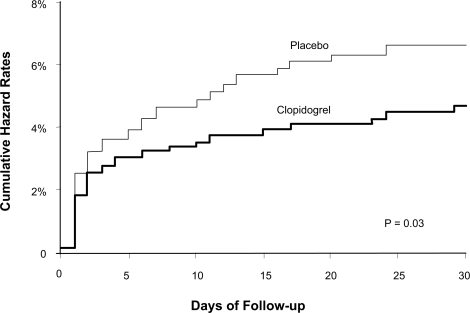
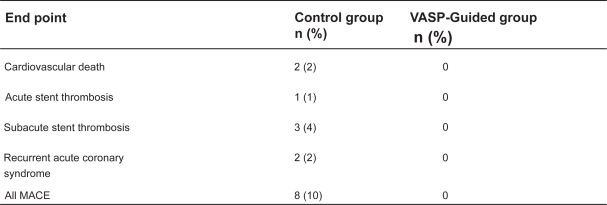
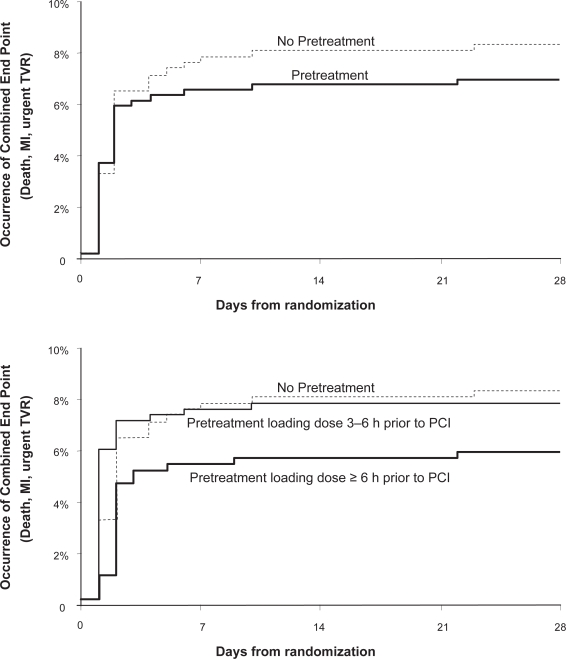
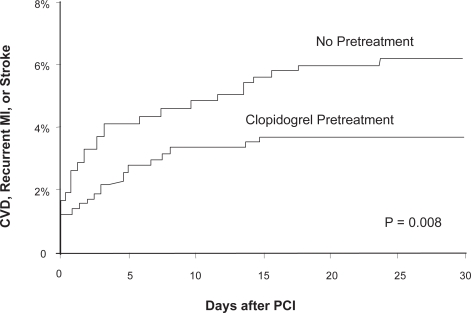
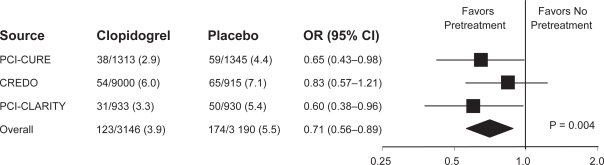
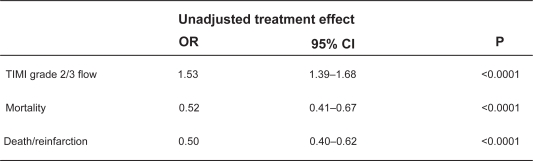
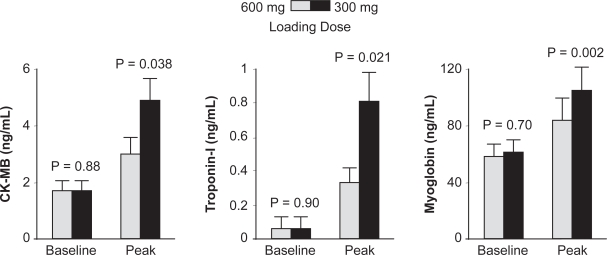
It is estimated that approximately a quarter of patients undergoing coronary intervention may have significant post-procedural creatinine (CK)/creatinine kinase myocardial band (CK-MB) elevations and approximately half may have post-procedural troponin elevations. Current data suggest that periprocedural infarction is associated with short-, intermediate-, and long-term adverse outcomes, most notably mortality. This review examines the role of clopidogrel in decreasing periprocedural myonecrosis following percutaneous coronary intervention (PCI). Clopidogrel is an important pharmacologic agent used to reduce myocardial infarction post-coronary intervention as assessed directly by the evaluation of cardiac biomarkers and indirectly by the evaluation of short-term ischemic events. The optimal dose of clopidogrel is considered to be at least 300 mg given 6 to 15 hours prior to PCI but there is considerable evidence to suggest that a loading dose of 600 mg given 2 to 6 hours prior to PCI may be more efficacious in limiting post-coronary intervention events. The benefit obtained from clopidogrel appears independent of and incremental to that of other antiplatelet and antithrombotic agents used during and after coronary intervention.
据估计,接受冠状动脉介入治疗的患者中约有四分之一可能在术后出现显著的肌酸激酶(CK)/肌酸激酶同工酶(CK-MB)升高,约一半患者可能出现术后肌钙蛋白升高。目前的数据表明,围手术期梗死与短期、中期和长期不良后果相关,最显著的是死亡率。本综述探讨了氯吡格雷在减少经皮冠状动脉介入治疗(PCI)后围手术期心肌坏死中的作用。氯吡格雷是一种重要的药物,可通过心脏生物标志物评估直接评估,以及通过短期缺血事件评估间接评估,用于减少冠状动脉介入治疗后的心肌梗死。氯吡格雷的最佳剂量被认为是在PCI前6至15小时给予至少300毫克,但有相当多的证据表明,在PCI前2至6小时给予600毫克的负荷剂量可能在限制冠状动脉介入治疗后事件方面更有效。氯吡格雷获得的益处似乎独立于冠状动脉介入治疗期间和之后使用的其他抗血小板和抗血栓药物,并且是这些药物益处的增量补充。