Kazi Aslamuzzaman, Lawrence Harshani, Guida Wayne C, McLaughlin Mark L, Springett Gregory M, Berndt Norbert, Yip Richard M L, Sebti Saïd M
Drug Discovery Department, Moffitt Cancer Center, Tampa, FL 33612, USA.
Cell Cycle. 2009 Jun 15;8(12):1940-51. doi: 10.4161/cc.8.12.8798. Epub 2009 Jun 20.
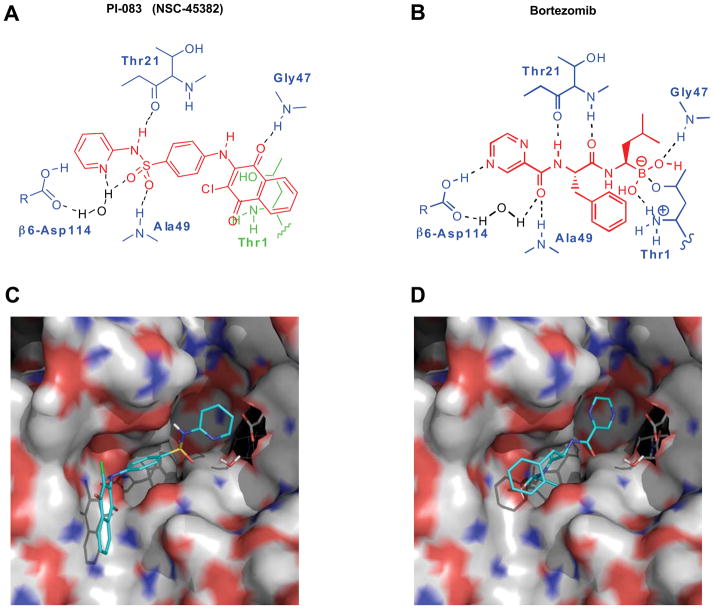
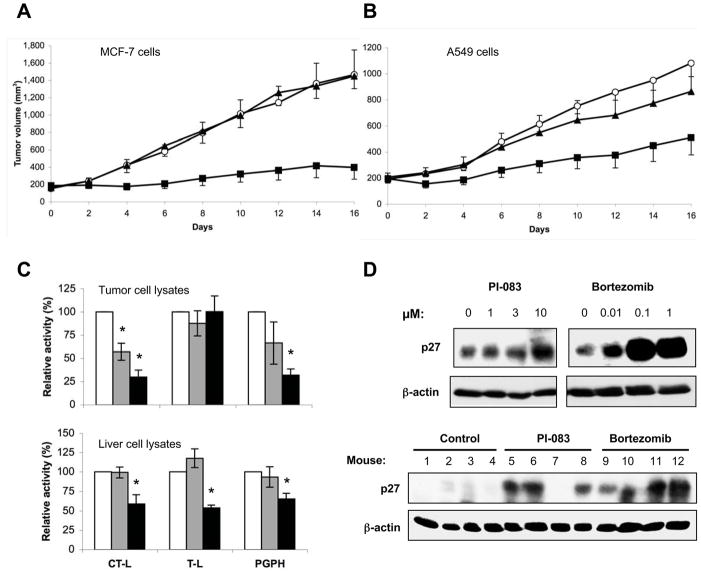
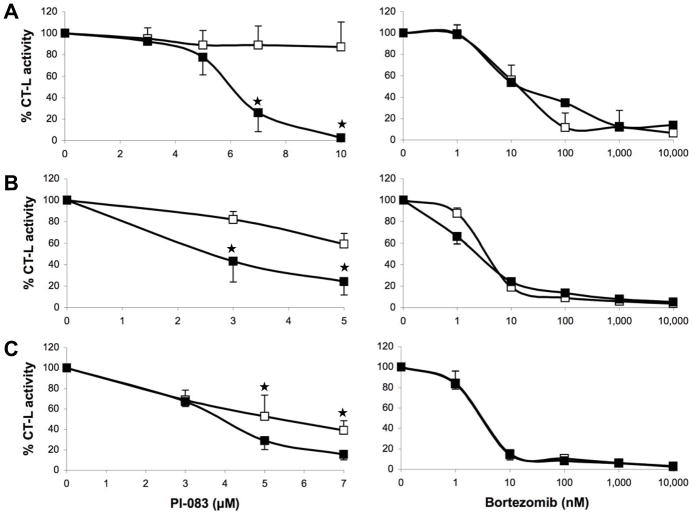
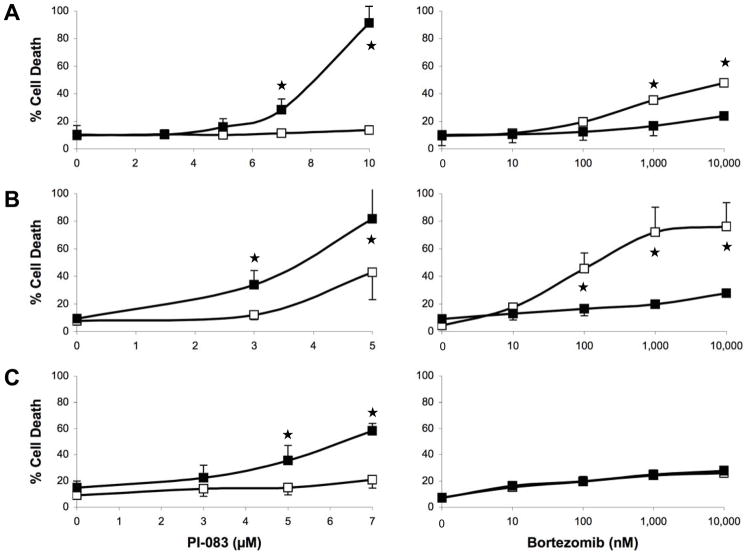
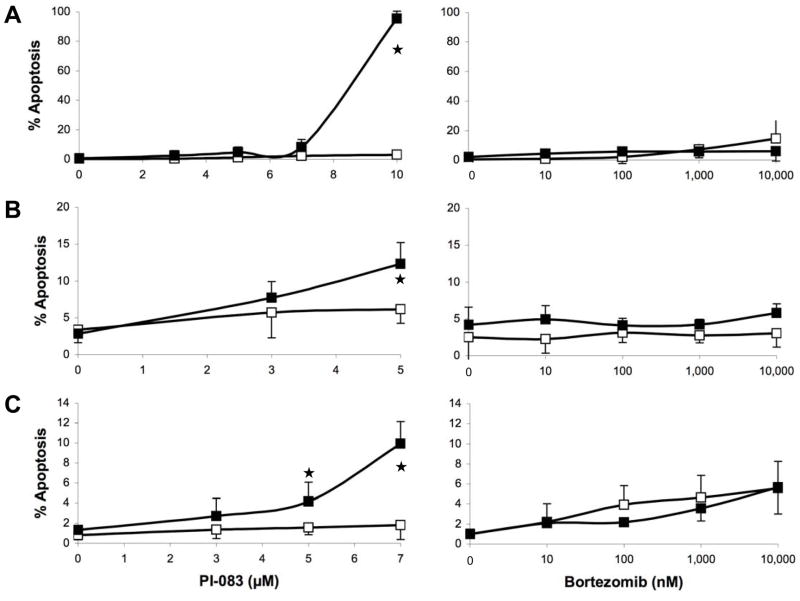
Numerous proteins controlling cell cycle progression, apoptosis and angiogenesis are degraded by the ubiquitin/proteasome system, which has become the subject for intense investigations for cancer therapeutics. Therefore, we used in silico and experimental approaches to screen compounds from the NCI chemical libraries for inhibitors against the chymotrypsin-like (CT-L) activity of the proteasome and discovered PI-083. Molecular docking indicates that PI-083 interacts with the Thr21, Gly47 and Ala49 residues of the beta5 subunit and Asp114 of the beta6 subunit of the proteasome. PI-083 inhibits CT-L activity and cell proliferation and induces apoptosis selectively in cancer cells (ovarian T80-Hras, pancreatic C7-Kras and breast MCF-7) as compared to their normal/immortalized counterparts (T80, C7 and MCF-10A, respectively). In contrast, Bortezomib, the only proteasome inhibitor approved by the Food and Drug Administration (FDA), did not exhibit this selectivity for cancer over non-transformed cells. In addition, in all cancer cells tested, including Multiple Myeloma (MM), breast, pancreatic, ovarian, lung, prostate cancer cell lines as well as fresh MM cells from patients, PI-083 required less time than Bortezomib to induce its antitumor effects. Furthermore, in nude mouse xenografts in vivo, PI-083, but not Bortezomib, suppressed the growth of human breast and lung tumors. Finally, following in vivo treatment of mice, PI-083 inhibited tumor, but not hepatic liver CT-L activity, whereas Bortezomib inhibited both tumor and liver CT-L activities. These results suggest that PI-083 is more selective for cancer cells and may have broader antitumor activity and therefore warrants further advanced preclinical studies.
许多控制细胞周期进程、细胞凋亡和血管生成的蛋白质会被泛素/蛋白酶体系统降解,该系统已成为癌症治疗领域深入研究的对象。因此,我们采用计算机模拟和实验方法,从美国国立癌症研究所(NCI)化学文库中筛选化合物,以寻找针对蛋白酶体类胰凝乳蛋白酶样(CT-L)活性的抑制剂,并发现了PI-083。分子对接表明,PI-083与蛋白酶体β5亚基的苏氨酸21、甘氨酸47和丙氨酸49残基以及β6亚基的天冬氨酸114相互作用。与正常/永生化对应细胞(分别为T80、C7和MCF-10A)相比,PI-08抑制CT-L活性和细胞增殖,并在癌细胞(卵巢T80-Hras、胰腺C7-Kras和乳腺MCF-7)中选择性诱导细胞凋亡。相比之下,美国食品药品监督管理局(FDA)批准的唯一一种蛋白酶体抑制剂硼替佐米,对癌细胞和未转化细胞没有这种选择性。此外,在所有测试的癌细胞中,包括多发性骨髓瘤(MM)、乳腺、胰腺、卵巢、肺癌、前列腺癌细胞系以及患者的新鲜MM细胞,PI-083诱导抗肿瘤作用所需的时间比硼替佐米少。此外,在体内裸鼠异种移植模型中,PI-083而非硼替佐米抑制了人乳腺和肺癌肿瘤的生长。最后,在对小鼠进行体内治疗后,PI-083抑制肿瘤而非肝脏的CT-L活性,而硼替佐米同时抑制肿瘤和肝脏的CT-L活性。这些结果表明,PI-083对癌细胞具有更高的选择性,可能具有更广泛的抗肿瘤活性,因此值得进一步深入开展临床前研究。