Bhowmick Sudipta, Ali Nahid
Infectious Diseases and Immunology Division, Indian Institute of Chemical Biology, Kolkata, West Bengal, India.
PLoS One. 2009 Jun 5;4(6):e5820. doi: 10.1371/journal.pone.0005820.
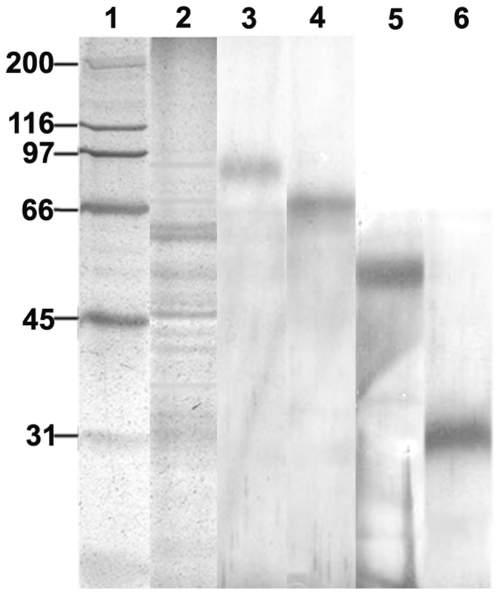
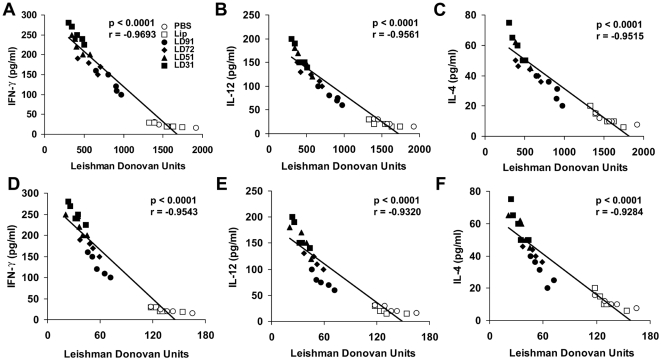
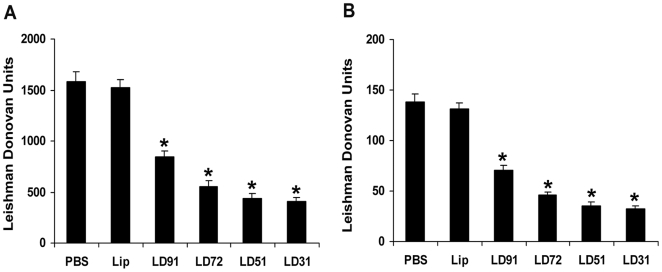
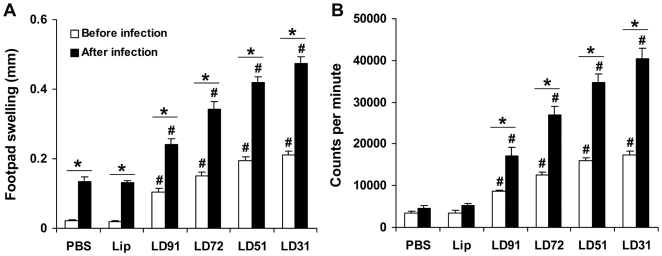
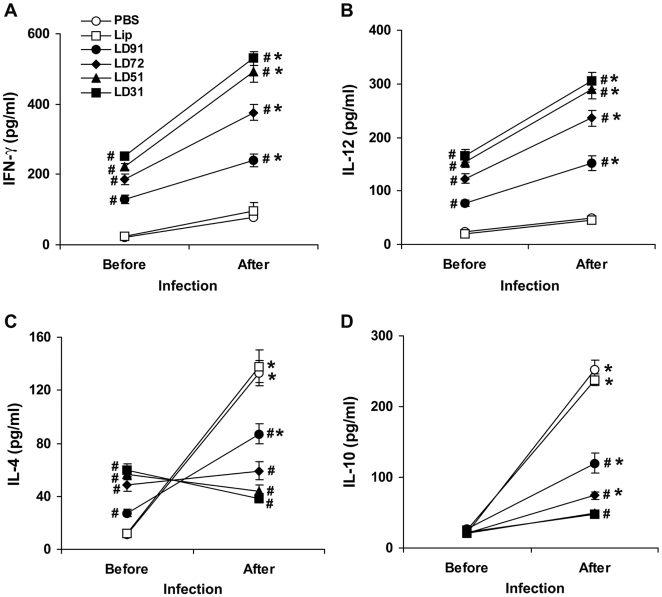
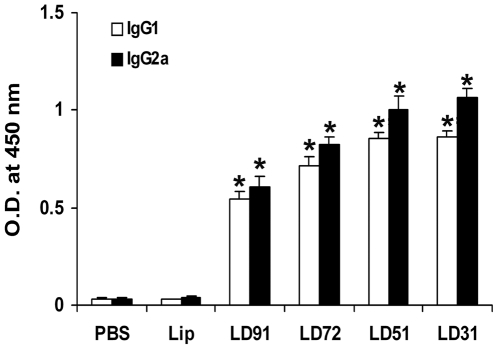
Visceral leishmaniasis (VL), caused by the intracellular parasite Leishmania donovani is a major public health problem in the developing world. But there is no effective and safe vaccine approved for clinical use against any form of leishmaniasis. Through reactivity with kala-azar patient and cured sera, polypeptides ranging from 91 to 31-kDa from L. donovani promastigotes were previously identified as potential protective vaccine candidates. In this study four polypeptides 91(LD91), 72 (LD72), 51(LD51) and 31 (LD31)-kDa were purified using sodium dodecyl sulfate polyacrylamide gel electrophoresis followed by electroelution. We compared the vaccine efficacy of these antigens encapsulated in cationic liposomes in BALB/c mice against challenge infection with L. donovani. Our results demonstrated that liposomal LD31 (74%-77%) and LD51 (72%-75%) vaccination reduced parasite burden to the greatest degree followed by liposomal LD72 (65%-67%) and LD91 (46%-49%). Analysis of the cytokine responses in immunized mice revealed that all the vaccinated groups produced prechallenge interferon-gamma, interleukin-12 and interleukin-4. Interestingly, the degree of reduction in parasite load could be predicted by the magnitude of the cytokine responses which correlated inversely with the parasite burden both in liver and spleen. The 31, 51 and 72-kDa bands were identified as ATP synthase alpha chain, beta-tubulin and heat shock 70-related protein 1 precursor of L. major, respectively using matrix-assisted laser desorption ionization-time of flight (MALDI-TOF/TOF) mass spectrometry. These three leishmanial antigens have not been described before as successful vaccine candidates examined against in vivo VL model. Thus, these antigens can be potential components of future antileishmaniasis vaccines.
内脏利什曼病(VL)由细胞内寄生虫杜氏利什曼原虫引起,是发展中世界的一个主要公共卫生问题。但目前尚无获批用于临床的针对任何形式利什曼病的有效且安全的疫苗。通过与黑热病患者血清及治愈血清的反应,先前已鉴定出杜氏利什曼原虫前鞭毛体中分子量在91至31 kDa之间的多肽为潜在的保护性疫苗候选物。在本研究中,使用十二烷基硫酸钠聚丙烯酰胺凝胶电泳随后进行电洗脱的方法纯化了四种多肽,分别为91 kDa(LD91)、72 kDa(LD72)、51 kDa(LD51)和31 kDa(LD31)。我们比较了包裹在阳离子脂质体中的这些抗原在BALB/c小鼠中针对杜氏利什曼原虫攻击感染的疫苗效力。我们的结果表明,脂质体LD31(74% - 77%)和LD51(高达72% - 75%)疫苗接种能最大程度降低寄生虫负荷,其次是脂质体LD72(65% - 67%)和LD91(46% - 49%)。对免疫小鼠细胞因子反应的分析显示,所有接种疫苗的组在攻击前均产生了干扰素 - γ、白细胞介素 - 12和白细胞介素 - 4。有趣的是,寄生虫负荷的降低程度可通过细胞因子反应的强度来预测,细胞因子反应强度与肝脏和脾脏中的寄生虫负荷呈负相关。使用基质辅助激光解吸电离飞行时间(MALDI - TOF/TOF)质谱法分别将31 kDa、51 kDa和72 kDa的条带鉴定为硕大利什曼原虫的ATP合酶α链、β - 微管蛋白和热休克70相关蛋白1前体。这三种利什曼原虫抗原此前尚未被描述为针对体内VL模型检测的成功疫苗候选物。因此,这些抗原可能是未来抗利什曼病疫苗的潜在成分。