Nager Charles W, Richter Holly E, Nygaard Ingrid, Paraiso Marie Fidela, Wu Jennifer M, Kenton Kimberly, Atnip Shanna D, Spino Cathie
Department of Reproductive Medicine, University of California, San Diego, San Diego, CA, USA.
Int Urogynecol J Pelvic Floor Dysfunct. 2009 Sep;20(9):1023-8. doi: 10.1007/s00192-009-0866-1. Epub 2009 Jun 16.
The aim of the study was to determine whether successful incontinence pessary fitting or pessary size can be predicted by specific POPQ measurements in women without advanced pelvic organ prolapse.
In a multicenter study, women with stress urinary incontinence (SUI) and POPQ stage < or = 2 were randomized to three treatment arms: (1) incontinence pessary, (2) behavioral therapy, or (3) both. This study evaluates incontinence pessary size, POPQ measures, and successful fitting in the 266 women assigned to treatment arms 1 and 3.
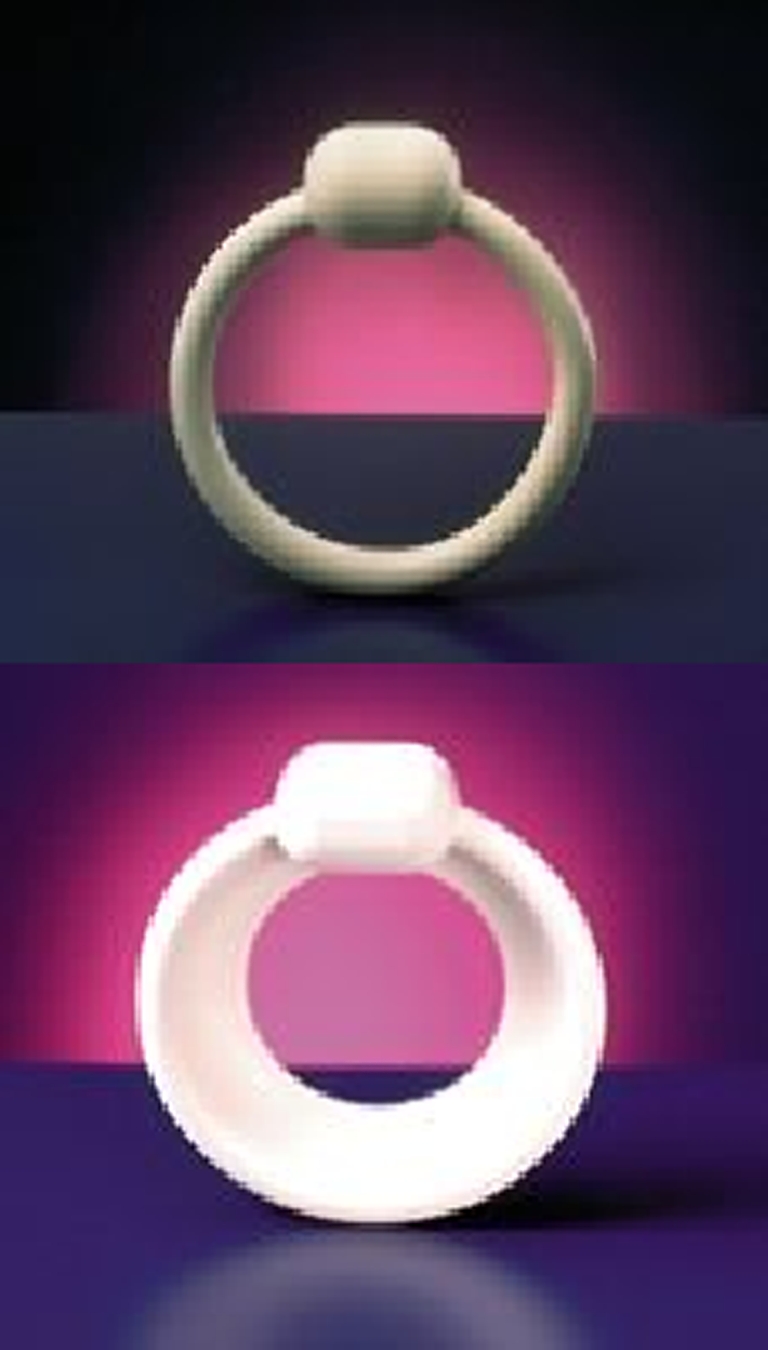
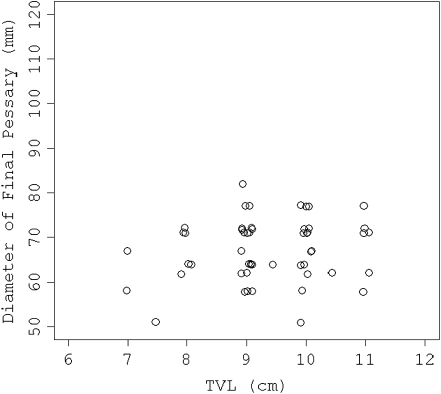
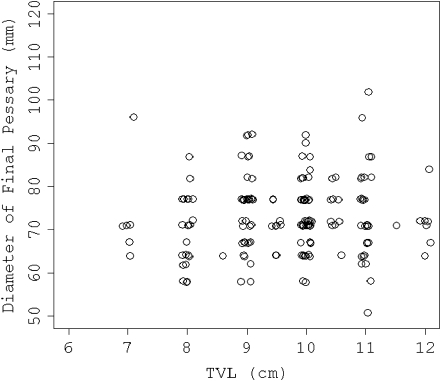
Two hundred thirty-five women (92%) were successfully fitted with an incontinence ring (n = 122) or dish (n = 113). Hysterectomy, genital hiatus (GH), and GH/total vaginal length (TVL) ratios did not predict unsuccessful fitting (p > 0.05). However, mean TVL was greater in women successfully fitted (9.6 vs. 8.8 cm, p < 0.01). Final pessary diameter was not predicted by TVL, point D, or point C (p > 0.05).
The vast majority of women with SUI can be successfully fitted with an incontinence pessary, but specific POPQ measures were not helpful in determining incontinence pessary size.
本研究的目的是确定在没有严重盆腔器官脱垂的女性中,能否通过特定的盆腔器官脱垂定量分期(POPQ)测量来预测尿失禁子宫托的成功适配或子宫托尺寸。
在一项多中心研究中,压力性尿失禁(SUI)且POPQ分期≤2期的女性被随机分为三个治疗组:(1)尿失禁子宫托,(2)行为疗法,或(3)两者结合。本研究评估了分配到治疗组1和3的266名女性的尿失禁子宫托尺寸、POPQ测量值以及成功适配情况。
235名女性(92%)成功适配了尿失禁环(n = 122)或尿失禁盘(n = 113)。子宫切除术、生殖裂孔(GH)以及GH/总阴道长度(TVL)比值并不能预测适配失败(p > 0.05)。然而,成功适配的女性平均TVL更长(9.6 vs. 8.8 cm,p < 0.01)。TVL、D点或C点无法预测最终子宫托直径(p > 0.05)。
绝大多数压力性尿失禁女性能够成功适配尿失禁子宫托,但特定的POPQ测量对于确定尿失禁子宫托尺寸并无帮助。