Ince M Nedim, Elliott David E, Setiawan Tommy, Metwali Ahmed, Blum Arthur, Chen Hung-lin, Urban Joseph F, Flavell Richard A, Weinstock Joel V
Department of Internal Medicine, University of Iowa, Iowa City, USA.
Eur J Immunol. 2009 Jul;39(7):1870-8. doi: 10.1002/eji.200838956.
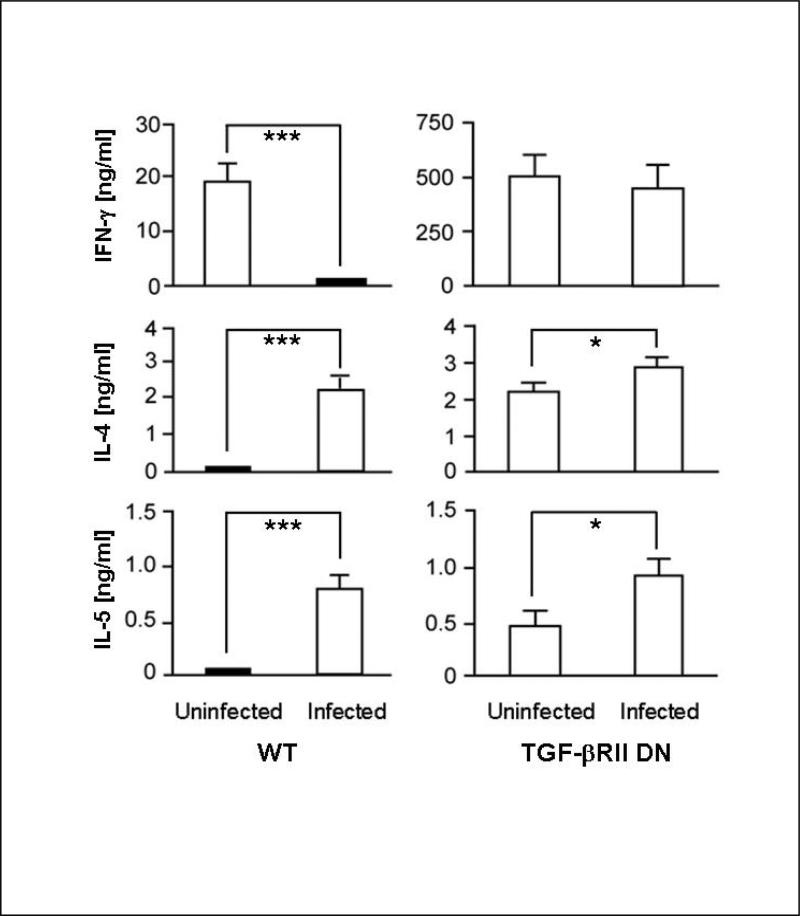
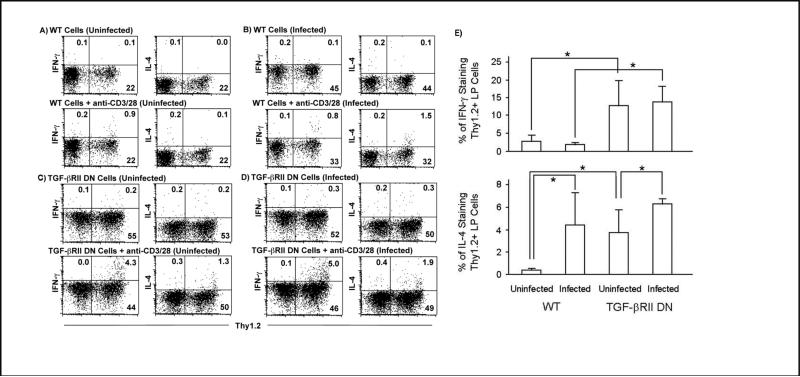
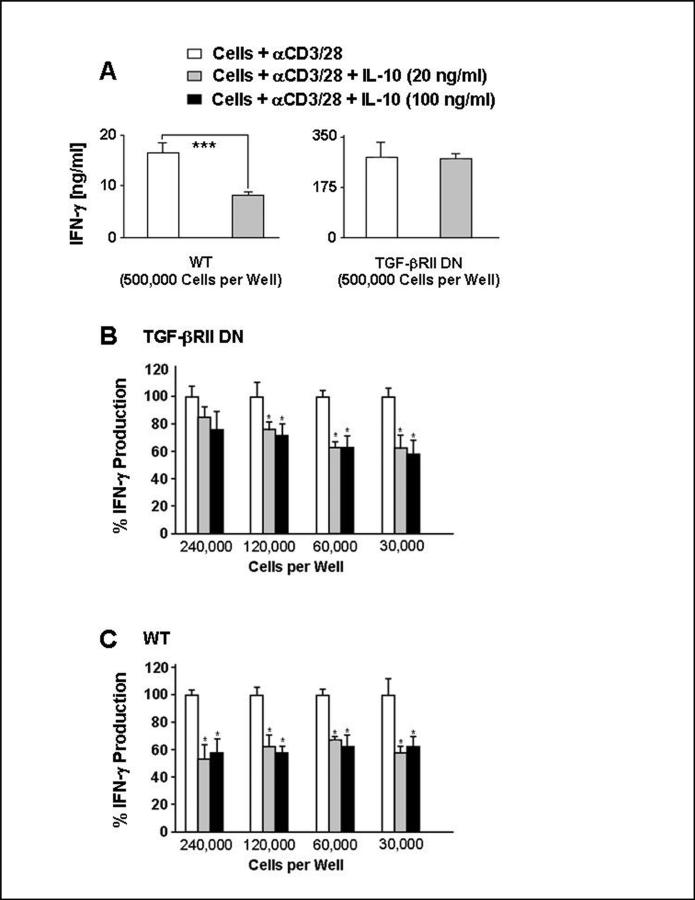
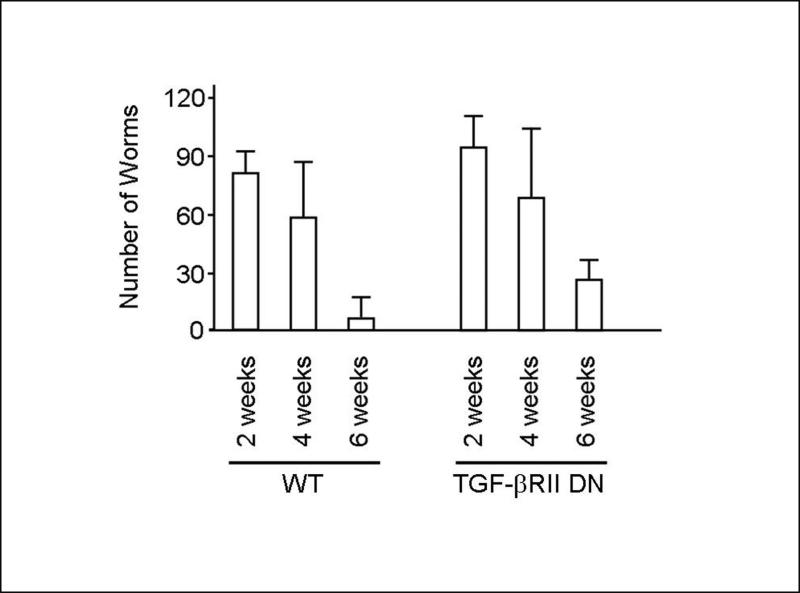
Colonization with helminthic parasites induces mucosal regulatory cytokines, like IL-10 or TGF-beta, that are important in suppressing colitis. Helminths induce mucosal T cell IL-10 secretion and regulate lamina propria mononuclear cell (LPMC) Th1 cytokine generation in an IL-10-dependent manner in WT mice. Helminths also stimulate mucosal TGF-beta release. As TGF-beta exerts major regulatory effects on T lymphocytes, we investigated the role of T lymphocyte TGF-beta signaling in helminthic modulation of intestinal immunity. T cell TGF-beta signaling is interrupted in TGF-beta receptor II dominant negative (TGF-betaRII DN) mice by T-cell-specific over-expression of a TGF-betaRII DN. We studied LPMC responses in WT and TGF-betaRII DN mice that were uninfected or colonized with the nematode, Heligmosomoides polygyrus. Our results indicate an essential role of T cell TGF-beta signaling in limiting mucosal Th1 and Th2 responses. Furthermore, we demonstrate that helminthic induction of intestinal T cell IL-10 secretion requires intact T cell TGF-beta-signaling pathway. Helminths fail to curtail robust, dysregulated intestinal Th1 cytokine production and chronic colitis in TGF-betaRII DN mice. Thus, T cell TGF-beta signaling is essential for helminthic stimulation of mucosal IL-10 production, helminthic modulation of intestinal IFN-gamma generation and H. polygyrus-mediated suppression of chronic colitis.
感染蠕虫寄生虫会诱导黏膜调节性细胞因子,如白细胞介素-10(IL-10)或转化生长因子-β(TGF-β),这些细胞因子在抑制结肠炎方面很重要。在野生型小鼠中,蠕虫可诱导黏膜T细胞分泌IL-10,并以IL-10依赖的方式调节固有层单核细胞(LPMC)产生Th1细胞因子。蠕虫还能刺激黏膜释放TGF-β。由于TGF-β对T淋巴细胞发挥主要调节作用,我们研究了T淋巴细胞TGF-β信号传导在蠕虫对肠道免疫调节中的作用。在TGF-β受体II显性阴性(TGF-βRII DN)小鼠中,通过T细胞特异性过表达TGF-βRII DN可中断T细胞TGF-β信号传导。我们研究了未感染或感染线虫多毛螺旋体的野生型和TGF-βRII DN小鼠的LPMC反应。我们的结果表明,T细胞TGF-β信号传导在限制黏膜Th1和Th2反应中起重要作用。此外,我们证明蠕虫诱导肠道T细胞分泌IL-10需要完整的T细胞TGF-β信号传导途径。在TGF-βRII DN小鼠中,蠕虫无法抑制强烈的、失调的肠道Th1细胞因子产生和慢性结肠炎。因此,T细胞TGF-β信号传导对于蠕虫刺激黏膜产生IL-10、蠕虫调节肠道γ干扰素生成以及多毛螺旋体介导的慢性结肠炎抑制至关重要。