Department of Medicine, University of California Irvine, Irvine, CA, USA.
J Thromb Thrombolysis. 2010 Apr;29(3):326-39. doi: 10.1007/s11239-009-0361-z.
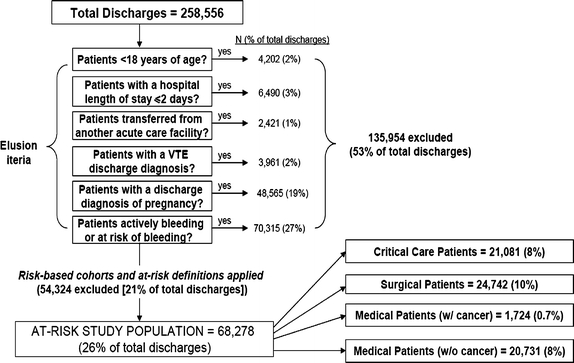
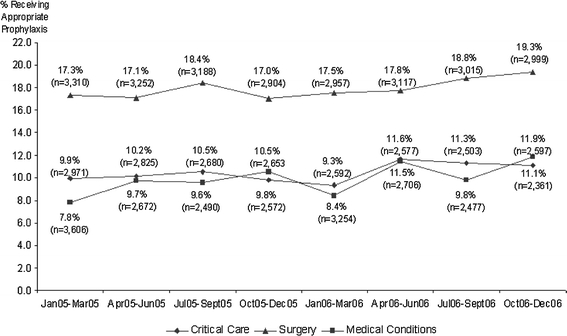
The 7th conference of the American College of Chest Physicians (ACCP7) provides recommendations on the type, dose, and duration of thromboprophylaxis in hospitalized patients at risk of venous thromboembolism (VTE), but the extent to which hospitals follow these criteria has not been well studied. Discharge and billing records for patients admitted to any of 16 acute-care hospitals from January 2005 to December 2006 were obtained. Patients 18 years or older who had an inpatient stay >or=2 days and no apparent contraindications for thromboprophylaxis were grouped into the categories of critical care, surgery and medically ill before being assessed for additional VTE risk factors based on the diagnostic criteria outlined in ACCP7. For patients at risk, the recommended type (mechanical or pharmacologic), dose, and duration of thromboprophylaxis was identified based on the guidelines and compared to the regimen actually received, if any. Among the 258,556 hospitalized patients, 68,278 (26.4%) were determined to be at risk of VTE without apparent contraindications for thromboprophylaxis. The proportions of patients who received the appropriate type, dose, and duration of thromboprophylaxis were 10.5, 9.8, and 17.9% for critical care, medical, and surgical patients, respectively. Of those at risk, 36.8% received no thromboprophylaxis and an additional 50.2% received thromboprophylaxis deemed inappropriate for one or more reasons. The implementation of ACCP7 guidelines for type, dosage, and duration of thromboprophylaxis is low in patients at risk of VTE. There is a need for physicians and health systems to improve awareness and implementation of recommended thromboprophylaxis.
美国胸科医师学院(ACCP)第 7 次会议就住院患者静脉血栓栓塞症(VTE)风险的血栓预防类型、剂量和持续时间提供了建议,但医院遵循这些标准的程度尚未得到很好的研究。从 2005 年 1 月至 2006 年 12 月,获取了 16 家急性护理医院住院患者的出院和计费记录。将住院时间>2 天且无明显血栓预防禁忌的 18 岁或以上患者分为重症监护、手术和内科患者类别,然后根据 ACCP7 中概述的诊断标准评估其他 VTE 危险因素。对于有风险的患者,根据指南确定推荐的血栓预防类型(机械或药物)、剂量和持续时间,并与实际接受的方案进行比较,如果有的话。在 258556 名住院患者中,68278 名(26.4%)被确定为 VTE 风险患者,且无明显的血栓预防禁忌。接受适当的血栓预防类型、剂量和持续时间的患者比例分别为重症监护、内科和外科患者的 10.5%、9.8%和 17.9%。在有风险的患者中,36.8%未接受血栓预防,另外 50.2%因一个或多个原因接受了不合适的血栓预防。在 VTE 风险患者中,ACCP7 指南关于血栓预防类型、剂量和持续时间的实施率较低。医生和卫生系统需要提高对推荐的血栓预防的认识并加强实施。