Pistollato Francesca, Rampazzo Elena, Abbadi Sara, Della Puppa Alessandro, Scienza Renato, D'Avella Domenico, Denaro Luca, Te Kronnie Geertruy, Panchision David M, Basso Giuseppe
Hemato-Oncology Laboratory, Department of Pediatrics, University of Padova, Padova, Italy.
PLoS One. 2009 Jul 9;4(7):e6206. doi: 10.1371/journal.pone.0006206.
Glioblastoma multiforme (GBM) is one of most common and still poorly treated primary brain tumors. In search for new therapeutic approaches, Bone Morphogenetic Proteins (BMPs) induce astroglial commitment in GBM-derived cells in vitro. However, we recently suggested that hypoxia, which is characteristic of the brain niche where GBM reside, strongly counter-acts BMP effects. It seems apparent that a more complete understanding of the biology of GBM cells is needed, in particular considering the role played by hypoxia as a signaling pathways regulator. HIF-1alpha is controlled at the transcriptional and translational level by mTOR and, alike BMP, also mTOR pathway modulates glial differentiation in central nervous system (CNS) stem cells.
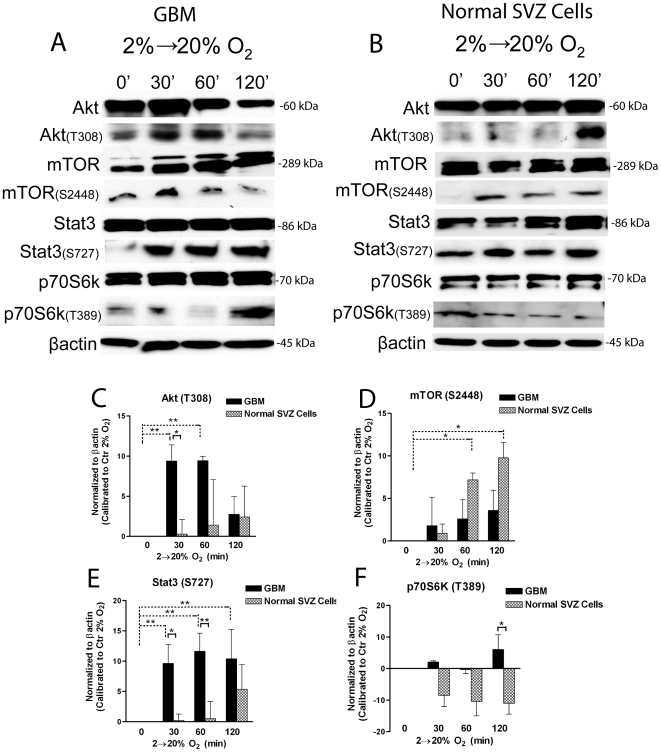
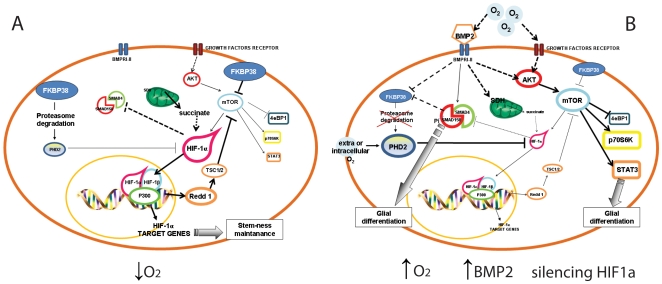
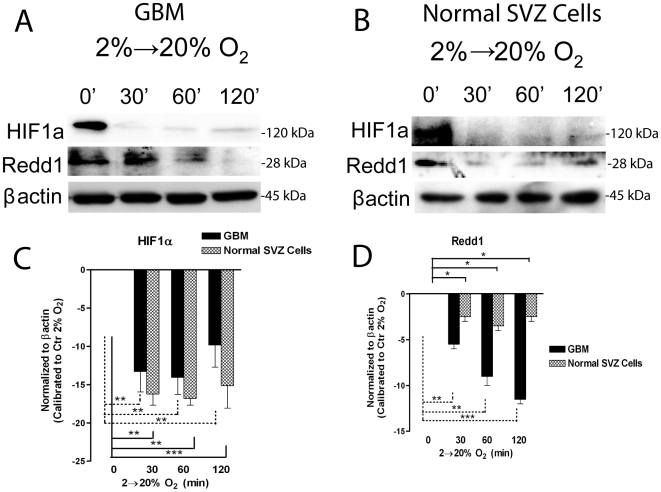
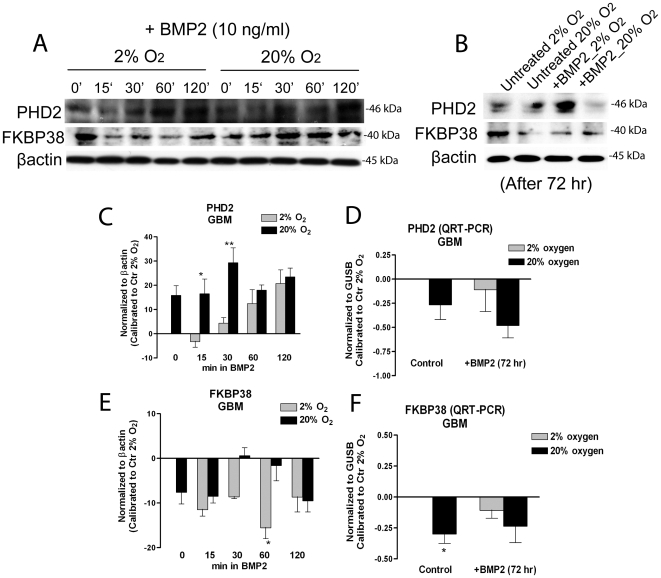
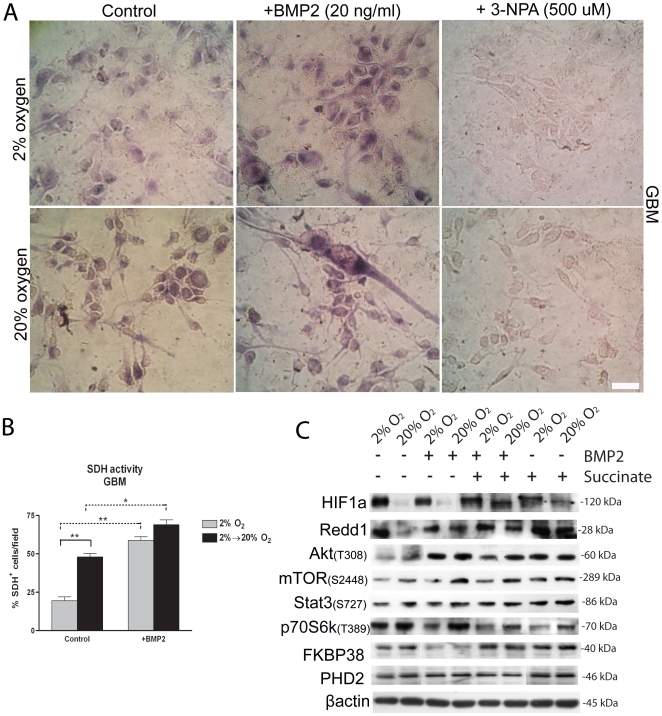
METHODOLOGY/PRINCIPAL FINDINGS: Here, we investigate the role of mTOR signaling in the regulation of HIF-1alpha stability in primary GBM-derived cells maintained under hypoxia (2% oxygen). We found that GBM cells, when acutely exposed to high oxygen tension, undergo Akt/mTOR pathway activation and that BMP2 acts in an analogous way. Importantly, repression of Akt/mTOR signaling is maintained by HIF-1alpha through REDD1 upregulation. On the other hand, BMP2 counter-acts HIF-1alpha stability by modulating intracellular succinate and by controlling proline hydroxylase 2 (PHD2) protein through inhibition of FKBP38, a PHD2 protein regulator.
CONCLUSIONS/SIGNIFICANCE: In this study we elucidate the molecular mechanisms by which two pro-differentiating stimuli, BMP2 and acute high oxygen exposure, control HIF-1alpha stability. We previously reported that both these stimuli, by inducing astroglial differentiation, affect GBM cells growth. We also found differences in high oxygen and BMP2 sensitivity between GBM cells and normal cells that should be further investigated to better define tumor cell biology.
多形性胶质母细胞瘤(GBM)是最常见且治疗效果仍较差的原发性脑肿瘤之一。为寻找新的治疗方法,骨形态发生蛋白(BMPs)在体外可诱导GBM来源的细胞向星形胶质细胞分化。然而,我们最近发现,GBM所处的脑微环境所具有的缺氧特性会强烈抵消BMP的作用。显然,需要更全面地了解GBM细胞的生物学特性,尤其是考虑到缺氧作为信号通路调节因子所起的作用。缺氧诱导因子-1α(HIF-1α)在转录和翻译水平受哺乳动物雷帕霉素靶蛋白(mTOR)调控,并且与BMP一样,mTOR信号通路也调节中枢神经系统(CNS)干细胞的胶质细胞分化。
方法/主要发现:在此,我们研究了mTOR信号在缺氧(2%氧气)条件下培养的原发性GBM来源细胞中对HIF-1α稳定性调节的作用。我们发现,GBM细胞在急性暴露于高氧张力时会发生Akt/mTOR信号通路激活,并且骨形态发生蛋白2(BMP2)也以类似方式起作用。重要的是,HIF-1α通过上调REDD1维持对Akt/mTOR信号的抑制。另一方面,BMP2通过调节细胞内琥珀酸以及通过抑制FKBP38(一种PHD2蛋白调节剂)来控制脯氨酰羟化酶2(PHD2)蛋白,从而抵消HIF-1α的稳定性。
结论/意义:在本研究中,我们阐明了两种促分化刺激因素,即BMP2和急性高氧暴露,控制HIF-1α稳定性的分子机制。我们之前报道过,这两种刺激因素通过诱导星形胶质细胞分化来影响GBM细胞的生长。我们还发现GBM细胞与正常细胞在高氧和BMP2敏感性方面存在差异,应进一步研究以更好地界定肿瘤细胞生物学特性。