Cambridge Institute for Medical Research, Addenbrooke's Hospital, UK.
Hum Mol Genet. 2009 Oct 15;18(20):3805-21. doi: 10.1093/hmg/ddp324. Epub 2009 Jul 20.
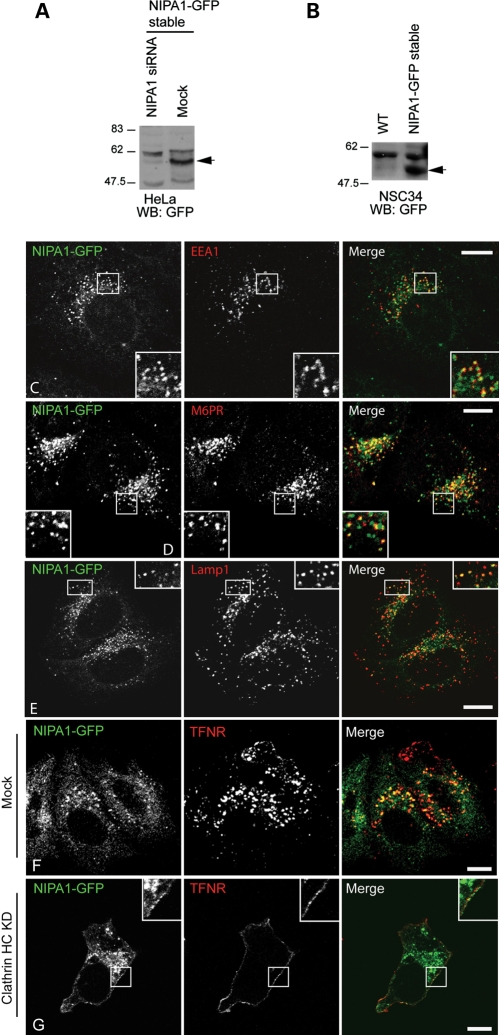
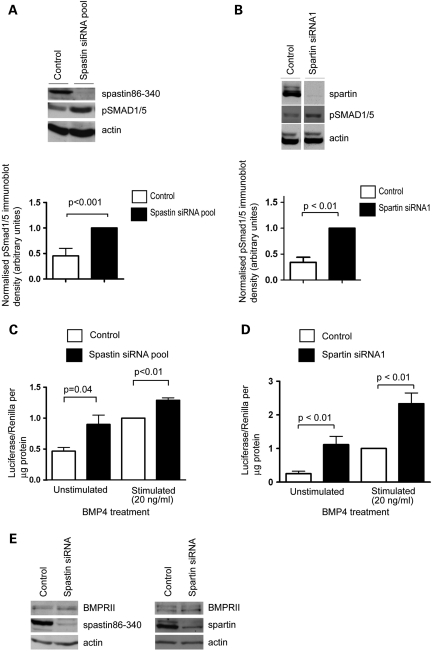
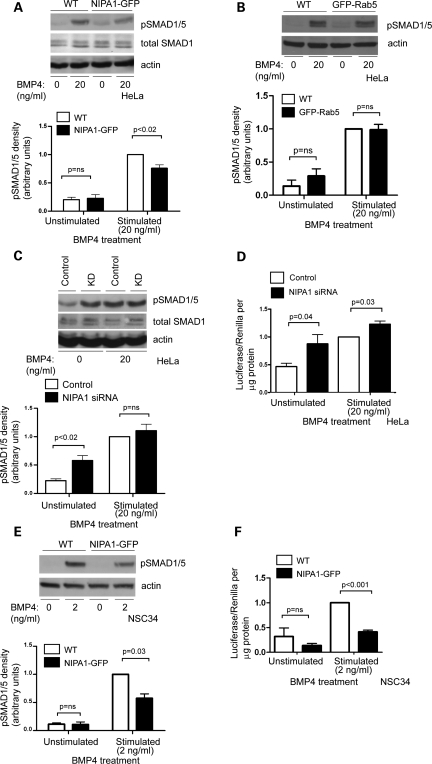
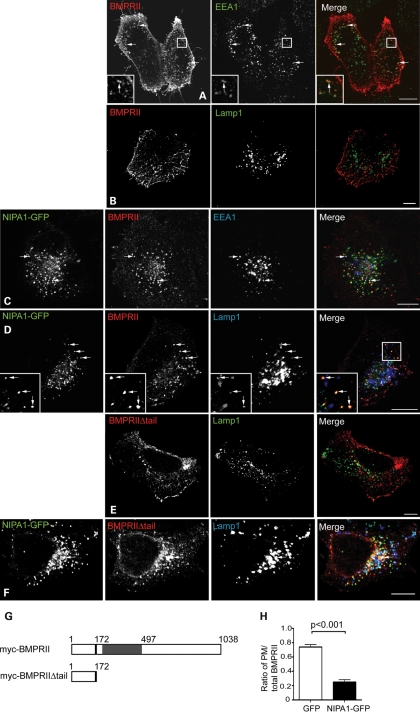
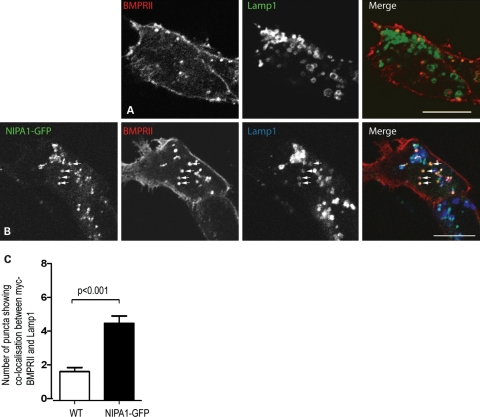
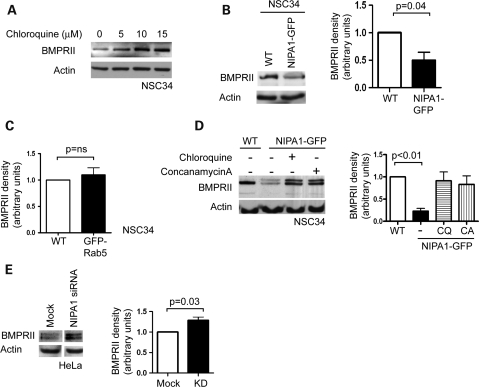
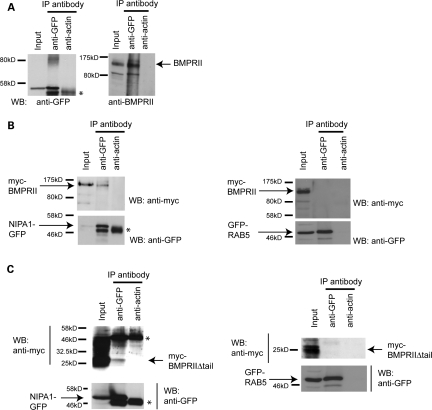
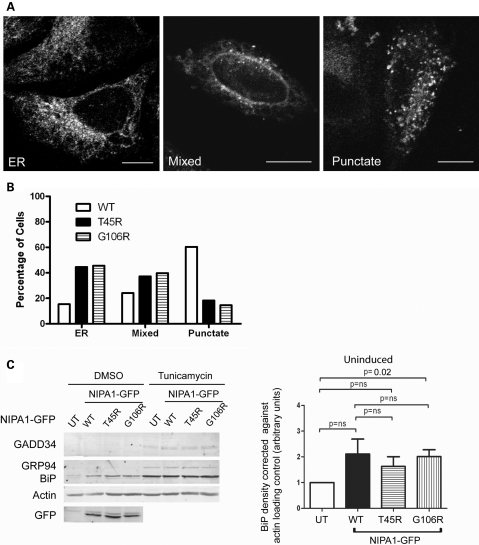
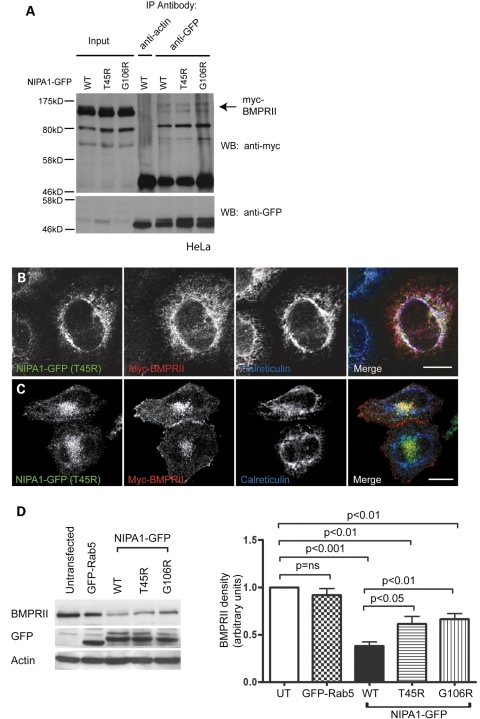
The hereditary spastic paraplegias (HSPs) are genetic conditions characterized by distal axonopathy of the longest corticospinal tract axons, and so their study provides an important opportunity to understand mechanisms involved in axonal maintenance and degeneration. A group of HSP genes encode proteins that localize to endosomes. One of these is NIPA1 (non-imprinted in Prader-Willi/Angelman syndrome 1) and we have shown recently that its Drosophila homologue spichthyin inhibits bone morphogenic protein (BMP) signalling, although the relevance of this finding to the mammalian protein was not known. We show here that mammalian NIPA1 is also an inhibitor of BMP signalling. NIPA1 physically interacts with the type II BMP receptor (BMPRII) and we demonstrate that this interaction does not require the cytoplasmic tail of BMPRII. We show that the mechanism by which NIPA1 inhibits BMP signalling involves downregulation of BMP receptors by promoting their endocytosis and lysosomal degradation. Disease-associated mutant versions of NIPA1 alter the trafficking of BMPRII and are less efficient at promoting BMPRII degradation than wild-type NIPA1. In addition, we demonstrate that two other members of the endosomal group of HSP proteins, spastin and spartin, are inhibitors of BMP signalling. Since BMP signalling is important for distal axonal function, we propose that dysregulation of BMP signalling could be a unifying pathological component in this endosomal group of HSPs, and perhaps of importance in other conditions in which distal axonal degeneration is found.
遗传性痉挛性截瘫(HSP)是一种遗传性疾病,其特征是最长的皮质脊髓束轴突的远端轴突病,因此它们的研究为理解轴突维持和退化的机制提供了一个重要的机会。一组 HSP 基因编码定位于内体的蛋白质。其中一种是 NIPA1(非印记在 Prader-Willi/Angelman 综合征 1 中),我们最近表明,它的果蝇同源物 spichthyin 抑制骨形态发生蛋白(BMP)信号,尽管这一发现与哺乳动物蛋白的相关性尚不清楚。我们在这里表明,哺乳动物 NIPA1 也是 BMP 信号的抑制剂。NIPA1 与 II 型 BMP 受体(BMPRII)发生物理相互作用,我们证明这种相互作用不需要 BMPRII 的细胞质尾巴。我们表明,NIPA1 抑制 BMP 信号的机制涉及通过促进 BMP 受体的内吞作用和溶酶体降解来下调 BMP 受体。与疾病相关的 NIPA1 突变体改变了 BMPRII 的运输,并且在促进 BMPRII 降解方面不如野生型 NIPA1 有效。此外,我们证明内体 HSP 蛋白组的另外两个成员,spastin 和 spartin,也是 BMP 信号的抑制剂。由于 BMP 信号对远端轴突功能很重要,我们提出 BMP 信号的失调可能是这个内体 HSP 蛋白组的一个统一的病理成分,并且在其他发现远端轴突退化的情况下可能很重要。