Cotten Joseph F, Husain S Shaukat, Forman Stuart A, Miller Keith W, Kelly Elizabeth W, Nguyen Hieu H, Raines Douglas E
Harvard Medical School, Boston, Massachusetts, USA.
Anesthesiology. 2009 Aug;111(2):240-9. doi: 10.1097/ALN.0b013e3181ae63d1.
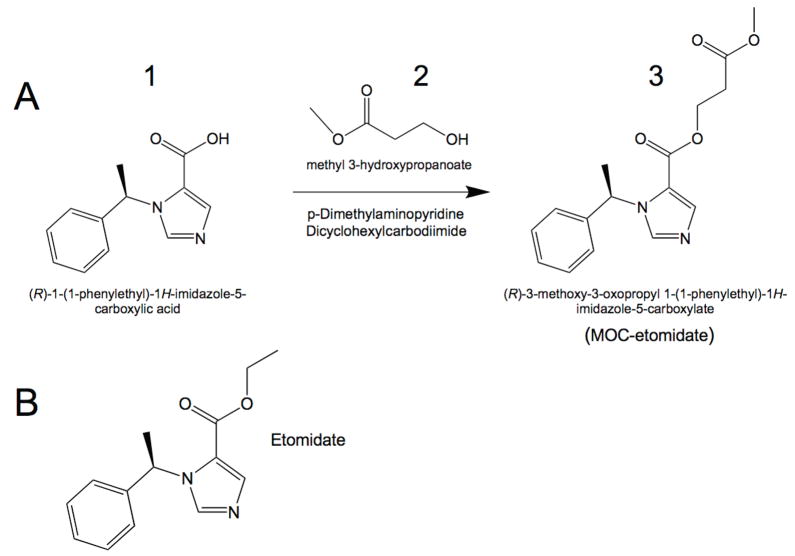
Etomidate is a rapidly acting sedative-hypnotic that provides hemodynamic stability. It causes prolonged suppression of adrenocortical steroid synthesis; therefore, its clinical utility and safety are limited. The authors describe the results of studies to define the pharmacology of (R)-3-methoxy-3-oxopropyl1-(1-phenylethyl)-1H-imidazole-5-carboxylate (MOC-etomidate), the first etomidate analogue designed to be susceptible to ultra-rapid metabolism.
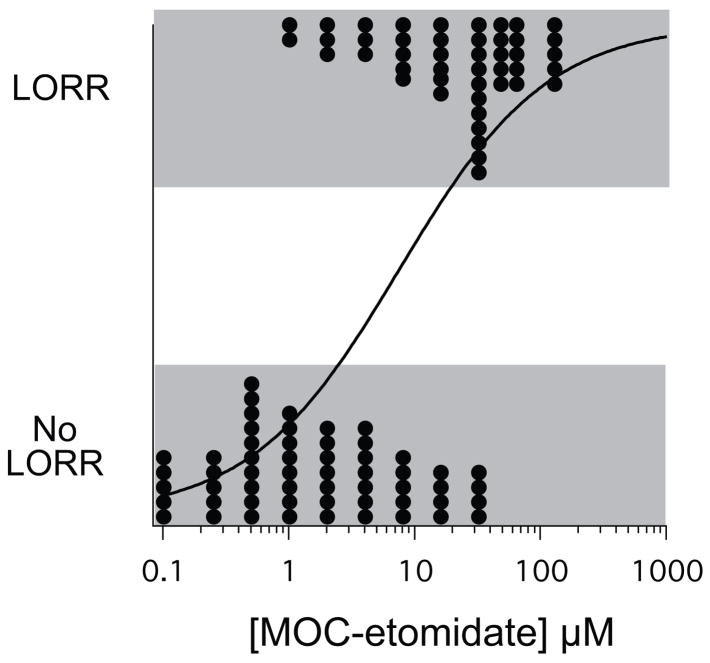
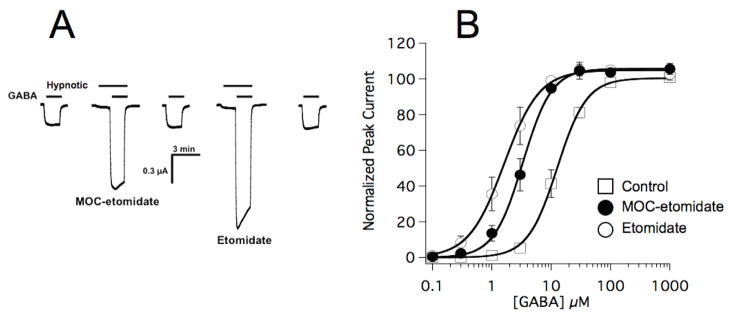
The gamma-aminobutyric acid type A receptor activities of MOC-etomidate and etomidate were compared by using electrophysiological techniques in human alpha1beta2gamma2l receptors. MOC-etomidate's hypnotic concentration was determined in tadpoles by using a loss of righting reflex assay. Its in vitro metabolic half-life was measured in human liver S9 fraction, and the resulting metabolite was provisionally identified by using high-performance liquid chromatography/mass spectrometry techniques. The hypnotic and hemodynamic actions of MOC-etomidate, etomidate, and propofol were defined in rats. The abilities of MOC-etomidate and etomidate to inhibit corticosterone production were assessed in rats.
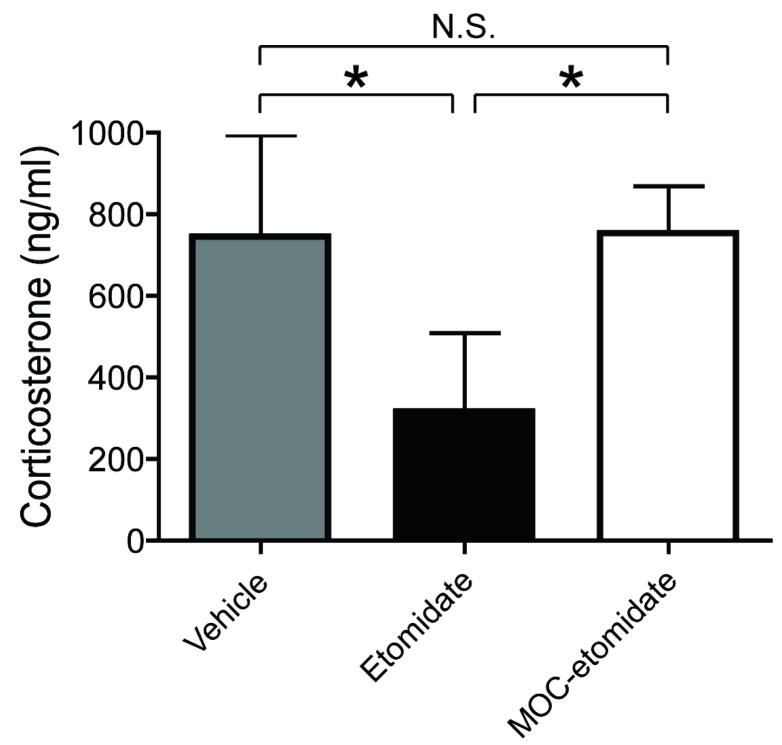
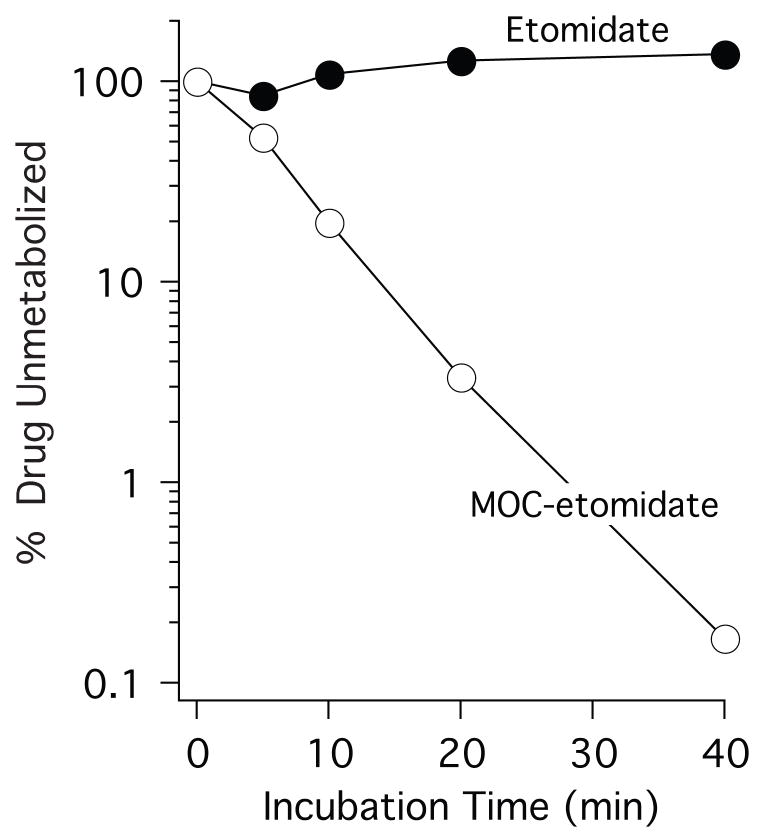
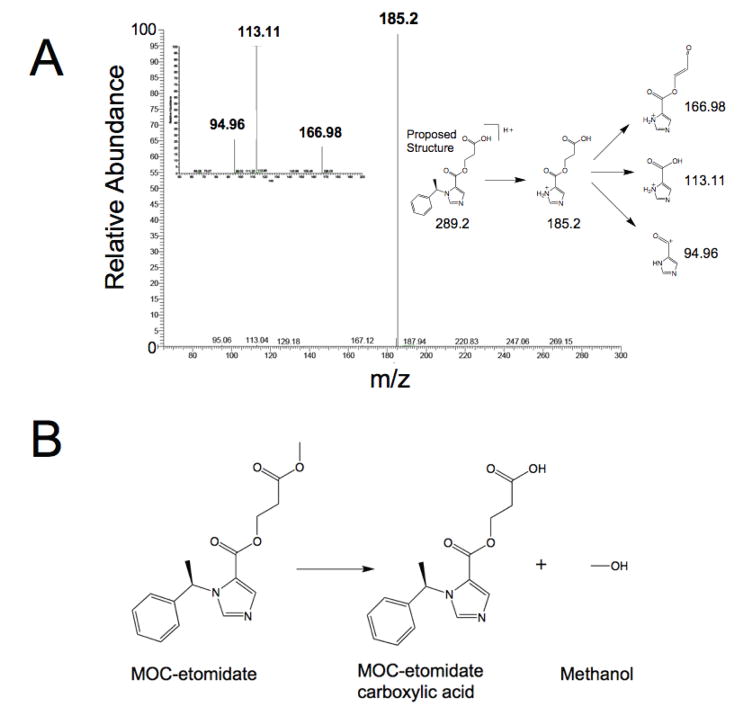
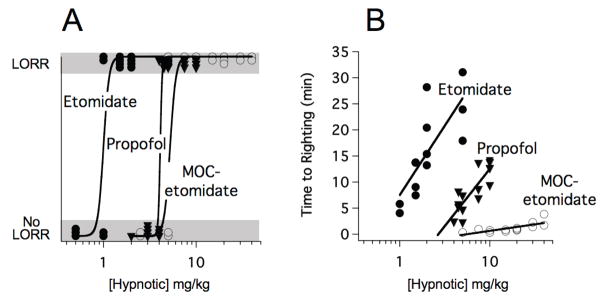
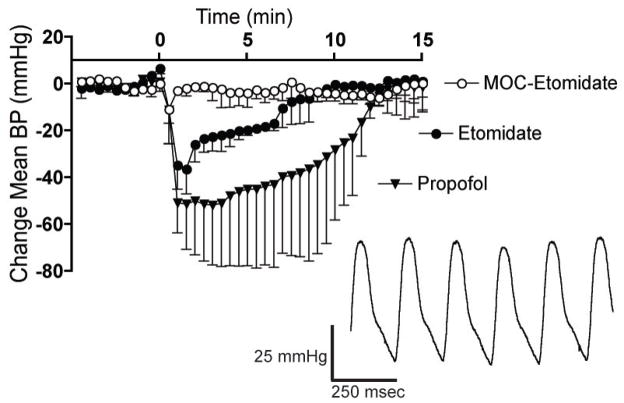
MOC-etomidate potently enhanced gamma-aminobutyric acid type A receptor function and produced loss of righting reflex in tadpoles. Metabolism in human liver S9 fraction was first-order, with an in vitro half-life of 4.4 min versus more than 40 min for etomidate. MOC-etomidate's only detectable metabolite was a carboxylic acid. In rats, MOC-etomidate produced rapid loss of righting reflex that was extremely brief and caused minimal hemodynamic changes. Unlike etomidate, MOC-etomidate produced no adrenocortical suppression 30 min after administration.
MOC-etomidate is an etomidate analogue that retains etomidate's important favorable pharmacological properties. However, it is rapidly metabolized, ultra-short-acting, and does not produce prolonged adrenocortical suppression after bolus administration.
依托咪酯是一种起效迅速的镇静催眠药,可维持血流动力学稳定。它会导致肾上腺皮质类固醇合成受到长期抑制;因此,其临床应用和安全性受到限制。作者描述了旨在确定(R)-3-甲氧基-3-氧代丙基1-(1-苯乙基)-1H-咪唑-5-羧酸酯(MOC-依托咪酯)药理学特性的研究结果,MOC-依托咪酯是首个设计为易于超快速代谢的依托咪酯类似物。
在人α1β2γ2l受体中,采用电生理技术比较了MOC-依托咪酯和依托咪酯对A型γ-氨基丁酸受体的活性。通过翻正反射消失试验在蝌蚪中测定MOC-依托咪酯的催眠浓度。在人肝S9组分中测量其体外代谢半衰期,并使用高效液相色谱/质谱技术初步鉴定产生的代谢物。在大鼠中确定了MOC-依托咪酯、依托咪酯和丙泊酚的催眠和血流动力学作用。评估了MOC-依托咪酯和依托咪酯抑制大鼠皮质酮生成的能力。
MOC-依托咪酯可有效增强A型γ-氨基丁酸受体功能,并使蝌蚪出现翻正反射消失。在人肝S9组分中的代谢为一级代谢,体外半衰期为4.4分钟,而依托咪酯则超过40分钟。MOC-依托咪酯唯一可检测到的代谢物是一种羧酸。在大鼠中,MOC-依托咪酯可迅速导致翻正反射消失,且极为短暂,引起的血流动力学变化极小。与依托咪酯不同,给药30分钟后MOC-依托咪酯不会产生肾上腺皮质抑制。
MOC-依托咪酯是一种依托咪酯类似物,保留了依托咪酯重要的良好药理学特性。然而,它代谢迅速、作用超短效,推注给药后不会产生长期的肾上腺皮质抑制。