Noritake Atsushi, Uttl Bob, Terao Masahiko, Nagai Masayoshi, Watanabe Junji, Yagi Akihiro
Brain Science Institute, Tamagawa University, Tokyo, Japan.
PLoS One. 2009 Jul 27;4(7):e6383. doi: 10.1371/journal.pone.0006383.
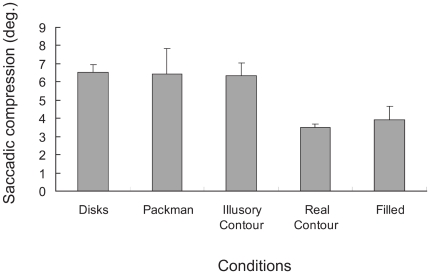
Observers misperceive the location of points within a scene as compressed towards the goal of a saccade. However, recent studies suggest that saccadic compression does not occur for discrete elements such as dots when they are perceived as unified objects like a rectangle.
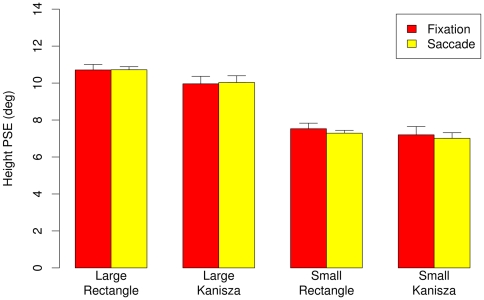
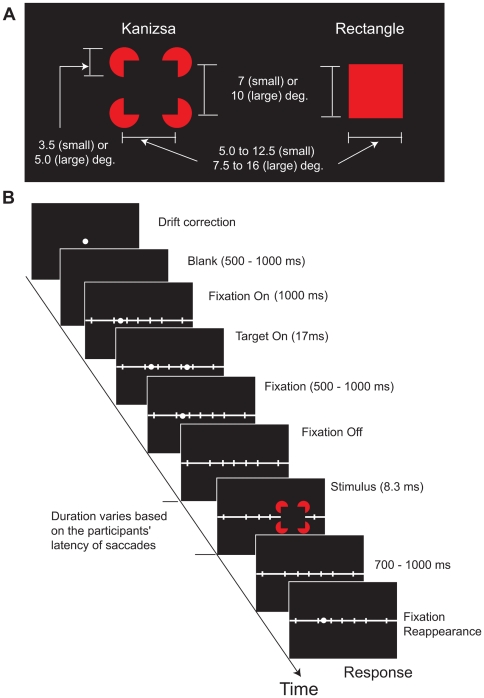
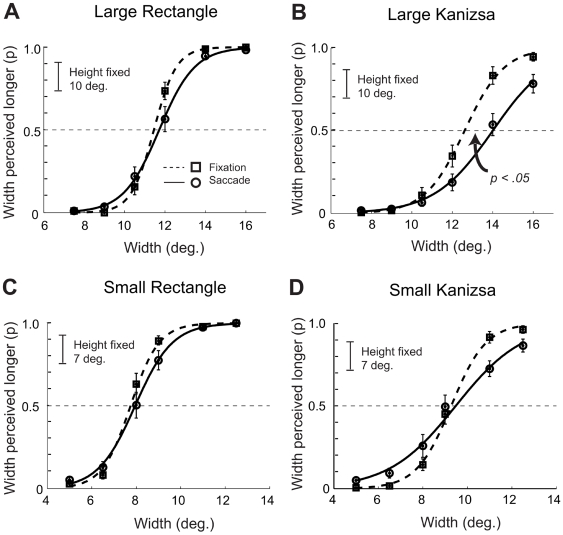
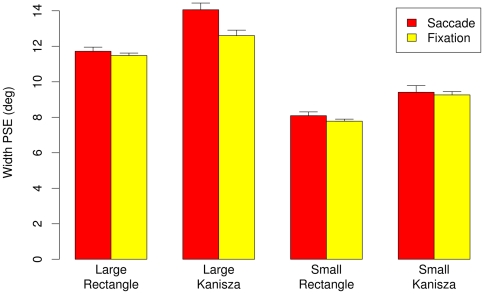
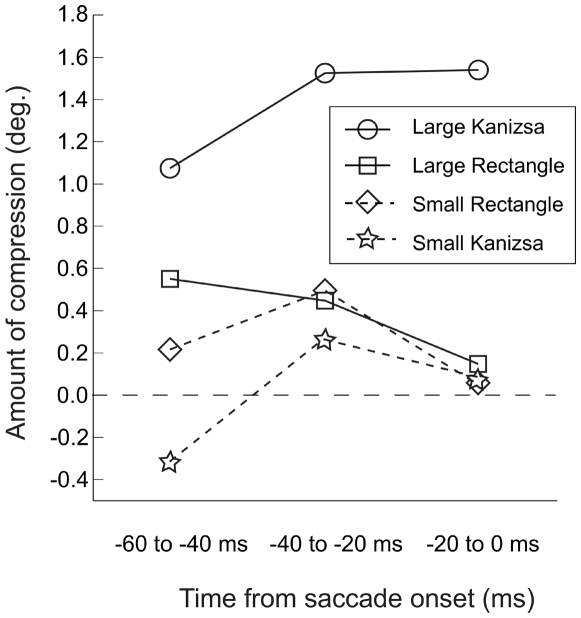
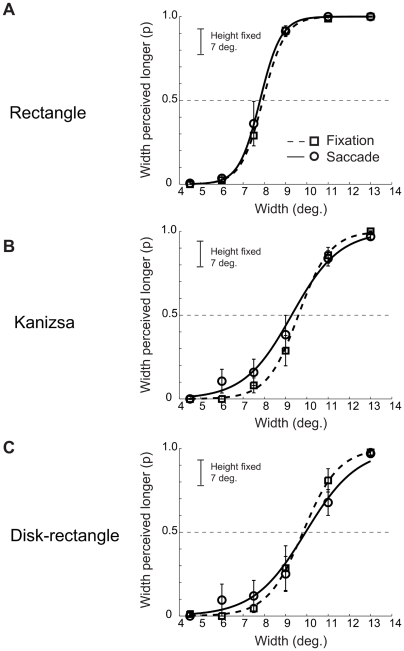
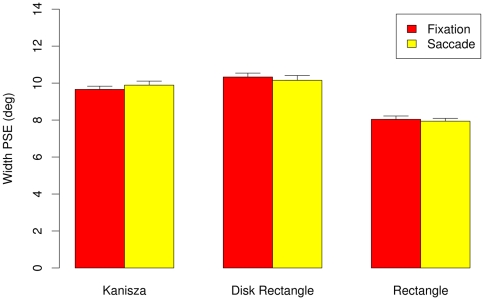
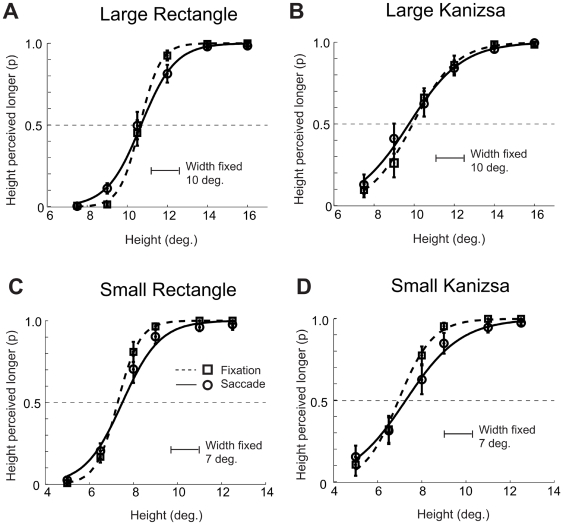
METHODOLOGY/PRINCIPAL FINDINGS: We investigated the magnitude of horizontal vs. vertical compression for Kanizsa figure (a collection of discrete elements unified into single perceptual objects by illusory contours) and control rectangle figures. Participants were presented with Kanizsa and control figures and had to decide whether the horizontal or vertical length of stimulus was longer using the two-alternative force choice method. Our findings show that large but not small Kanizsa figures are perceived as compressed, that such compression is large in the horizontal dimension and small or nil in the vertical dimension. In contrast to recent findings, we found no saccadic compression for control rectangles.
Our data suggest that compression of Kanizsa figure has been overestimated in previous research due to methodological artifacts, and highlight the importance of studying perceptual phenomena by multiple methods.
观察者会将场景中各点的位置误判为向扫视目标压缩。然而,最近的研究表明,当像点这样的离散元素被视为如矩形等统一对象时,不会发生扫视压缩。
方法/主要发现:我们研究了卡尼萨图形(通过虚幻轮廓统一为单个感知对象的离散元素集合)和对照矩形图形的水平与垂直压缩程度。向参与者呈现卡尼萨图形和对照图形,他们必须使用二择一迫选法来判断刺激的水平长度还是垂直长度更长。我们的研究结果表明,大的而非小的卡尼萨图形被视为压缩的,这种压缩在水平维度上较大,而在垂直维度上较小或不存在。与最近的研究结果相反,我们发现对照矩形不存在扫视压缩。
我们的数据表明,由于方法学上的人为因素,先前研究中对卡尼萨图形压缩的估计过高,并强调了通过多种方法研究感知现象的重要性。