Byarugaba Wilson, Kajumbula Henry, Wayengera Misaki
Restrizymes Biotherapeutics (U) LTD, PO Box 16606, Kampala, Uganda.
Theor Biol Med Model. 2009 Jul 29;6:14. doi: 10.1186/1742-4682-6-14.
Mosquitoes are the transmissive vectors for several infectious pathogens that affect man. However, the control of mosquitoes through insecticide and pesticide spraying has proved difficult in the past. We hypothesized that, by virtue of their reported vertical inheritance among mosquitoes, group II introns - a class of small coding ribonucleic acids (scRNAs) - may form a potential species-specific biomarker. Structurally, introns are a six-moiety complex. Depending on the function of the protein encoded within the IV moiety, the highly mobile class of group II introns or retroposons is sub-divided into two: Restriction Endonuclease (REase)-like and Apurinic aPyramydinic Endonuclease (APE)-like. REase-like retroposons are thought to be the ancestors of APE retroposons. Our aim in this study was to find evidence for the highly species-specific conservation of the APE subclass of mosquito retroposons.
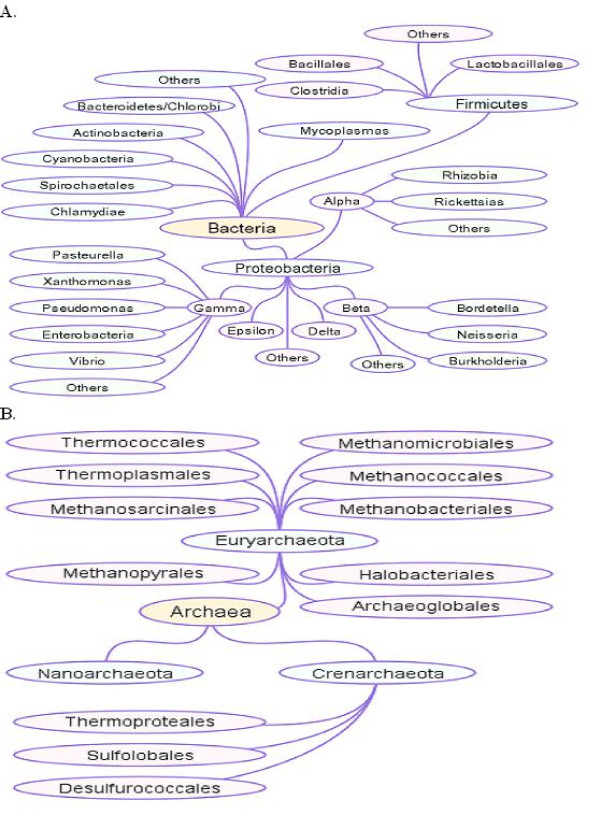
In silico targeted sequence alignments were conducted across a 1,779-organism genome database (1,518 bacterial, 59 archeal, 201 eukaryotic, and the human), using three mosquito retroposon sequence tags (RST) as BLASTN queries [AJ970181 and AJ90201 of Culex pipien origin and AJ970301 of Anoplese sinensis origin]. At a calibration of E = 10, A & D = 100, default filtration and a homology cut-off of >95% identity, no hits were found on any of the 1,518 bacterial genomes. Eleven (100%) and 15 (100%) hits obtained on the 201-eukaryote genome database were homologs (>95% score) of C.pipien quinquefasciatus JHB retroposons, but none of An. sinensis. Twenty and 221 low score (30-43% identity) spurious hits were found at flanking ends of genes and contigs in the human genome with the C.pipien and An. sinensis RSTs respectively. Functional and positional inference revealed these to be possible relatives of human genomic spliceosomes. We advance two models for the application of mosquito RST: as precursors for developing molecular biomarkers for mosquitoes, and as RST-specific monoclonal antibody (MAb)-DDT immunoconjugates to enhance targeted toxicity.
We offer evidence to support the species-specific conservation of mosquito retroposons among lower taxa. Our findings suggest that retroposons may therefore constitute a unique biomarker for mosquito species that may be exploited in molecular entomology. Mosquito RST-specific MAbs may possibly permit synthesis of DDT immunoconjugates that could be used to achieve species-tailored toxicity.
蚊子是多种影响人类的传染性病原体的传播媒介。然而,过去通过喷洒杀虫剂和农药来控制蚊子已被证明很困难。我们推测,由于据报道II类内含子(一类小编码核糖核酸(scRNAs))在蚊子中存在垂直遗传,它们可能形成一种潜在的物种特异性生物标志物。从结构上讲,内含子是一种由六个部分组成的复合体。根据IV部分内编码的蛋白质的功能,高度可移动的II类内含子或逆转座子可分为两类:限制性内切酶(REase)样和脱嘌呤嘧啶内切酶(APE)样。REase样逆转座子被认为是APE逆转座子的祖先。我们在本研究中的目的是寻找蚊子逆转座子的APE亚类具有高度物种特异性保守性的证据。
使用三个蚊子逆转座子序列标签(RST)[库蚊来源的AJ970181和AJ90201以及中华按蚊来源的AJ970301]作为BLASTN查询,在一个包含1779个生物体的基因组数据库(1518个细菌、59个古细菌、201个真核生物和人类)中进行了电子靶向序列比对。在校准E = 10、A&D = 100、默认过滤且同源性截止值>95%同一性的条件下,在1518个细菌基因组中均未发现匹配。在201个真核生物基因组数据库中获得的11个(100%)和15个(100%)匹配是致倦库蚊JHB逆转座子的同源物(得分>95%),但没有中华按蚊逆转座子的匹配。分别使用库蚊和中华按蚊的RST在人类基因组的基因和重叠群侧翼末端发现了20个和共221个低得分(同一性30 - 43%)的假阳性匹配。功能和位置推断表明这些可能是人类基因组剪接体的亲属。我们提出了两种蚊子RST的应用模型:作为开发蚊子分子生物标志物的前体,以及作为RST特异性单克隆抗体(MAb) - DDT免疫缀合物以增强靶向毒性。
我们提供了证据支持蚊子逆转座子在低等分类群中的物种特异性保守性。我们的研究结果表明,逆转座子因此可能构成蚊子物种的独特生物标志物,可在分子昆虫学中加以利用。蚊子RST特异性单克隆抗体可能允许合成可用于实现物种特异性毒性的DDT免疫缀合物。