
信号调节蛋白α(SIRPα)细胞在对结核分枝杆菌ESAT-6/CFP-10蛋白的适应性反应中。
Signal regulatory protein alpha (SIRPalpha) cells in the adaptive response to ESAT-6/CFP-10 protein of tuberculous mycobacteria.
作者信息
Waters W Ray, Palmer Mitchell V, Nonnecke Brian J, Thacker Tyler C, Estes D Mark, Larsen Michelle H, Jacobs William R, Andersen Peter, McNair James, Minion F C, Lyashchenko Konstantin P, Hewinson R Glyn, Vordermeier H Martin, Sacco Randy E
机构信息
National Animal Disease Center, Agricultural Research Service, U.S. Department of Agriculture, Ames, Iowa, United States of America.
出版信息
PLoS One. 2009 Jul 29;4(7):e6414. doi: 10.1371/journal.pone.0006414.
BACKGROUND
Early secretory antigenic target-6 (ESAT-6) and culture filtrate protein-10 (CFP-10) are co-secreted proteins of Mycobacterium tuberculosis complex mycobacteria (includes M. bovis, the zoonotic agent of bovine tuberculosis) involved in phagolysosome escape of the bacillus and, potentially, in the efficient induction of granulomas. Upon tuberculosis infection, multi-nucleate giant cells are elicited, likely as a response aimed at containing mycobacteria. In tissue culture models, signal regulatory protein (SIRP)alpha (also referred to as macrophage fusion receptor or CD172a) is essential for multi-nucleate giant cell formation.
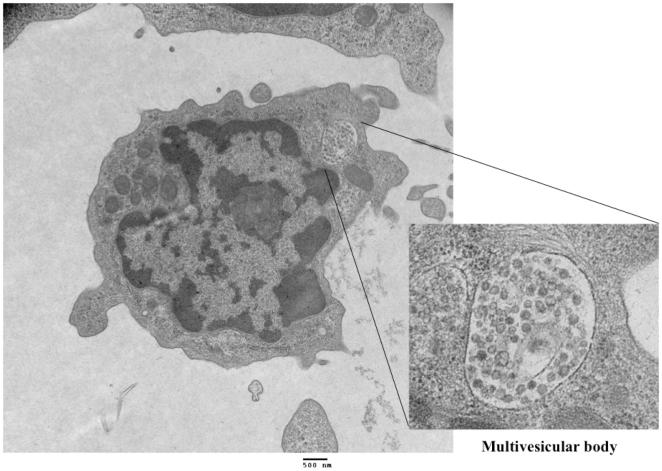
METHODOLOGY/PRINCIPAL FINDINGS: In the present study, ESAT-6/CFP-10 complex and SIRPalpha interactions were evaluated with samples obtained from calves experimentally infected with M. bovis. Peripheral blood CD172a(+) (SIRPalpha-expressing) cells from M. bovis-infected calves proliferated upon in vitro stimulation with ESAT-6/CFP-10 (either as a fusion protein or a peptide cocktail), but not with cells from animals receiving M. bovis strains lacking ESAT-6/CFP-10 (i.e, M. bovis BCG or M. bovis DeltaRD1). Sorted CD172a(+) cells from these cultures had a dendritic cell/macrophage morphology, bound fluorescently-tagged rESAT-6:CFP-10, bound and phagocytosed live M. bovis BCG, and co-expressed CD11c, DEC-205, CD44, MHC II, CD80/86 (a subset also co-expressed CD11b or CD8alpha). Intradermal administration of rESAT-6:CFP-10 into tuberculous calves elicited a delayed type hypersensitive response consisting of CD11c(+), CD172a(+), and CD3(+) cells, including CD172a-expressing multi-nucleated giant cells.
CONCLUSIONS/SIGNIFICANCE: These findings demonstrate the ability of ESAT-6/CFP-10 to specifically expand CD172a(+) cells, bind to CD172a(+) cells, and induce multi-nucleated giant cells expressing CD172a.
背景
早期分泌性抗原靶标6(ESAT-6)和培养滤液蛋白10(CFP-10)是结核分枝杆菌复合群分枝杆菌(包括牛结核的人畜共患病原体牛分枝杆菌)的共同分泌蛋白,参与杆菌的吞噬溶酶体逃逸,并可能参与肉芽肿的有效诱导。在结核感染时,会引发多核巨细胞,这可能是一种旨在控制分枝杆菌的反应。在组织培养模型中,信号调节蛋白(SIRP)α(也称为巨噬细胞融合受体或CD172a)对于多核巨细胞的形成至关重要。
方法/主要发现:在本研究中,使用从实验感染牛分枝杆菌的小牛获得的样本评估了ESAT-6/CFP-10复合物与SIRPα的相互作用。来自牛分枝杆菌感染小牛的外周血CD172a(+)(表达SIRPα)细胞在用ESAT-6/CFP-10(作为融合蛋白或肽混合物)进行体外刺激后增殖,但用来自接受缺乏ESAT-6/CFP-10的牛分枝杆菌菌株(即牛分枝杆菌卡介苗或牛分枝杆菌ΔRD1)的动物的细胞刺激时则不增殖。从这些培养物中分选的CD172a(+)细胞具有树突状细胞/巨噬细胞形态,结合荧光标记的rESAT-6:CFP-10,结合并吞噬活的牛分枝杆菌卡介苗,并共表达CD11c、DEC-205、CD44、MHC II、CD80/86(一个亚群还共表达CD11b或CD8α)。将rESAT-6:CFP-10皮内注射到患结核的小牛中引发了由CD11c(+)、CD172a(+)和CD3(+)细胞组成的迟发型超敏反应,包括表达CD172a的多核巨细胞。
结论/意义:这些发现证明了ESAT-6/CFP-10特异性扩增CD172a(+)细胞、与CD172a(+)细胞结合以及诱导表达CD172a的多核巨细胞的能力。




 Zotero 插件