Du Yan-ping, Peng Jun-sheng, Sun Ai, Tang Zhi-hong, Ling Wen-hua, Zhu Hui-lian
School of public health, Sun Yat-Sen University, Guangzhou 510080, PR China.
BMC Cancer. 2009 Jul 30;9:261. doi: 10.1186/1471-2407-9-261.
The development and progression of liver cancer may involve abnormal changes in DNA methylation, which lead to the activation of certain proto-oncogenes, such as c-myc, as well as the inactivation of certain tumor suppressors, such as p16. Betaine, as an active methyl-donor, maintains normal DNA methylation patterns. However, there are few investigations on the protective effect of betaine in hepatocarcinogenesis.
Four groups of rats were given diethylinitrosamine (DEN) and fed with AIN-93G diets supplemented with 0, 10, 20 or 40 g betaine/kg (model, 1%, 2%, and 4% betaine, respectively), while the control group, received no DEN, fed with AIN-93G diet. Eight or 15 weeks later, the expression of p16 and c-myc mRNA was examined by Real-time PCR (Q-PCR). The DNA methylation status within the p16 and c-myc promoter was analyzed using methylation-specific PCR.
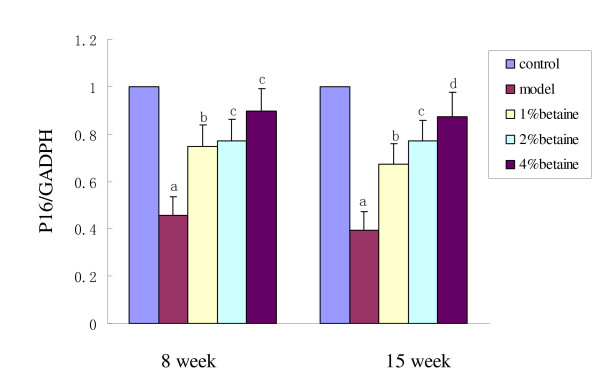
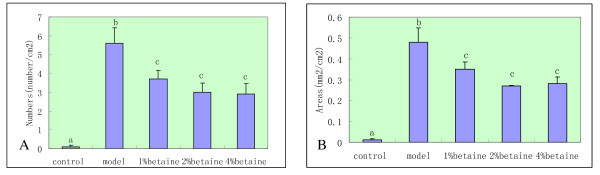
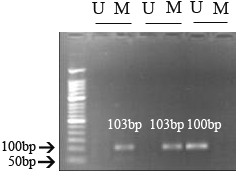
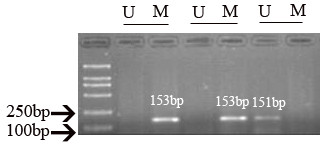
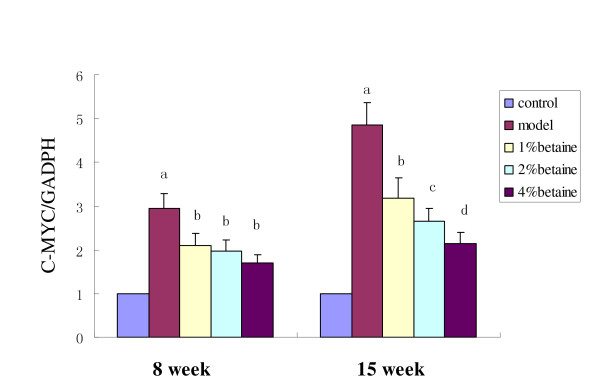
Compared with the model group, numbers and areas of glutathione S-transferase placental form (GST-p)-positive foci were decreased in the livers of the rats treated with betaine (P < 0.05). Although the frequency of p16 promoter methylation in livers of the four DEN-fed groups appeared to increase, there is no difference among these groups after 8 or 15 weeks (P > 0.05). Betaine supplementation attenuated the down-regulation of p16 and inhibited the up-regulation of c-myc induced by DEN in a dose-dependent manner (P < 0.01). Meanwhile, increases in levels of malondialdehyde (MDA) and glutathione S-transferase (GST) in model, 2% and 4% betaine groups were observed (P < 0.05). Finally, enhanced antioxidative capacity (T-AOC) was observed in both the 2% and 4% betaine groups.
Our data suggest that betaine attenuates DEN-induced damage in rat liver and reverses DEN-induced changes in mRNA levels.
肝癌的发生和发展可能涉及DNA甲基化异常,这会导致某些原癌基因如c-myc的激活,以及某些肿瘤抑制基因如p16的失活。甜菜碱作为一种活性甲基供体,可维持正常的DNA甲基化模式。然而,关于甜菜碱在肝癌发生中的保护作用的研究较少。
四组大鼠给予二乙基亚硝胺(DEN),并分别喂食添加0、10、20或40 g甜菜碱/kg的AIN-93G饲料(分别为模型组、1%、2%和4%甜菜碱组),而对照组未给予DEN,喂食AIN-93G饲料。8周或15周后,通过实时定量聚合酶链反应(Q-PCR)检测p16和c-myc mRNA的表达。使用甲基化特异性聚合酶链反应分析p16和c-myc启动子内的DNA甲基化状态。
与模型组相比,甜菜碱处理的大鼠肝脏中谷胱甘肽S-转移酶胎盘型(GST-p)阳性灶的数量和面积减少(P < 0.05)。虽然四组给予DEN的大鼠肝脏中p16启动子甲基化频率似乎增加,但在8周或15周后这些组之间没有差异(P > 0.05)。补充甜菜碱以剂量依赖的方式减弱了DEN诱导的p16下调并抑制了c-myc的上调(P < 0.01)。同时,在模型组、2%和4%甜菜碱组中观察到丙二醛(MDA)和谷胱甘肽S-转移酶(GST)水平升高(P < 0.05)。最后,在2%和4%甜菜碱组中均观察到抗氧化能力(T-AOC)增强。
我们的数据表明,甜菜碱可减轻DEN诱导的大鼠肝脏损伤,并逆转DEN诱导的mRNA水平变化。