Department of Anthropology, University of California Santa Barbara, Santa Barbara, CA, USA.
PLoS One. 2009 Aug 11;4(8):e6590. doi: 10.1371/journal.pone.0006590.
Arterial aging is well characterized in industrial populations, but scantly described in populations with little access to modern medicine. Here we characterize health and aging among the Tsimane, Amazonian forager-horticulturalists with short life expectancy, high infectious loads and inflammation, but low adiposity and robust physical fitness. Inflammation has been implicated in all stages of arterial aging, atherogenesis and hypertension, and so we test whether greater inflammation associates with atherosclerosis and CVD risk. In contrast, moderate to vigorous daily activity, minimal obesity, and low fat intake predict minimal CVD risk among older Tsimane.
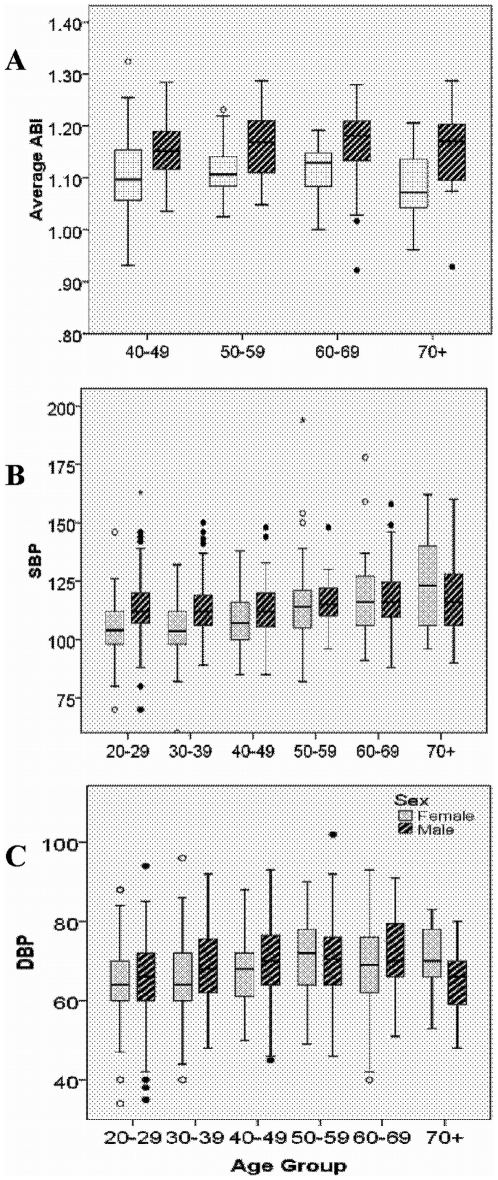
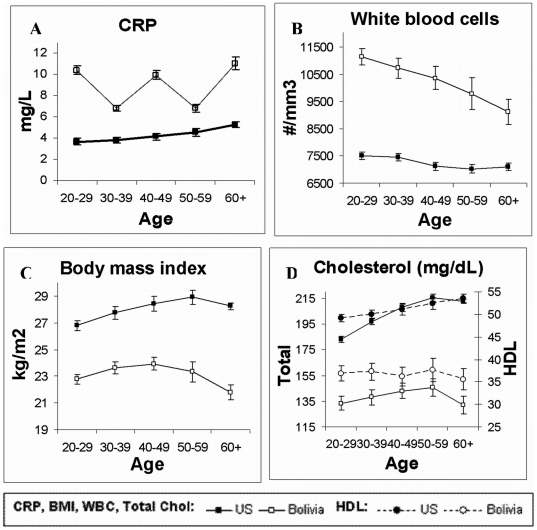
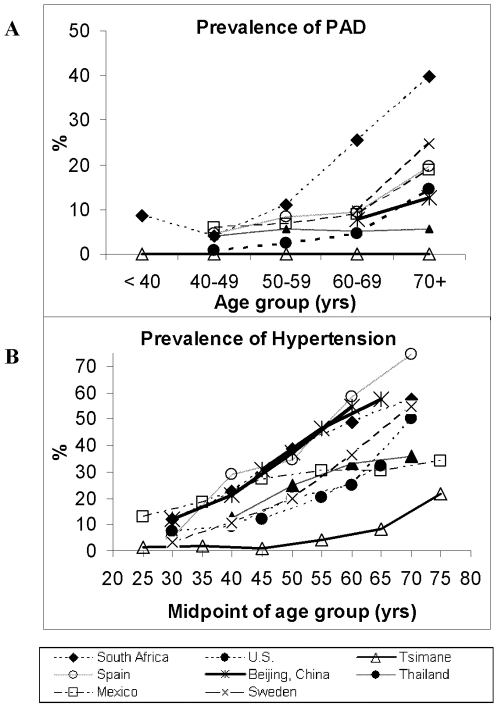
Peripheral arterial disease (PAD), based on the Ankle-Brachial Index (ABI), and hypertension were measured in Tsimane adults, and compared with rates from industrialized populations. No cases of PAD were found among Tsimane and hypertension was comparatively low (prevalence: 3.5%, 40+; 23%, 70+). Markers of infection and inflammation were much higher among Tsimane than among U.S. adults, whereas HDL was substantially lower. Regression models examine associations of ABI and BP with biomarkers of energy balance and metabolism and of inflammation and infection. Among Tsimane, obesity, blood lipids, and disease history were not significantly associated with ABI. Unlike the Tsimane case, higher cholesterol, C-reactive protein, leukocytes, cigarette smoking and systolic pressure among North Americans are all significantly associated with lower ABI.
Inflammation may not always be a risk factor for arterial degeneration and CVD, but instead may be offset by other factors: healthy metabolism, active lifestyle, favorable body mass, lean diet, low blood lipids and cardiorespiratory health. Other possibilities, including genetic susceptibility and the role of helminth infections, are discussed. The absence of PAD and CVD among Tsimane parallels anecdotal reports from other small-scale subsistence populations and suggests that chronic vascular disease had little impact on adult mortality throughout most of human evolutionary history.
动脉老化在工业人群中得到了很好的描述,但在很少接触现代医学的人群中描述甚少。在这里,我们描述了具有较短预期寿命、高传染性和炎症但低肥胖和强健的身体适应性的亚马逊觅食-园艺人群的健康和衰老情况。炎症与动脉老化的所有阶段、动脉粥样硬化和高血压有关,因此我们测试了更大的炎症是否与动脉粥样硬化和 CVD 风险相关。相比之下,适度到剧烈的日常活动、最小的肥胖和低脂肪摄入可以预测老年提斯曼人中最小的 CVD 风险。
在提斯曼成年人中测量了外周动脉疾病(PAD),基于踝臂指数(ABI),并将其与工业化人群的比率进行了比较。在提斯曼人中没有发现 PAD 病例,高血压相对较低(患病率:3.5%,40+;23%,70+)。与美国成年人相比,提斯曼人感染和炎症标志物的水平要高得多,而高密度脂蛋白(HDL)则要低得多。回归模型检查了 ABI 和血压与能量平衡和代谢以及炎症和感染标志物的关联。在提斯曼人中,肥胖、血脂和病史与 ABI 没有显著关联。与提斯曼人不同,北美人的胆固醇、C 反应蛋白、白细胞、吸烟和收缩压较高,所有这些都与较低的 ABI 显著相关。
炎症不一定总是动脉退化和 CVD 的危险因素,而是可能被其他因素抵消:健康的新陈代谢、积极的生活方式、有利的体重、精益饮食、低血脂和心肺健康。其他可能性,包括遗传易感性和寄生虫感染的作用,都在讨论之中。提斯曼人没有 PAD 和 CVD,这与其他小规模自给自足人群的传闻报道相吻合,这表明慢性血管疾病在人类进化史的大部分时间里对成年人的死亡率影响不大。