Spehlmann Martina E, Dann Sara M, Hruz Petr, Hanson Elaine, McCole Declan F, Eckmann Lars
Department of Medicine, University of California, San Diego, La Jolla, CA 92093, USA.
J Immunol. 2009 Sep 1;183(5):3332-43. doi: 10.4049/jimmunol.0900600. Epub 2009 Aug 12.
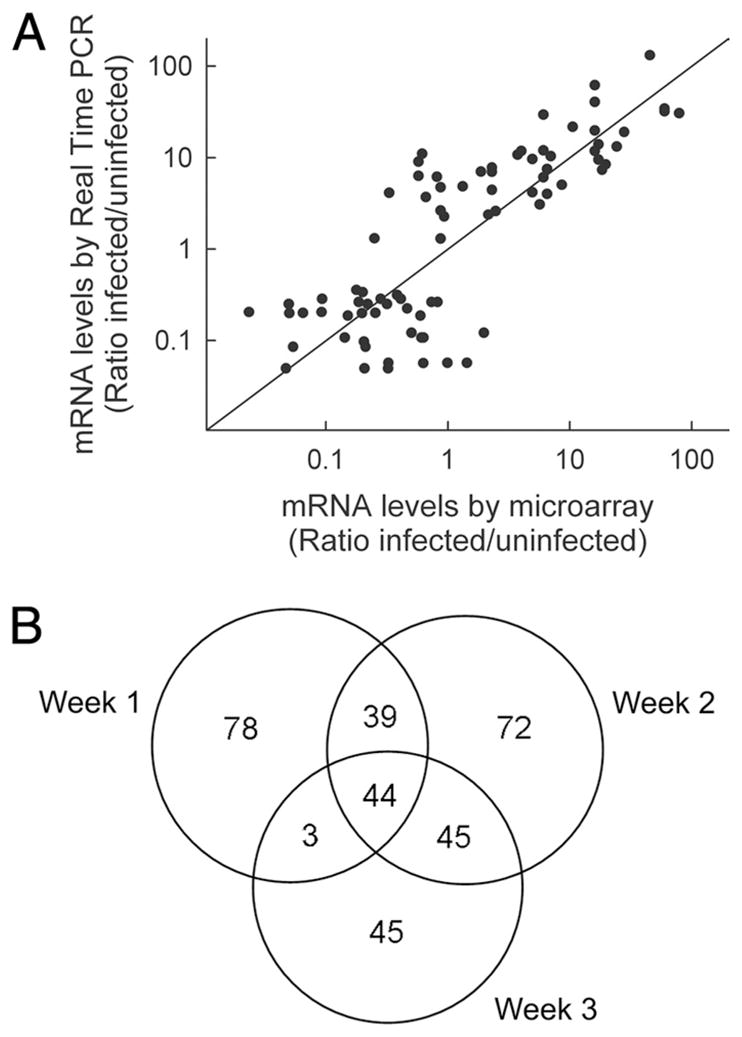
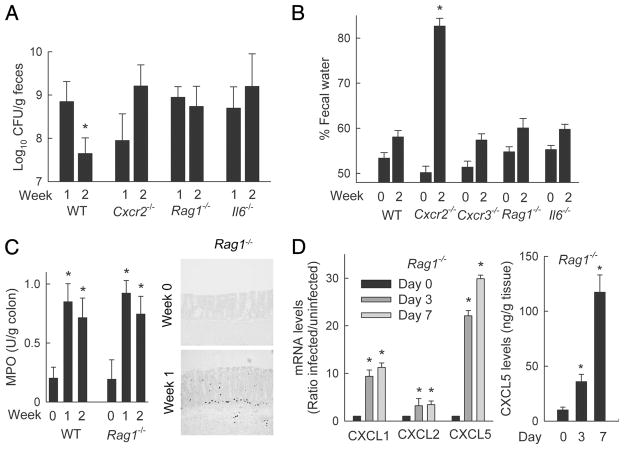
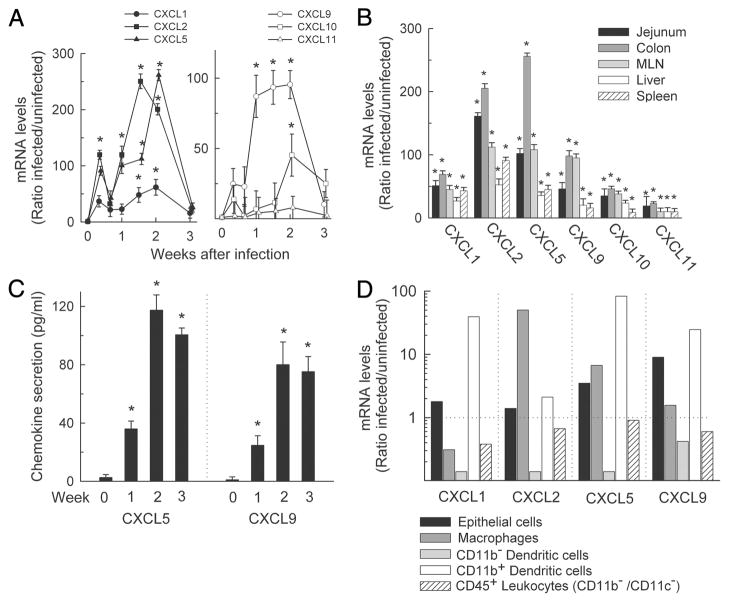
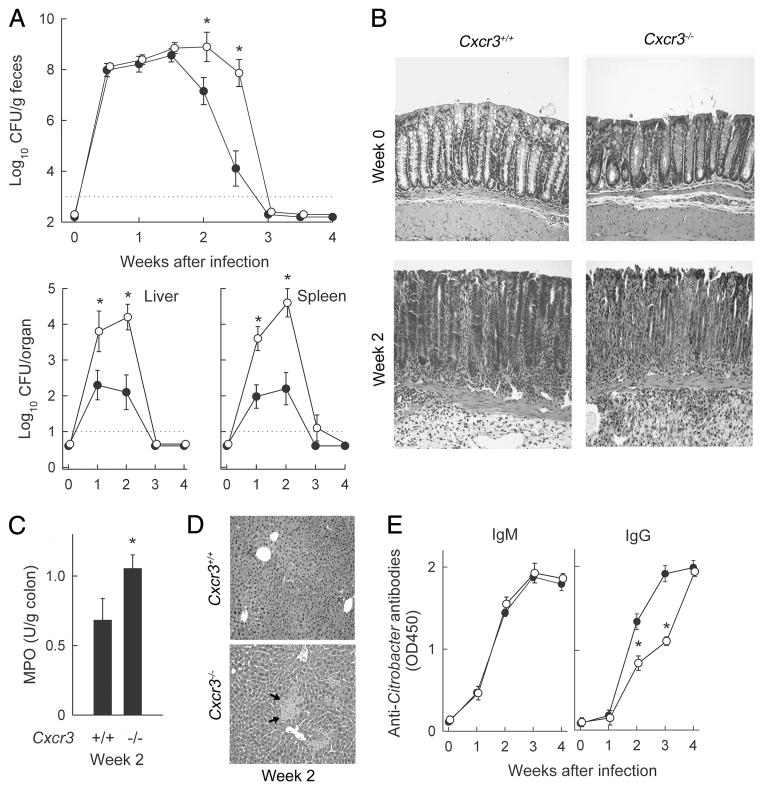
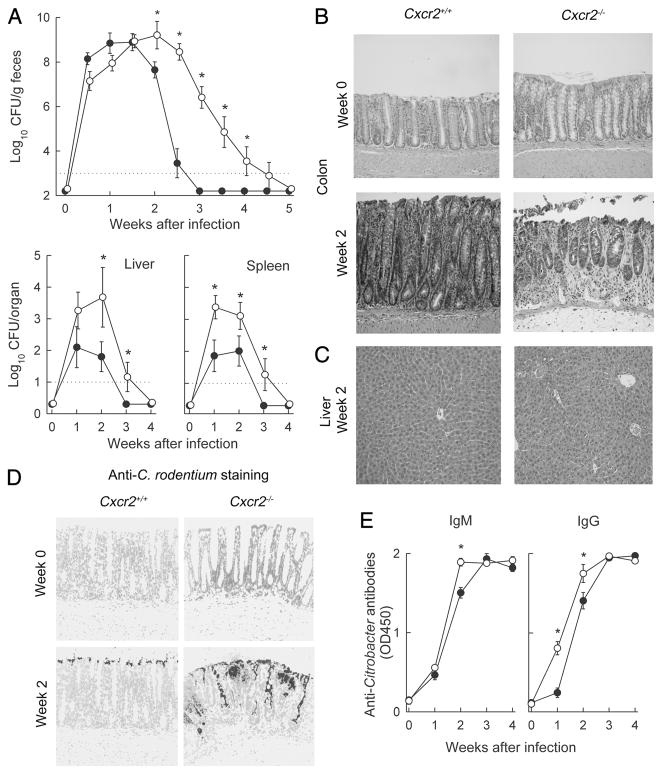
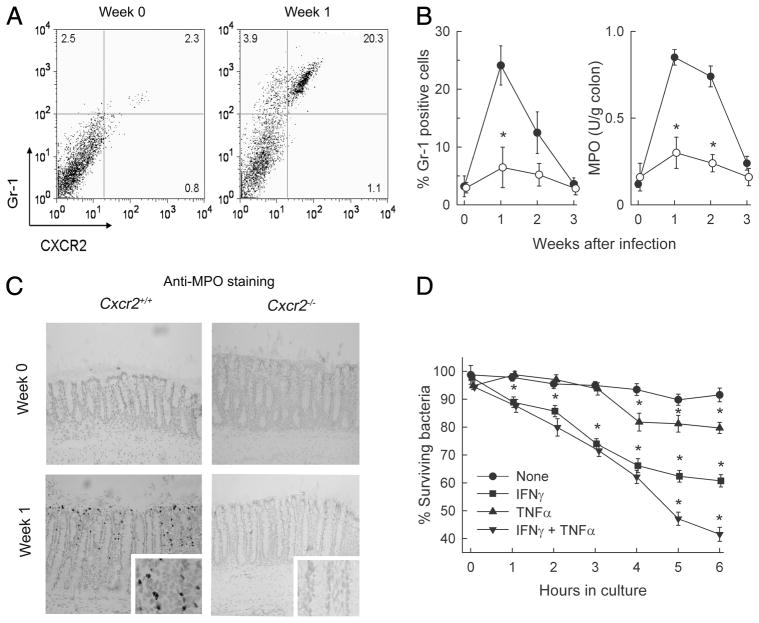
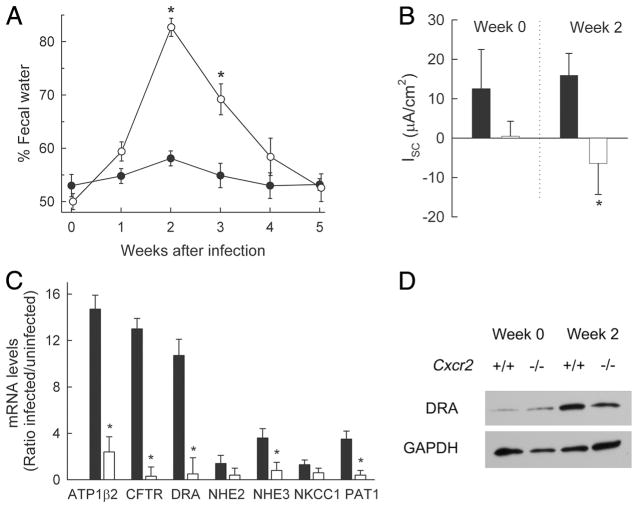
Enteropathogenic Escherichia coli (EPEC) is a major cause of diarrheal disease in young children, yet symptoms and duration are highly variable for unknown reasons. Citrobacter rodentium, a murine model pathogen that shares important functional features with EPEC, colonizes mice in colon and cecum and causes inflammation, but typically little or no diarrhea. We conducted genome-wide microarray studies to define mechanisms of host defense and disease in C. rodentium infection. A significant fraction of the genes most highly induced in the colon by infection encoded CXC chemokines, particularly CXCL1/2/5 and CXCL9/10, which are ligands for the chemokine receptors CXCR2 and CXCR3, respectively. CD11b(+) dendritic cells were the major producers of CXCL1, CXCL5, and CXCL9, while CXCL2 was mainly induced in macrophages. Infection of gene-targeted mice revealed that CXCR3 had a significant but modest role in defense against C. rodentium, whereas CXCR2 had a major and indispensable function. CXCR2 was required for normal mucosal influx of neutrophils, which act as direct antibacterial effectors. Moreover, CXCR2 loss led to severe diarrhea and failure to express critical components of normal ion and fluid transport, including ATPase beta(2)-subunit, CFTR, and DRA. The antidiarrheal functions were unique to CXCR2, since other immune defects leading to increased bacterial load and inflammation did not cause diarrhea. Thus, CXCR2-dependent processes, particularly mucosal neutrophil influx, not only contribute to host defense against C. rodentium, but provide protection against infection-associated diarrhea.
肠致病性大肠杆菌(EPEC)是幼儿腹泻疾病的主要病因,但症状和持续时间因不明原因而高度可变。鼠柠檬酸杆菌是一种与EPEC具有重要功能特征的鼠类模型病原体,它在小鼠的结肠和盲肠中定殖并引起炎症,但通常很少或不会引起腹泻。我们进行了全基因组微阵列研究,以确定宿主防御和鼠柠檬酸杆菌感染疾病的机制。感染后在结肠中诱导程度最高的基因中有很大一部分编码CXC趋化因子,特别是CXCL1/2/5和CXCL9/10,它们分别是趋化因子受体CXCR2和CXCR3的配体。CD11b(+)树突状细胞是CXCL1、CXCL5和CXCL9的主要产生者,而CXCL2主要在巨噬细胞中被诱导产生。对基因靶向小鼠的感染研究表明,CXCR3在抵御鼠柠檬酸杆菌方面具有显著但适度的作用,而CXCR2具有主要且不可或缺的功能。CXCR2是中性粒细胞正常黏膜内流所必需的,中性粒细胞作为直接的抗菌效应器。此外,CXCR2缺失导致严重腹泻,并无法表达正常离子和液体转运的关键成分,包括ATP酶β(2)亚基、囊性纤维化跨膜传导调节因子(CFTR)和二肽转运体(DRA)。抗腹泻功能是CXCR2所特有的,因为其他导致细菌载量增加和炎症的免疫缺陷并未引起腹泻。因此,依赖CXCR2的过程,特别是黏膜中性粒细胞内流,不仅有助于宿主抵御鼠柠檬酸杆菌,还能预防与感染相关的腹泻。