Ashley N, Poulton J
Nuffield Department of Obstetrics and Gynaecology, University of Oxford, Level 3, Women's Centre, John Radcliffe Hospital, Headington, Oxford, UK.
Oncogene. 2009 Nov 5;28(44):3880-91. doi: 10.1038/onc.2009.242. Epub 2009 Aug 17.
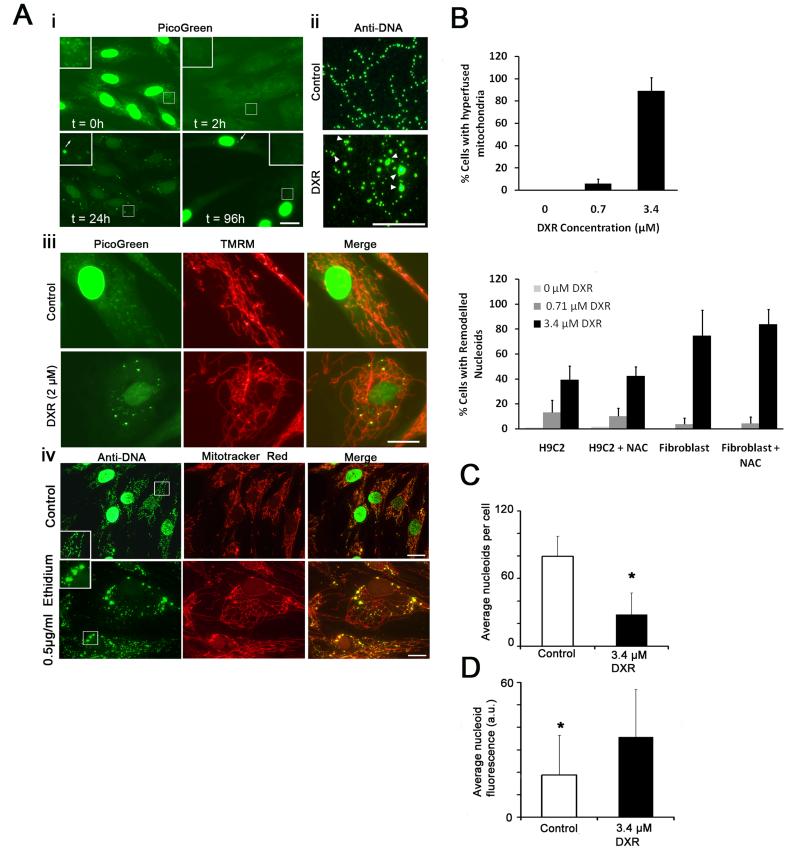
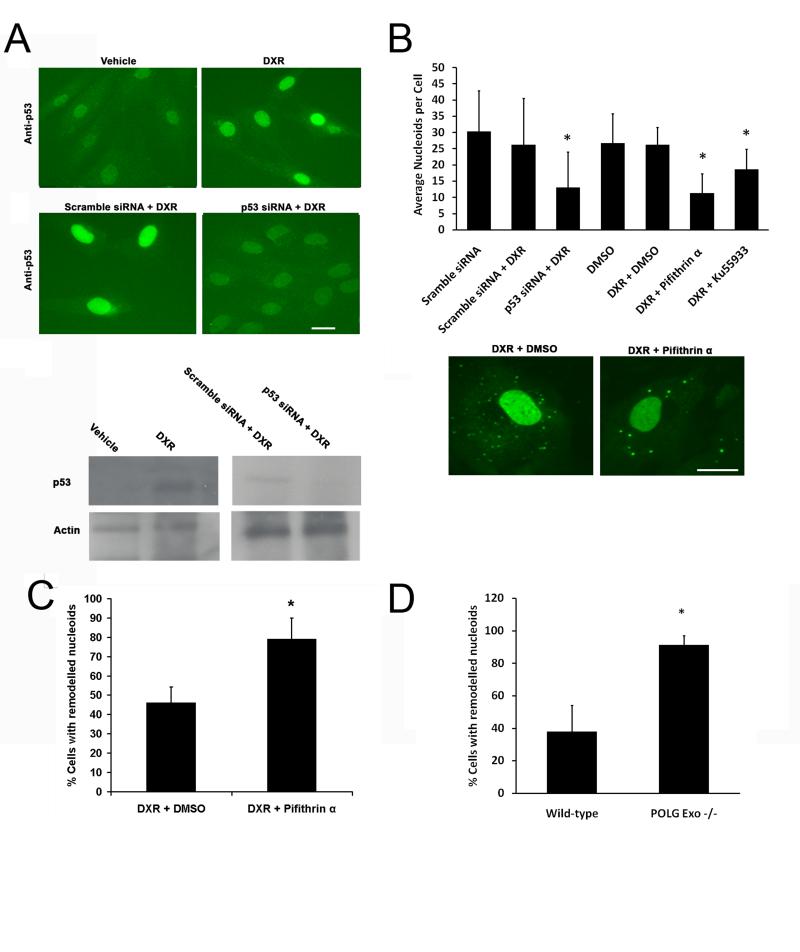
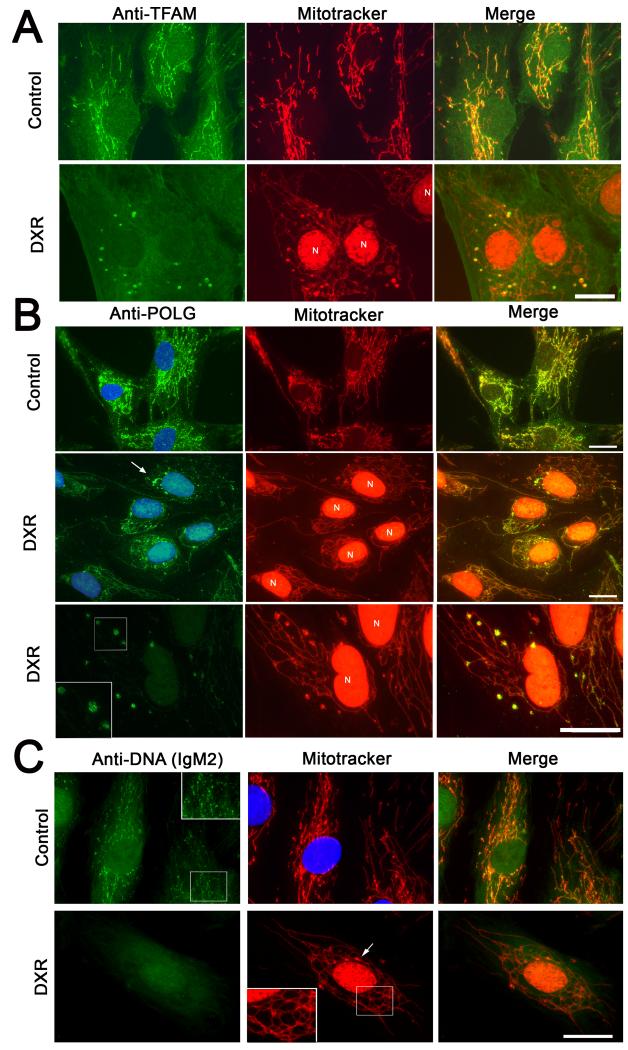
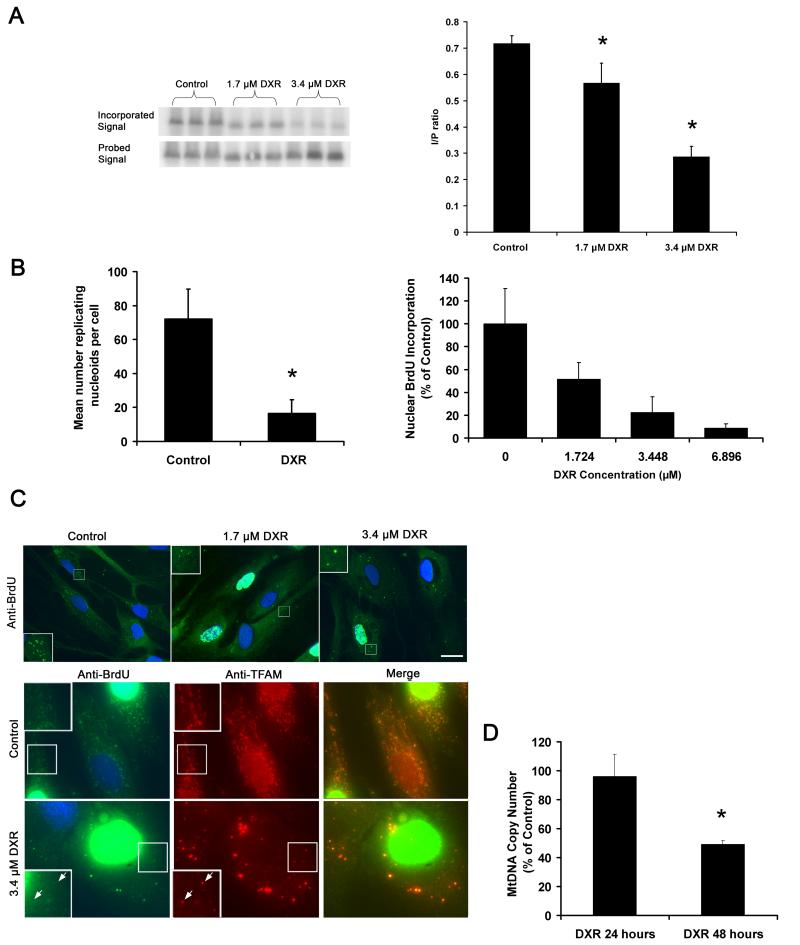
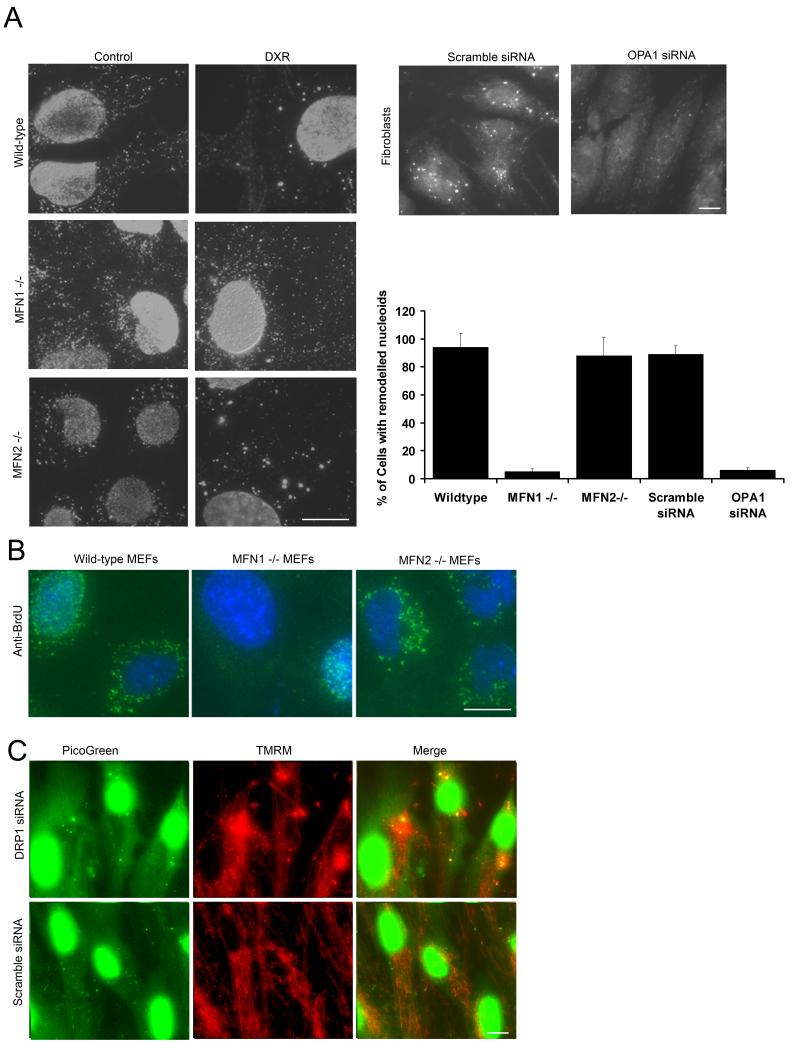
Many anticancer drugs, such as doxorubicin (DXR), intercalate into nuclear DNA of cancer cells, thereby inhibiting their growth. However, it is not well understood how such drugs interact with mitochondrial DNA (mtDNA). Using cell and molecular studies of cultured cells, we show that DXR and other DNA intercalators, such as ethidium bromide, can rapidly intercalate into mtDNA within living cells, causing aggregation of mtDNA nucleoids and altering the distribution of nucleoid proteins. Remodelled nucleoids excluded DXR and maintained mtDNA synthesis, whereas non-remodelled nucleoids became heavily intercalated with DXR, which inhibited their replication, thus leading to mtDNA depletion. Remodelling was accompanied by extensive mitochondrial elongation or interconnection, and was suppressed in cells lacking mitofusin 1 and optic atrophy 1 (OPA1), the key proteins for mitochondrial fusion. In contrast, remodelling was significantly increased by p53 or ataxia telangiectasia mutated inhibition (ATM), indicating a link between nucleoid dynamics and the genomic DNA damage response. Collectively, our results show that DNA intercalators can trigger a common mitochondrial response, which likely contributes to the marked clinical toxicity associated with these drugs.
许多抗癌药物,如阿霉素(DXR),可插入癌细胞的核DNA中,从而抑制其生长。然而,人们对这类药物如何与线粒体DNA(mtDNA)相互作用还了解甚少。通过对培养细胞进行细胞和分子研究,我们发现DXR和其他DNA嵌入剂,如溴化乙锭,可迅速插入活细胞内的mtDNA中,导致mtDNA类核聚集,并改变类核蛋白的分布。重塑后的类核排斥DXR并维持mtDNA合成,而未重塑的类核则被大量DXR嵌入,从而抑制其复制,进而导致mtDNA耗竭。重塑伴随着广泛的线粒体延长或相互连接,并且在缺乏线粒体融合关键蛋白线粒体融合蛋白1和视神经萎缩蛋白1(OPA1)的细胞中受到抑制。相反,p53或共济失调毛细血管扩张症突变抑制(ATM)可显著增加重塑,这表明类核动态与基因组DNA损伤反应之间存在联系。总体而言,我们的结果表明,DNA嵌入剂可引发一种常见的线粒体反应,这可能是这些药物显著临床毒性的原因。